
An Oppositional Reading of ‘The Wicker Man’
by Annalee Newitz
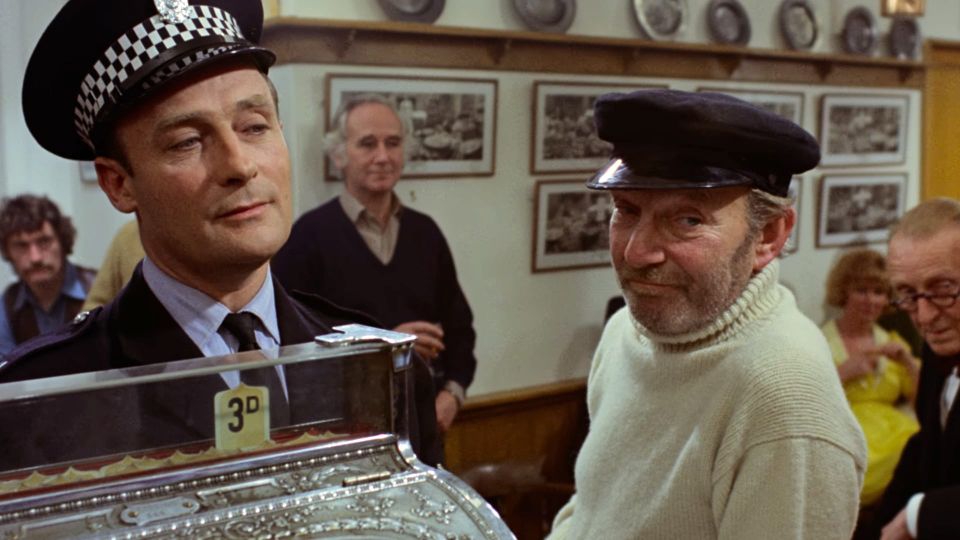
I have always seen The Wicker Man as a dark satire with a happy ending. Think about it: A group of sexy pagans lures a repressed right-wing Christian cop to their little island in order to sacrifice him to the “old gods.” Just to be clear, I don’t approve of literal human sacrifice, but I like this story as an allegory about where moral panic and imperial power will inevitably lead.
The Wicker Man came out in 1973, the same year as Stuart Hall’s influential essay “Encoding/Decoding.” In it, Hall coined the phrase “oppositional reading,” an idea that arrived just in time to help explain why one man’s grotesque horror movie can also be an enby’s tale of triumph over the forces of darkness.
At the time he wrote the essay, Hall was known mostly among Marxist academics for leading the University of Birmingham’s Cultural Studies program and co-founding the New Left Review. But he became a public figure after writing and starring in It Ain’t Half Racist Mum, a 1979 documentary about racism in the media that instantly made him one of England’s leading anti-Thatcherite public intellectuals.
The question at the heart of “Encoding/Decoding” is simple: How can two people see the same TV program, and get dramatically different information from it? Hall’s answer can be summed up neatly by his response in the documentary to a cringe clip from It Ain’t Half Hot Mum, a sitcom about life in colonial Asia, in which a group of British military men in Burma 1945 discuss the wages of a punkah wallah (fan operator) who is seated on the ground nearby.
Keep us breathing fire!








For $3/month you can read this whole post and get our weekdaily newsletter too!