Canada’s Charlie Angus Defends Democracy
by Nathan Munn
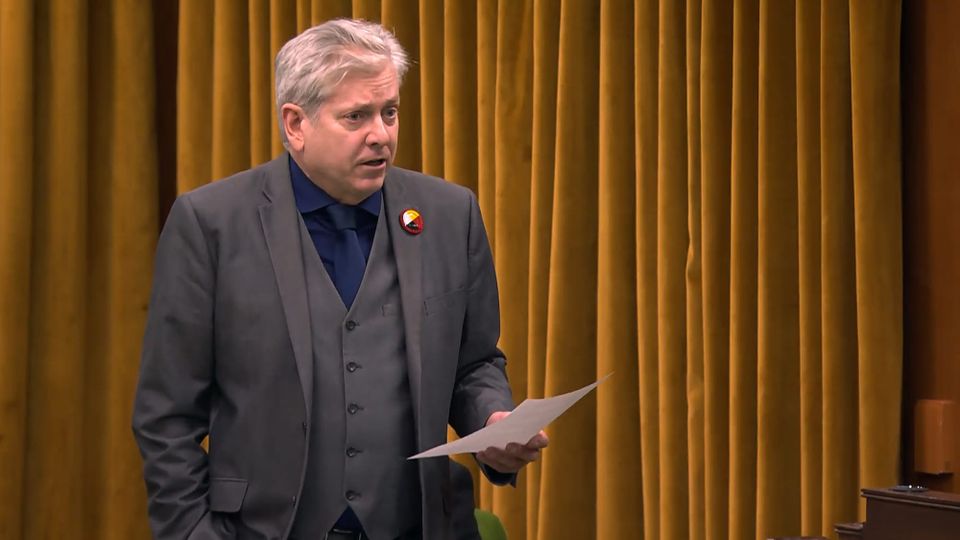
The punk rock artist, former member of Canadian parliament, author, and activist Charlie Angus came out swinging against American authoritarianism in the earliest days of Donald Trump’s catastrophic second presidency. When Trump began threatening to crush Canada’s economy and annex the country as the “51st state” Charlie spoke out forcefully in his newsletter, The Resistance; now he has partnered with the Meidas Touch Network in the U.S., which recently launched Meidas Canada.
Charlie travels across Canada and around the world to encourage people to stand up against rising fascism. He was kind enough to sit down for a chat with me recently about his lifetime of activism, the pursuit of social justice, and standing up for what’s right in dark times.
This interview has been edited for length and clarity.
Nathan Munn: You grew up in the small Northern Ontario city of Timmins, where my grandmother was from. How did growing up there shape your view of the world?
Charlie Angus: My grandfather Charlie Angus came from the Hawkhill tenements in Dundee, Scotland, and apparently was quite a fiery political debater. He died on the shop floor at the Hollinger mine. I got his name when I was born.
The thing about the north, those mining towns, is that they were all populated by immigrants. People came from all over the world, and the conditions weren’t very nice—they were harsh and brutal. My mother’s father, Joe MacNeil, was from Cape Breton. I got my sense of music, my faith, and my family from the MacNeils. Growing up, my parents—two working-class kids—had a real openness to the world, a real sense of fairness. They grew up among the Ukrainians and the Finns, the Croatians, the French. We were the original multicultural outposts of Canada, that’s what the northern mining towns were. And people survived by having each other’s backs.
As a teenager in Toronto, you started your punk band, L’Etranger, played shows, and toured. A few years later you helped establish a homeless shelter in Toronto. For you, what’s the connection between punk rock and community activism?
Punk rock wasn’t just mohawks and leather jackets. It was a multi-faceted, anti-commercial resistance movement of young people. It was art, it was design, it was theater, and it was really driven by the music.
The whole punk ethos was DIY—Do It Yourself. And that attitude has remained with me for my whole political career. When I walked into Parliament (in 2004, as a newly-elected MP for the federal New Democratic Party) people said they could see that punk attitude: I was looking at The Man and thinking, you’re not so big. We’ll take you on.
Morphing from punk rock to working in the homeless shelter also happened because I was raised in the Catholic tradition at a time when Liberation theology was very strong. We were raised in the schools on social justice, about doing right and making a difference. So it’s a confluence of these influences that run through the work that I do.
The fight against South African apartheid was happening, which was a larger social justice movement, but artists were very much involved. Being a young musician, our audience expected us to take positions on things, to be strong: Where do you stand? These issues were life-defining.
I look at a young generation confronting genocide in Gaza today, confronting the gangster regimes, and they are looking for the same thing. This is a moment like the one when I was 18, when the world hung in the balance and you had to make choices. There was never any question for me about where I stood. I never had any existential long dark nights of the soul. It was like yeah, shit’s gotta get done, so let’s get to it.
The author's whole unedited conversation with Charlie Angus!!
After your time in Toronto, you moved back up north to the small mining town of Cobalt in the ’90s. It wasn’t long after that you were elected to Parliament as a Member of the federal NDP, where you kept a seat for the next 20 years. What prompted you to take your work from the streets into Parliament?
[laughing] Well, my wife Brit, who’s been with me since I was 19, she wasn’t gonna stay in Toronto. She married me on the condition that we would move in five years. When you’re 19, five years is a lifetime, so I was like Sure, I’ll sign that. Just like Faust. Then she said, “Now we’re moving.”
Cobalt at that time was considered a kind of fated town: it had come through a brutal fire, the grocery store was shutting down, the French school shut down. All the mines were shutting down. But there was something about the place that just compelled us to move there. When I started out there I was a chimney sweep, I was a roofer, drywaller, just to try and make ends meet.
And then my wife and I decided what we wanted to do was write. We had no experience, so we started our own magazine, HighGrader Magazine, in 1995, and that got us into the politics of the time. We started covering a proposal to dump millions of tons of garbage into an abandoned open pit mine, which would have been an environmental disaster. And that was the beginning of my real transformation: realizing suddenly that the people whose job it was to look after the public interest had no interest in doing so.
The environmental departments were gonna sign off on the dump because of political pressure; the politicians were gonna sign off because there was big money involved. And they were gonna get away with it because they saw our region as a land of poor farmers, blue collar people, and Indigenous people. So I began politically organizing, building a movement that led to mass civil disobedience, shutting down the highways, shutting down the road to the mine. Getting into serious confrontation with, but also learning how to negotiate with, police.
We were just barely getting by, my wife and I. We were living like poor punk hippies up in the bush. I had been getting a bit of work with CBC and with TV Ontario as a freelancer, but once you organize a blockade in Canada, your journalistic career is done. So I went to work for the Algonquin Nation in Quebec, doing blockades and organizing young people, and that’s when I met [NDP leader] Jack Layton and he talked me into running for Parliament.
I had no plan to run in politics, it wasn’t on my radar at all. But Jack said, “We need people who understand what it’s like to have to fight to make a better world. We need people like you.” So I ran. Nobody thought I was gonna win. The campaign had to buy me a hundred-dollar suit so I could look presentable. We won by about 800 votes in that first election; 18 months later we won that riding again by 6,000 votes, the next by 8,000 votes, and there I was.
You ended up staying in federal politics for 20 years. During your years in Parliament you were recognized for your popularity with constituents, and you won awards for your effectiveness as an opposition MP. You built a long track record of standing up for what’s right even when you took heat for it, for example your support for same-sex marriage in 2005.
You mentioned the same-sex marriage battle: I never, ever thought that me going to church was going to lead to a political battle and become an international story.
I was threatened with excommunication, and that rattled me. I mean, my aunts were nuns. But I realized if they could intimidate me, they could intimidate anybody. So you toughen up.
When I started taking on Big Oil I was receiving death threats, harassment. And it was like Okay, a storm’s coming, whatever. We’re gonna stay focused. I had to decide in the morning I was gonna go outside and be Charlie Angus. Because to walk into a bank and confront a bank manager when a family is gonna lose their farm isn’t something you do unless you believe you’re representing something bigger.
I think that now, in this time of rising threats and fascism—you know, over the past four years I’ve had multiple death threats, stuff that has almost become normal for politicians to deal with, it shouldn’t be normal but it is—now I’ve just decided that that kind of gutless intimidation doesn’t stand. We have to speak up, and all those haters can go fuck themselves. They don’t represent what people believe, and they think they can hide behind their keyboards or come to my events to harass and intimidate, that they can shout you down. No. That’s an attack on democracy and I’m not gonna go along with that.
In April 2024 you announced you wouldn’t be running for re-election. Seven months later, Trump won a second term. How did you feel when he was elected?
This was a man who’d been conjured out of the toxic ouija board of the Boogaloo Boys, the Proud Boys, the Russian bots, the hate machine—and democracy was gonna be threatened. I couldn’t imagine how it was gonna be threatened, or how bad it has gotten and how much worse it may get, but I knew it was a line-in-the-sand moment. I knew that Trump’s election was a game-changer, that Trump 2024 wasn’t Trump 2016.
It suddenly felt like words mattered again, speaking clearly about history and the reality of what we were living through. That became the focus of my last months in Parliament. I didn’t think anyone would really listen; I just wanted to get it on the record. But it seems to have really galvanized people.
You started your newsletter, The Resistance, when Trump started threatening our country, responding to the shock, confusion and outrage across Canada.
The morning after Trump’s election I kept thinking of Gramsci’s line: “The old world is dying and the new world struggles to be born; now is the time of monsters.”
My wife called me at eight o’clock that morning after the election and asked me, “Why haven’t you written anything yet?” I said I didn’t know what to write, and she said, “Well, you start writing, you start speaking, because people need a voice.” Once we got the newsletter started I was writing an essay a day, I couldn’t stop. People were sending me messages saying they would wait in the morning to hear what I had to say, to help them find their way through this.
I’ll also say that I had been writing a book about the 1930s in Timmins, Kirkland Lake, and Noranda, a dark and wild time, and that there was a history there that had never been told. I’d immersed myself in the microfiche, the old newspapers, for every single day from 1928 to 1940: reading the daily news, the ads, the social columns. And I began to see a real pattern of how the ’30s unfolded. Because we know how it ended, but they didn’t.
That may be one of the reasons I was out of the gate early: I’d seen the playbook, I’d been living it for a year in my notes and readings, and I felt a sense of cold dread. Those forces are in play, and there’s a real naivety among our political class.
I felt from the get-go that ordinary, working-class Canadians understood the nature of the threat very quickly. I still don’t know if our intellectual and political class get it, or if they think it will all go back to normal, and our evening talking heads will continue to carry on with their obsession over whether Pierre Poilievre is up one point or down one point in the polls overnight—when the storm is coming at us.
What can people do now, wherever they live, to stand up for democracy and human rights?
I confront this question every night at our Meidas Canada town halls. It starts from the premise that nobody’s coming to save us. Anyone who thinks the Democrats are gonna get their act together in the mid-term elections and the pendulum is gonna swing back? That’s all bullshit. So what do we do?
Right now the Canadian boycott is an unprecedented political resistance act. It’s had enormous impact in the United States. And it’s the only non-violent, political movement that I’ve seen that wasn’t organized by any team or group. People’s innate outrage at Trump’s abuse just said they weren’t gonna go along. So we have to keep that boycott strong.
I challenge Canadian media all the time, they’re always undercutting the boycott: Well, it was big in the spring, but it doesn’t seem to be there now... It’s that world-weary attitude we see from mainstream media. I get most of my coverage on the boycott from the U.S., where they’re freaking out.
The world is watching us. People send me messages—this morning it was Poland, the UK, Australia, every state in the union, they’re watching Canada and what we’re doing. That’s something we have to tell ourselves: We’re in dark times, but we’re getting through it right now by holding a line.
Then, people need to rebuild democracy from the ground up. It needs to be at the local level. We need to get off Zoom, to get out and start being at community meetings, and it’s different in every community: in some places it was about taking out some toxic city councillors who were pushing hate, in others it was a Tesla Takedown, in others it’s the Grandmothers Against Genocide. Any of these groups you can be active in or invite people into. We need to build a web of community. That’s what we had before, we used to take it for granted. We don’t have that anymore. To rebuild a democracy now, it’s gonna have to be built through these webs, locally and globally.
At Meidas Canada, that’s what we’re doing, and we say to people I don’t care where you are, if you’re doing anything, let us know. And we’re gonna talk about it. So that people become confident again. The right and the extremists and the conspiracy haters came at us so hard in the post-Covid era that we all became gun-shy of speaking up. Now? No, fuck you. We’re taking our country back, we’re taking our flag back, we’re taking our values back. You don’t own our values. They belong to caring people who believe in democracy and inclusion. Those are our values. And we’re gonna stand up.
Follow Charlie at the Meidas Canada YouTube channel and on Bluesky.