
Certain Parallels
by Kọ́lá Túbọ̀sún
The meeting ended with a majority pledge of allegiance to the new University Credo. Confident that it now had the support, or complaisance of the majority of the University, the Government issued fresh orders. All those who had resigned should be… ejected from the University at once. Twenty-four hours’ grace, no more. If they were on the campus after that, the consequences, it was threatened, would be very grave indeed.
—Ìbàdàn the Penkelemes Years (1994) by Wole Soyinka
I’m Nigerian, so dictatorships are familiar to me. The ’60s were full of coups around West and Central Africa, my country included. Just six years after independence from the British, the civilian government in Lagos was toppled. Another year later, Nigeria was embroiled in a civil war that would last three more years, with aftershocks that continue to be felt to this day.
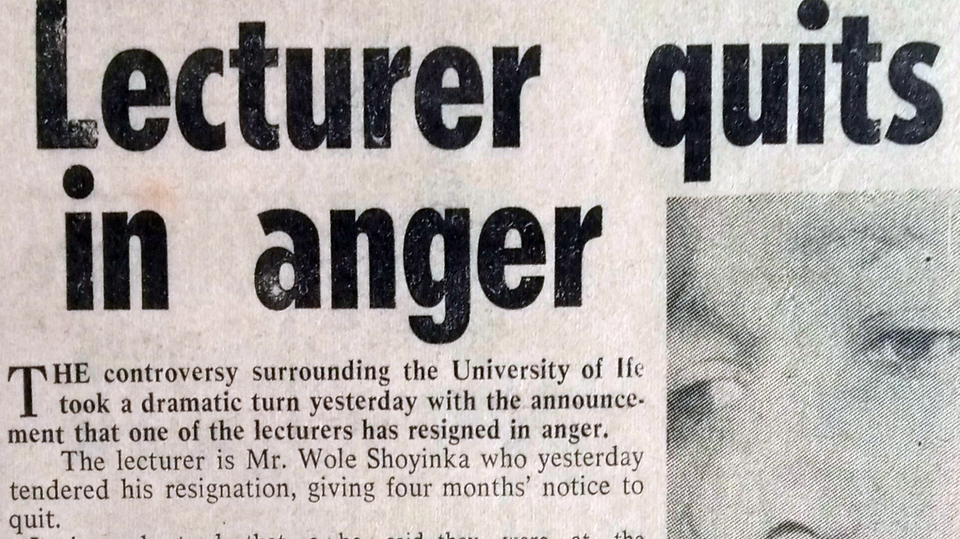
In 1963, Wole Soyinka was a staff member of the new University of Ifẹ̀ that had been set up by the Western Nigerian government. In that turbulent year, which was characterized by irregular elections, a state of emergency, and other fabricated conflicts, the first salvo was fired in the war against Nigerian educational independence.
In what was later known as the “Credo” speech, the Vice Chancellor of the university, following the direction of the Western Nigerian government in Ibadan, declared to his staff that his administration henceforth would support the policies of the government. Anyone who was against this was welcome to resign effective immediately.
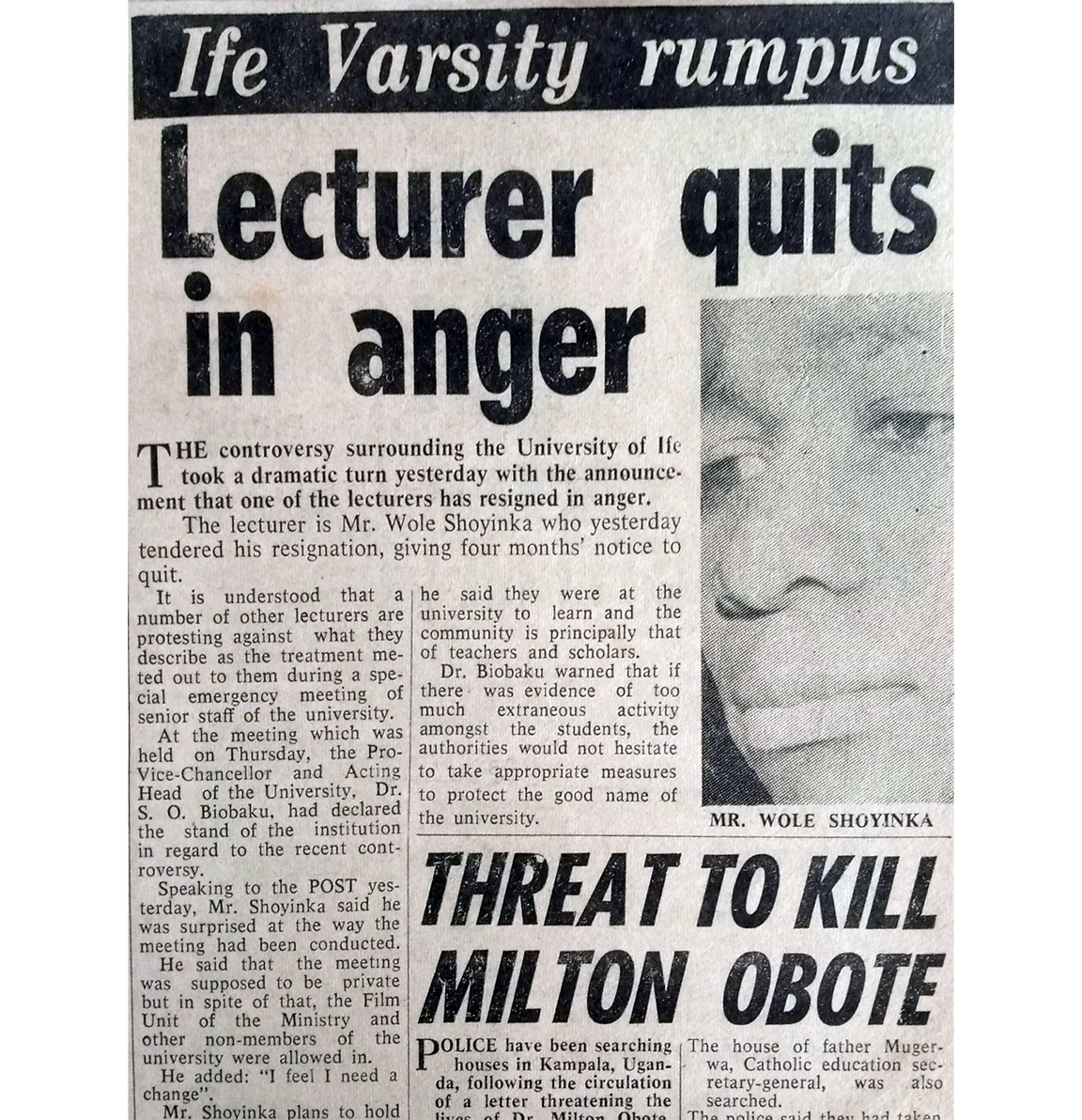
Many, including Soyinka, chose to resign immediately. Those who did not—or who asked for the university to honour its mandatory six-week notice period—were physically attacked and their property destroyed. Soyinka’s 1994 memoirs, from which the above epigraph was taken, provide a detailed account of this episode.
It’s 2025, in the United States. A green card holder at Columbia University in New York was arrested and detained without process. He’s now facing deportation. Later, the U.S. Immigration and Customs Enforcement agency (ICE) arrested Rumeysa Ozturk in broad daylight, in a scene reminiscent of foreign dictatorships. People in the administration have threatened the judges that go against the government credo. And in the place of due process, they are promised one-way flights to a notorious prison in El Salvador, even for a victim whom the government agrees was sent there by mistake.
What’s the purpose of history and memory if not to warn and prepare? And what’s the purpose of that warning and preparation if, when the moment comes, all the parallels are useless?
The Middle-Eastern and African Studies department at Columbia have been put under the control of an administrator selected by the government of the day. I have seen no resignations so far.
The university system in Nigeria never remained the same. The “credo” event is notable now in hindsight because it marked one of the earliest indications of what was to come. There were other issues too—economic downturns, military dictatorships, and other social upheavals—but the brutal curtailing of the autonomy that universities had enjoyed in the early days of independence can be fingered as one of the early indicators of the society’s decline. When the soul of an institution is castrated, it won’t matter if you’re a member of staff or a student. When your agency is gone, so is your capacity for boundless inquiry. When education is been reduced to just the pursuit of a paper certificate over a genuine search for truth, then something is lost. And it has gotten worse in each generation of students…
In early 2020 in Nigeria, an organic protest rose up, started by young people in protest of the high-handedness and violent conduct of SARS (State Anti-Robbery Squad), a paramilitary police force. SARS, it was claimed, had targeted young people indiscriminately, for wearing tattoos, or braids, for carrying laptops in public, and other petty things that young people typically do in big cities. So many had lost their lives or limbs in these frequent interactions with these agents of the state that they had become impossible to ignore. The #EndSARS protests, set up to pressure the government to disband the group, gathered force from Lagos, spreading to other parts of the country until the movement’s violent end on October 20, 2020 at the Lekki Toll Gate, where the government of Buhari sent soldiers to open fire on unarmed protesters. Scores were killed; some of the victims simply disappeared, and have never been found.
Message sent and received. Do not go against the government credo.
But all that is far away, in Nigeria—a “third world country”. Right?
Neri Alvarado Borges, a migrant baker from Venezuela, was recently arrested by ICE for having a tattoo which he had gotten in honour of his autistic brother. He has no criminal record, but was sent in open violation of a court order to the notorious Terrorism Confinement Center (CECOT) in El Salvador.
Protests against the government will be followed with more arrests and more deportations, according to U.S. Secretary of State, Marco Rubio, himself a descendant of immigrants (“Every time I find one of these lunatics, I take away their visa.”)
What’s the purpose of history if it doesn’t alert us to injustice and prevent a repeat? Must we eventually become what we hate, because the world is a sphere that bends everything back to a primal start?
A genocide is happening is Gaza, according to all human rights groups, journalists, writers, actors, Jewish activist groups in Israel, and the International Criminal Court. But to speak of this is to run against the credo of the government of the day.
This is the United States, though. Not Nigeria. It’s 2025, and not 1963. Yet you can be a student, whose role by definition is critical thinking and learning. You could be a member of the staff of a university, where the search for truth, through diligent exchanges of creative and sometimes contentious ideas, are the bedrock of our work. But as soon as your ideas deviate from what this administration considers acceptable, you are at risk of being attacked with every power of the state.