
Cetacean Solo
by Misha Angrist
As I recall, my older brother and I stood in line for hours (probably at National Record Mart) to buy tickets to see Led Zeppelin at the Civic Arena in Pittsburgh. I would turn 13 that summer of 1977 and there was little that spoke to me with the authority and unquenchable force of these four long-haired blokes from the sticks of England and their deafening, wailing, sensual, grandiose tapestry of medieval Tolkien-laden modal blues.
The previous year they had released their seventh studio album, Presence, a cryptic and somewhat off-putting work, beginning with the creepy cover: a very respectable Mummy, Daddy, and two children sitting at a white-clothed dinner table, tall windows behind them overlooking a crowded marina. In the center of the table, and the focus of everyone’s attention, is a phallic obelisk, jet-black, popularly known as “The Object.” It reflects no light and casts no shadow.
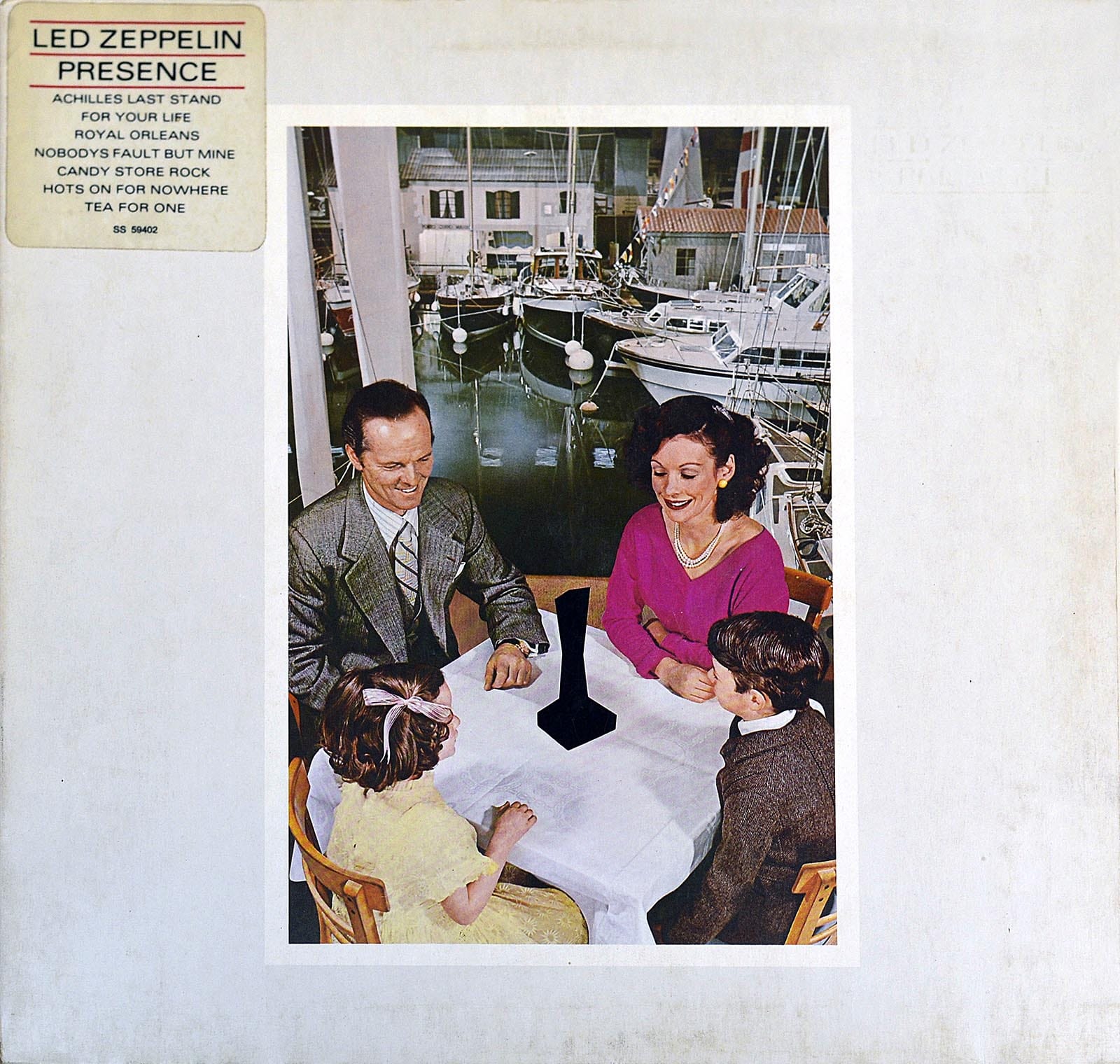
The sleeve of Presence has been described as the greatest work ever done by album cover auteurs Hipgnosis… and also, somewhat less charitably, on Reddit. Apparently, the band’s label, Swan Song Records, made a thousand replicas of The Object; the quest for one consumed the better part of an episode of Pawn Stars. Meanwhile, the music itself felt more bloated and discursive than 1975’s magisterial double album, Physical Graffiti (which a friend owned on eight-track tape, because of course), despite being half as long.
None of that mattered to teen-aged me. I was preconditioned to love Presence and dammit, I was going to see the apotheosis—the embodiment—of rock and roll decadence in person at the tail end of their triumphant North American tour.
Alas, it was not to be. That July, singer Robert Plant’s five-year-old son Karac contracted a stomach virus and passed away. The remaining tour dates were cancelled.
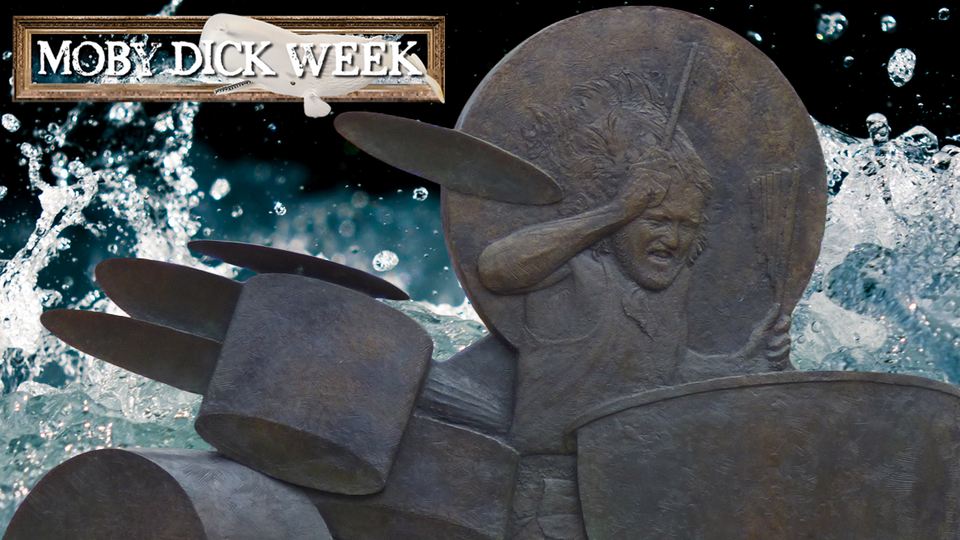
When I hear the words “Moby Dick,” my first thought is of a masterpiece, yes, but the one by Zeppelin drummer John Bonham rather than the one by Herman Melville. Many will raise an eyebrow to ask: “A masterpiece? Really?”
“Moby Dick” (originally called “Pat’s Delight” in honor of Bonham’s wife) is a perfectly serviceable I-IV-V heavy blues riff bookending Bonham’s 15-minute-long tour de force. The cetacean drum excursion begins about one minute in on Led Zeppelin II, after a bit of Jimmy Page histrionics. You can hear Bonzo finding his way, almost as if he is tuning the drums. Gradually, he becomes more insistent, the beating of the toms intensifies, the fury builds, and soon it is as if the entire drum kit is falling down flight after flight of metal stairs on a planet burdened with infinite gravity; one fears that the drumheads will break. At the four-minute mark, Bonham crescendos with a final majestic crack and the guitar and bass return. The outgoing riff is punctuated by outbursts of Bonham’s tom tom tumult and a final descending sequence of Page power chords.
Viewers of Becoming Led Zeppelin might recall Page’s vision for recording the band’s second album as they made their way across the United States in 1969. “John Bonham’s kit was gonna be spread right across the stereo picture,” Page said of Zeppelin II. “He had the science of tuning the drum so that when he hit it, it just resonated out of the top. It just projected. And he played with his wrists—it’s not all this forearm smashing.” Though when Bonzo hit an accent on the bass drum, Page conceded, “you’d feel it in your gut.”
The exquisitely engineered four-minute studio version of the song does not demand the same indulgence on the part of the listener as the various lengthy live versions. (And no, I’ve not listened to them all.) I love drums and drumming and drummers, but I am not a drummer. For me, long drum solos—Ginger Baker’s “Toad” with Cream and the Grateful Dead’s thoughtfully named “Drums” come to mind—were usually an opportunity to duck out for a smoke and a drink.
So how would “Moby Dick” live at the Royal Albert Hall (1970) sound to my jaded ears, five decades later? Short answer: pretty good! Bonham begins with the same searching and tinkering—he is clearing his throat. As in the studio version, the energy builds, accelerating to the familiar insistent rhythmic clatter that undergirds so many Led Zep classics… but suddenly, a little more than five minutes in, he stops—he puts down his sticks and begins playing the drums with his hands.
Once I might have viewed this the way I view Jimmy Page playing guitar with a violin bow—an eyeroll-provoking bit of cacophonous 1970s kitsch destined to be satirized in Spinal Tap. But I find I can feel it now. Bonham’s hand drumming—now kit, now congas—feels feral and relentless.
According to Mick Wall, author of the salacious Zeppelin biography When Giants Walked the Earth, before playing “Moby Dick,” Bonham would “reach down and grab handfuls of coke from a bag at his feet and rub it all over his nose and mouth.”
There is zero question that this kind of excess hastened the demise of Led Zeppelin. Bonham would drink himself unconscious with some regularity; he died in September 1980, allegedly after having consumed 40 shots of vodka. But please don’t conflate the rock and roll lifestyle with some kind of shortcut to making amazing art. Performance-enhancing drugs might give you the stamina to hit your snare longer and louder, but I seriously doubt that they will allow you to master drag triplets or double paradiddles or 11/8 time.
Back at the Royal Albert Hall, by the time the band rejoins Bonham at 14 and a half minutes, he has taken us on a sublime percussive ride—from soothing sotto voce pulses to raucous violence—and reminded us that he is not a technician but an artist. (Among his heroes was session legend Bernard “Pretty” Purdie, the architect of so many iconic grooves from Aretha Franklin to Steely Dan. One can hear Bonham’s homage to him in the infectious shuffle of “Fool in the Rain.”)
I would argue that the song “Moby Dick” is worthy of its namesake. It is full of singlemindedness, compulsion, relentlessness, and rage. It is, at its apex, unhinged.
In Chapter 119 of the novel (“The Candles”), a typhoon has struck the Pequod and produced a Saint Elmo’s fire such that the masts of the ship appear to be on fire. Ahab, in full flower of madness, sees the “flames” as some kind of divine validation of his quest—a force that inhabits and nourishes him.
Oh, thou clear spirit, of thy fire thou madest me, and like a true child of fire, I breathe it back to thee.