
Chi from the Cosmos
by Zito Madu
Anyone who has ever spent time in the Lower East Side of Manhattan in New York City has likely seen the old people there practicing Tai Chi. Classes and meetups are happening all over, from the community centers to whatever outside space is available. When I play soccer on Saturdays or Sunday mornings in that area, I always see them near the field or park performing their flowing and meditative movements. Even on cold winter mornings, they’ll be out there bundled up, inhaling and exhaling the cold air with the kind of control that stands out in contrast to the heavy panting coming from the soccer players.
A lot has been written about Zohran Mamdani’s recent breakthrough mayoral campaign, citing his team’s skill in producing social media and videos. These allowed him to express his political ideas and positions in a relatable, or at least more human way, especially by showing the love and understanding he has for the people and culture of New York City. The campaign focused on making lives better for all of the people, and his engagement with so many diverse cultures and histories demonstrated in a vivid way what makes the city unique and exceptional.
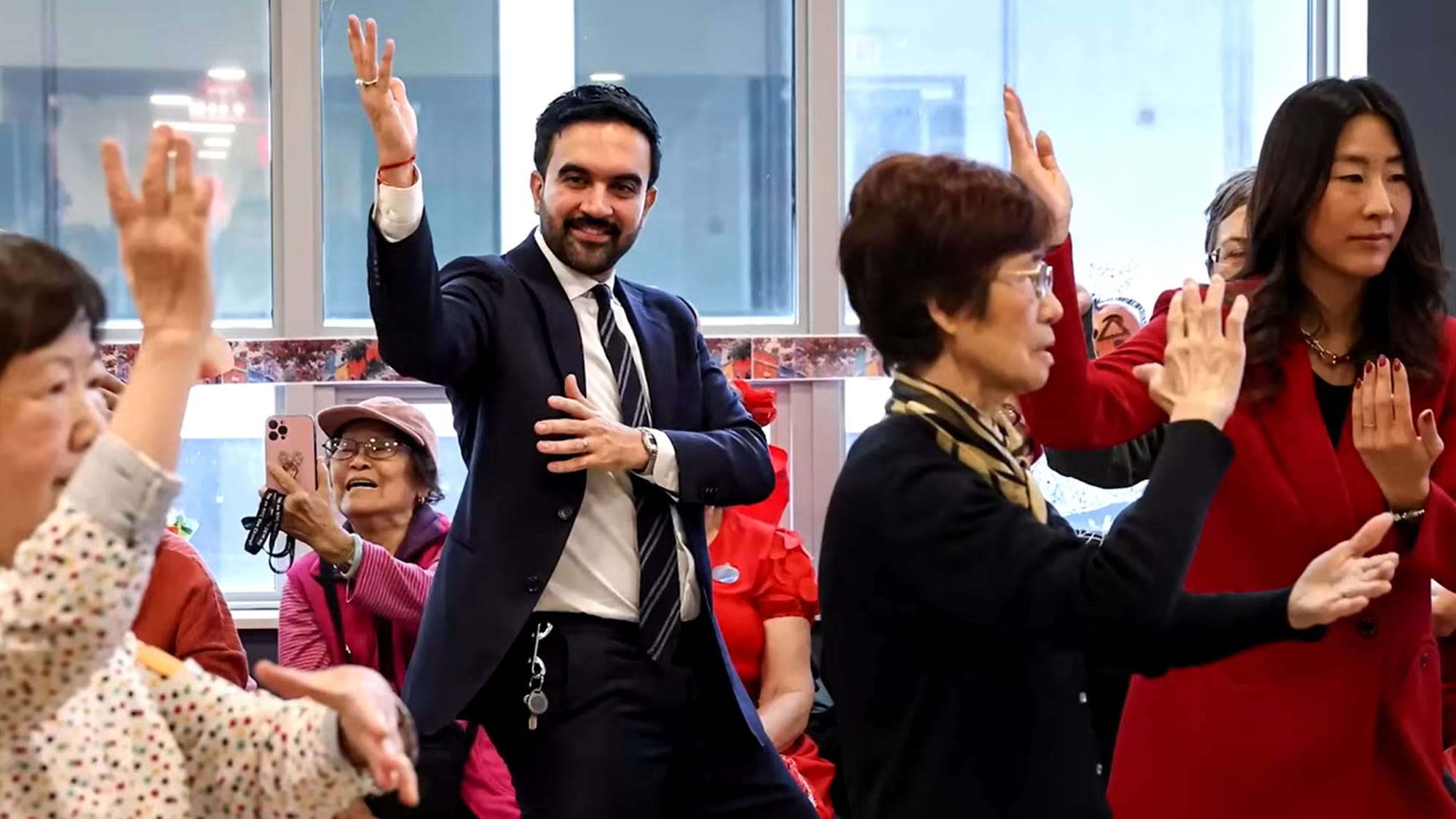
One of the videos that touched me most came late in the campaign, when Mamdani visited a community center in the Lower East Side to talk with seniors, and emphasized that the affordability crisis affects seniors as much as it does young people. Part of this engagement included a Tai Chi session with the older Asian American women there. He didn’t do it especially well, but it was still lovely to see.
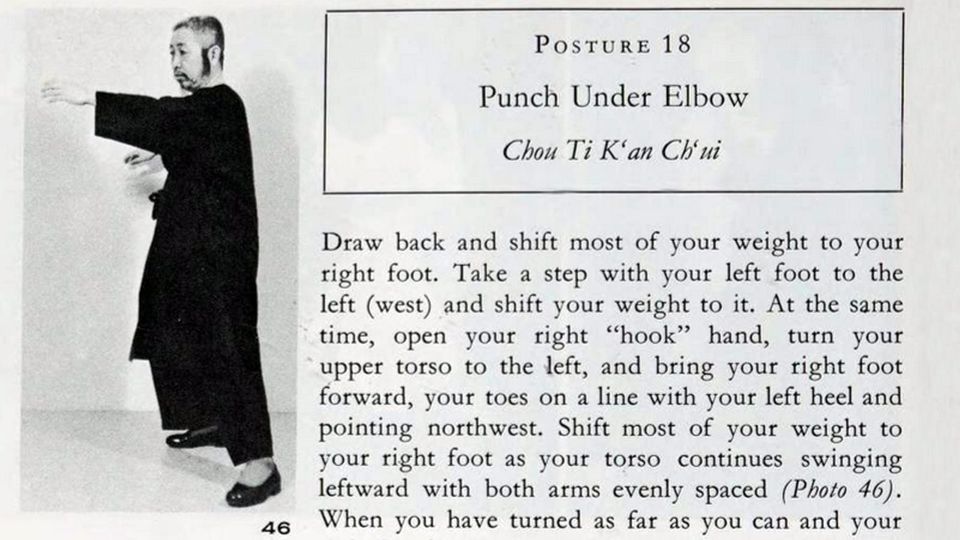
T‘ai Chi: The “Supreme Ultimate” Exercise for Health, Sport, and Self-Defense by Cheng Man-ch‘ing [so styled], translated by Robert W. Smith gives several accounts of the origins of Tai Chi. The first is that a Taoist priest of the Yuan dynasty learned it in a dream; the second, that it developed in the T‘ang dynasty, through four schools: the Hsu, Yu, Ch‘eng, and Yin; the third credits the Ch‘en of Ch‘en Chia Kou in the Honan province during the Ming dynasty, and Cheng Man-ch‘ing relates the fourth as follows:
...while passing through Ch‘en Chia Kou in Wen-hsien (Honan province), Wang Tsung-yueh saw the villagers practicing a form of hand boxing called pao ch‘uan. Later at his inn he made an offhand remark on the method, which the villagers—almost all surnamed Ch‘en—had practiced for generations. His remark brought several challenges and he met them all successfully. The villagers were impressed and asked Wang to stay for a short while to teach them his method. Moved by their sincerity, he agreed and helped them modify their hard boxing method into the softer T‘ai-chi. The practice was eventually divided into two styles, the old and the new.
Tai Chi is a practice for transforming and increasing the “chi,” loosely translated as life force or energy, through slow and rhythmic movement. This goal has taken many forms in addition to exercise, from dietary practices to sexual experiments, all intended “to extract ch’i from matter in its solid, liquid, and gaseous forms,” according to The World’s Religions by Huston Smith. Tai Chi “gathers calisthenics, dance, meditation, yin/yang philosophy, and martial art into a synthesis that in this case was designed to draw ch’i from the cosmos and dislodge blocks to its internal flow.”
When I first practiced Tai Chi I was in middle school, soon after my family had moved to the United States in 1998, and I had no idea what it was. I had already developed the reputation in school of being a troublemaker and would be sent to detention so regularly that additional punishments were added to the already dull requirement of having to sit quietly in a classroom for an hour after school. The detention teacher sometimes made me stand in front of the class holding a heavy dictionary in each hand for a certain amount of time, a punishment that would definitely not be permitted nowadays. If I dropped the books before the time was up, I would have to hold them up again, for longer than the previous time, or until the teacher was satisfied that I was too exhausted to continue misbehaving.
These punishments were sometimes draconian, but it was an effort from the school and its teachers to deal with an angry, disruptive, and rebellious child. The reasons for my bad behavior were at times obvious and at others mysterious in the sense that I felt things that I couldn’t properly explain, or that I would try to explain but sounded silly coming from such a young child. The obvious problem was that I was a young immigrant and some of the kids in the school were testing to see if they could get away with bullying me; rather than accept it, my natural attitude was to say no, both verbally and physically. My mindset was that we can just fight it out, all the time. Which the teachers and the principal didn’t particularly like, since they would have much preferred to live in the peace of me accepting the bullying quietly than in the prevailing chaos of my defiance and the work of having to address the tension. But I didn’t mind the punishments. They were fine with me, even though my parents quickly got tired of getting calls from the school.
Harder to explain was that at that young age I felt the hands of everything and everyone pushing me, trying to shape my life and my future, and the lack of freedom or agency that I had in that process. Everything was being done to me. I was being made into someone without my input. Since no one cared what a young kid had to say about their own life, I exercised the only power that I had, that is, the power of my own life, body, and self, and said no to all of it. If I felt that I wasn’t being listened to or respected, I said no to the situation completely. Whether that was in leaving class, talking back to teachers, putting a kid in a chokehold during gym for tripping me, or not coming home when I felt that I was being punished without my parents’ clear understanding that I had been justified in what I did.
They put me in detention almost every day but it had little effect because sitting in that classroom was no different from being out in the world; it all felt like one continuous experience of being disrespected and ignored, each event as hostile as the last. It changed nothing, and sometimes it was even a kind of reprieve to have time to sit and draw in silence rather than having to answer for and defend myself.
Eventually, one of my teachers, who saw that the punishments weren’t working, suggested that instead of detention I should be put in afterschool volleyball. It was an activity that some of the kids did as they waited for their parents to get off work to pick them up. I still remember walking into the large, dark, quiet, room that seemed to exist outside of the school, as if it were a different realm completely, and having our teacher, an older Black woman, introduce me to the strange cast of afterschool kids. She told me that before and after each practice, we were required to do Tai Chi. I hadn’t played volleyball before, and I definitely had no idea what Tai Chi was.
We all had so much pent-up energy and wanted to get to the volleyball as quickly as possible, but she never let us touch the ball without a few minutes of imitating the flow of water and concentrating on our breathing. We did Tai Chi to meditate, relax, to feel at home and engaged with our bodies. She didn’t emphasize emptying the mind as much as she did learning to float in it, as well as feeling every part of our bodies. She wanted us to get to know and be in ourselves, mind and body. Then we would get to expressing that knowledge of self through volleyball. And after that high intensity action, we would meditate once again, returning to ourselves.
The combination of Tai Chi and volleyball were delightful to me, and I looked forward to going every day. I had a friend who also played volleyball with me, who was on the basketball team and was so good and so athletic that he became a rival for me. Tai Chi became a time for me to lock in before I tried to beat him at the volleyball court. Not only did I try learning to calm down and be comfortable in my body and mind, but I would cheat by also visualizing myself beating my friend in volleyball. I could imagine the person that I wanted to be, and each practice was an opportunity to work towards that person. I would lose, come back and refine myself, and try again. In this one space, outside of the reality of life beyond its borders, I could participate in the designing of myself and my life, with the help of a teacher and a practice that helped in that project.
Unfortunately for my teachers then and the teachers afterwards, Tai Chi and volleyball seemed to have the opposite effect of their hopes for docility. By allowing me to see myself more clearly, my new practice only made me double down on the demand for freedom and active participation in my own life. The anger was still there, but it didn’t feel chaotic or without reason. I knew now that my anger was the proper and natural reaction to an intense set of circumstances. The same way that a body of water could grow intense during a storm.
What I could articulate much later in life, with the vision of myself then and in the future clear in my mind, was that while I could negotiate with the demands and hopes of parents, teachers, and the world around me, I still wanted to have a life that allowed me a sense of freedom, one that I would be proud to live. If that desire were respected, then I had no problem doing the things others wanted, and making the necessary adjustments for existing in society. But I wanted to feel part of my own life.
After that time, playing soccer and my intellectual pursuits took up most of my time, even as the fights and trouble continued. I only managed to beat my friend one time, but never got to thank our teacher for making us do Tai Chi before and after practice. Things in life sometimes end without a soft closing. But whenever I see the old people in the Lower East Side doing Tai Chi, it takes me immediately back to that room and those times. I see the young me watching and imitating my teacher’s moves as he tries to imagine himself floating in the river of his mind, clearing through everything that makes life complicated to allow him to see his own face, the image of himself more clearly, and to imagine the best possible future. Inhaling and exhaling, feeling the movements of his arms, legs, hips, chest, neck, and head, and then locking in to put all of that body on the line for an inconsequential, all-important volleyball game.