
Etymology Today: BUSKER
by The Editors

Here are three different etymologies for the word, BUSKER.
I. Google AI Overview
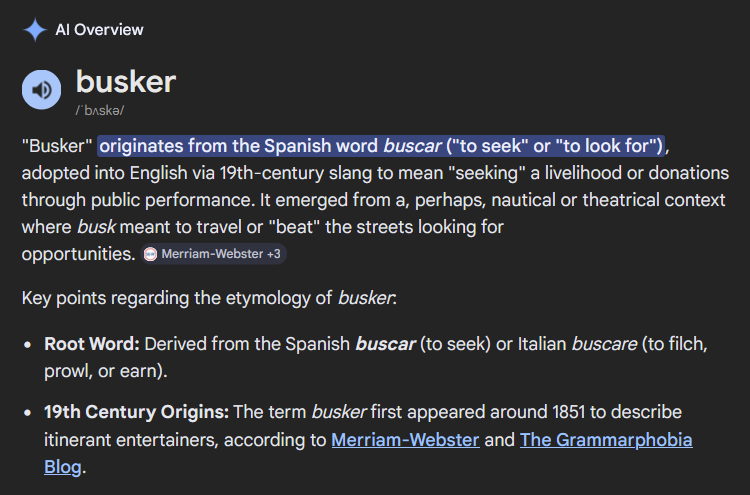
There are no direct citations or example sentences given here, just the bald assertion that busker is derived from Spanish buscar. Italian buscare is “filch,” “prowl,” or “earn”? How are those the same word? Given that the point of writing etymologies is to inform the reader of the various cognitive threads that may have led to a word’s meaning, this is a failure to begin with. You can’t just say “a word appeared,” you’ve gotta say where for pete’s sake.
Some few points for the link to the Grammarphobia Blog, which at least contains a slapdash accounting of the main etymological points for busk.
Keep us breathing fire!
just a few of our contributors








For $3/month you can read this whole post and get our weekdaily newsletter too!