Freedom and Sharing at the Internet Archive Europe
by Maria Bustillos
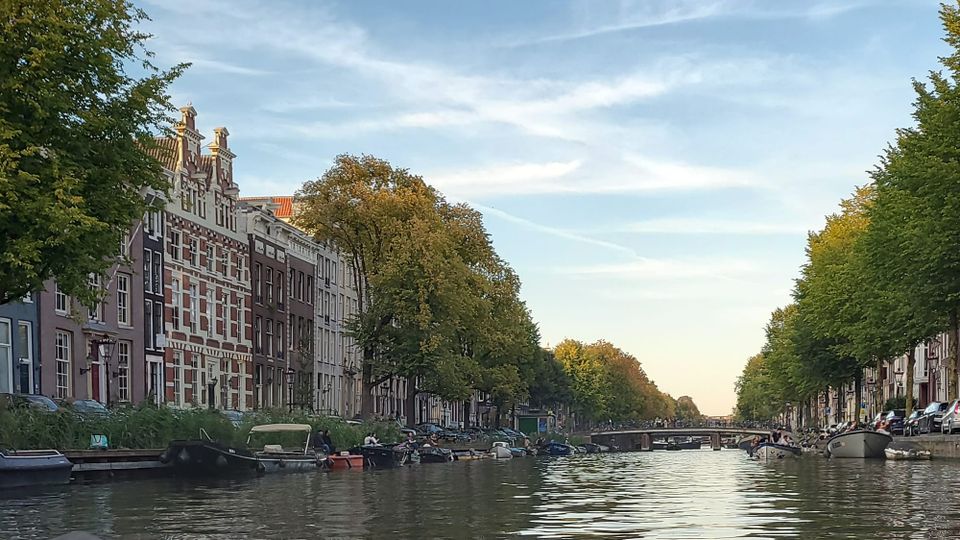
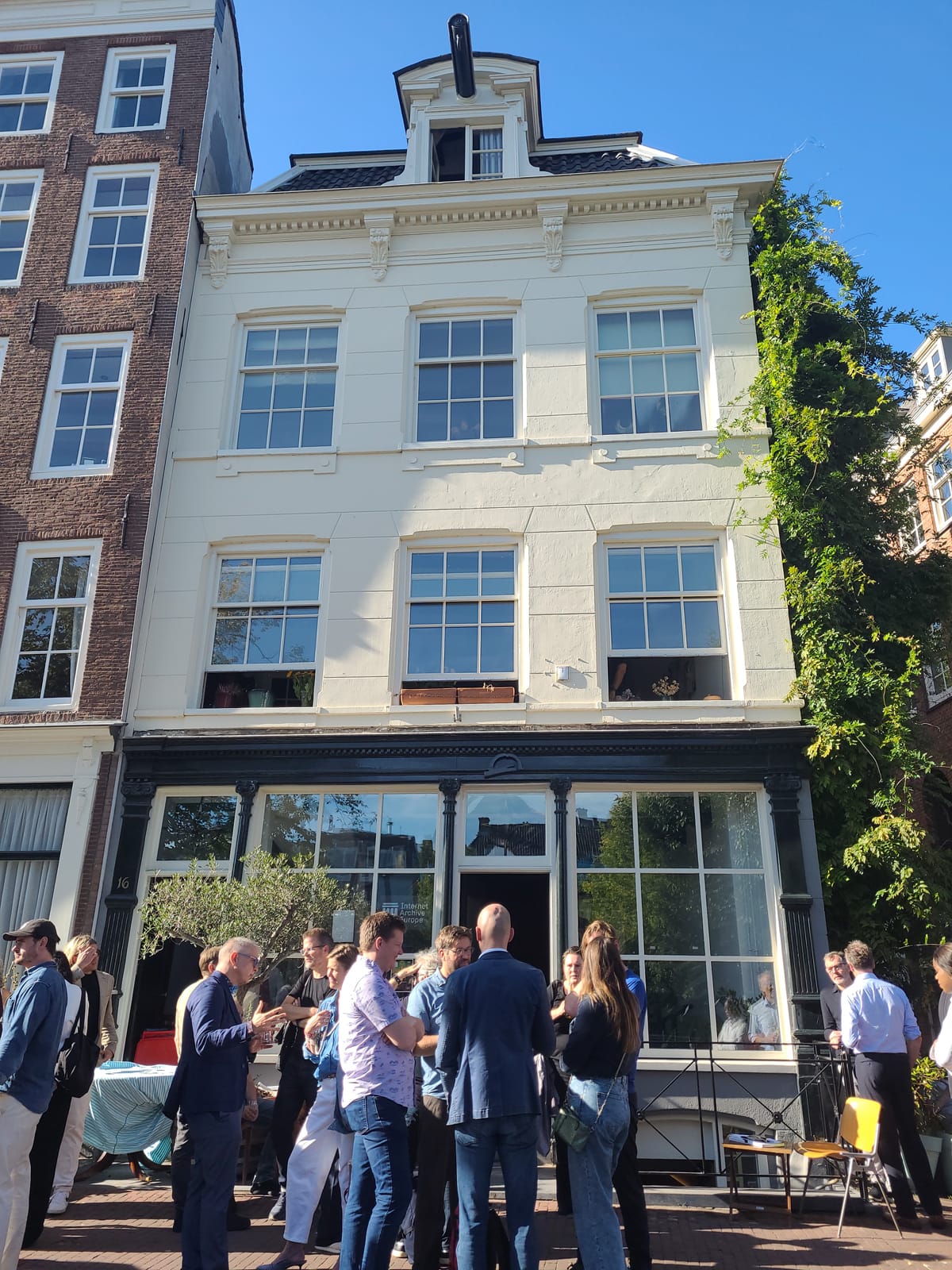
On Friday, in a narrow, cream-painted 17th-century row house facing a wide canal bathed in golden light, the Internet Archive Europe celebrated the opening of its new headquarters in Amsterdam. Around 100 guests milled around, snacking on hors d’oeuvres and drinks and sharing their inspiringly ambitious goals for the future of the internet.
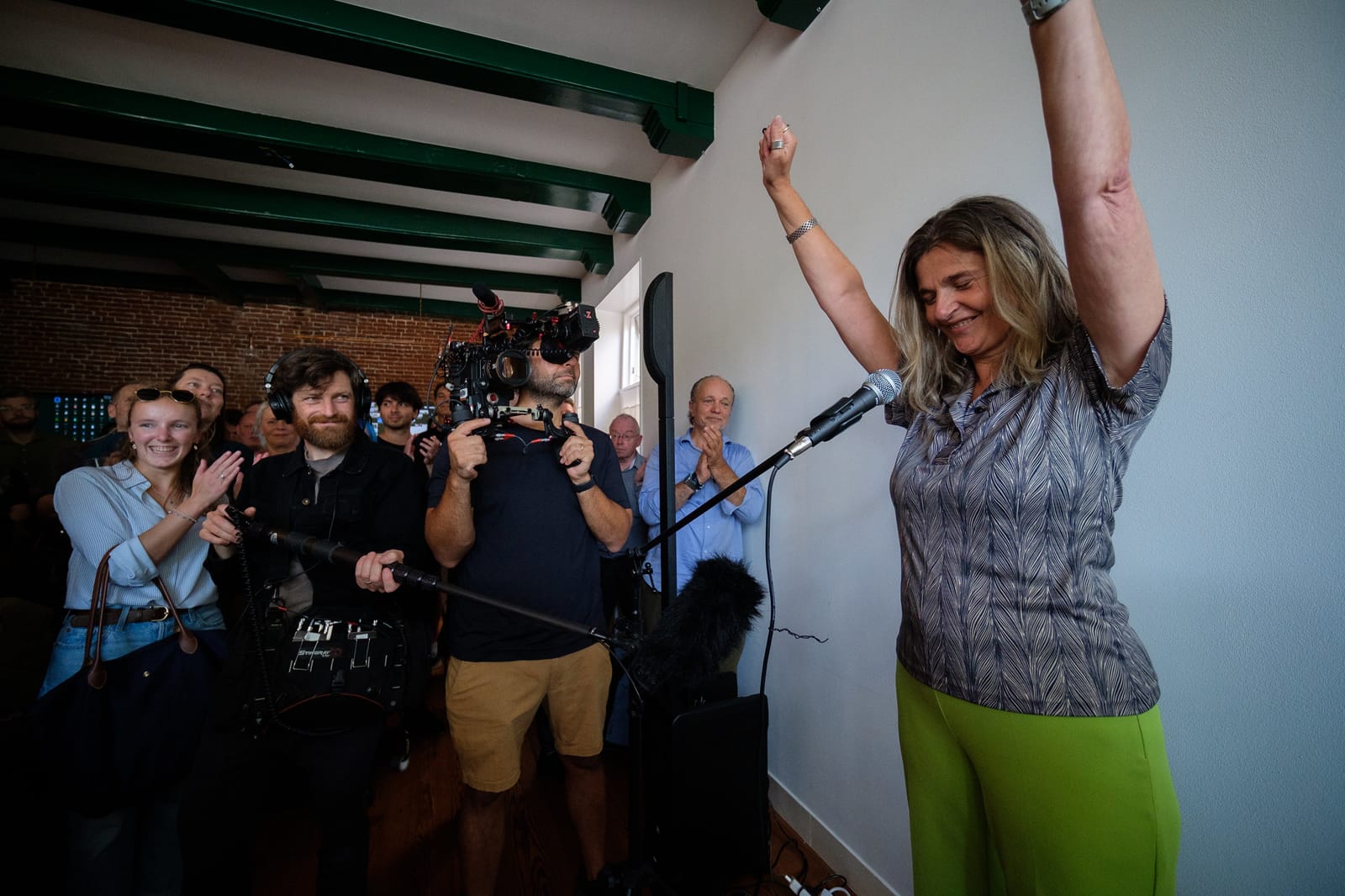
Wilma van Wezenbeek, the Director General of the National Library of the Netherlands, spoke briefly, as did Internet Archive founder and digital librarian Brewster Kahle, who called for the development of “a healthy information ecosystem,” one in which “everyone prospers based on our shared cultural heritage.”
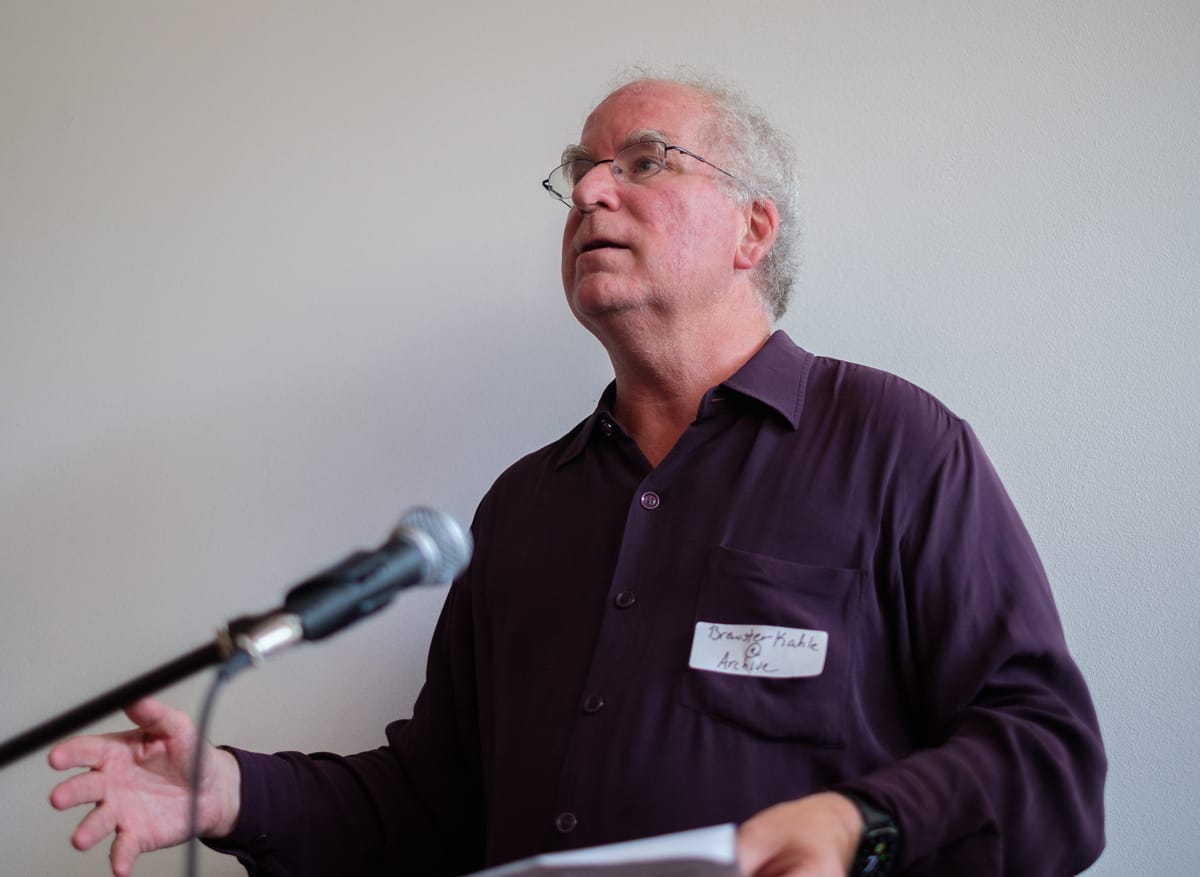
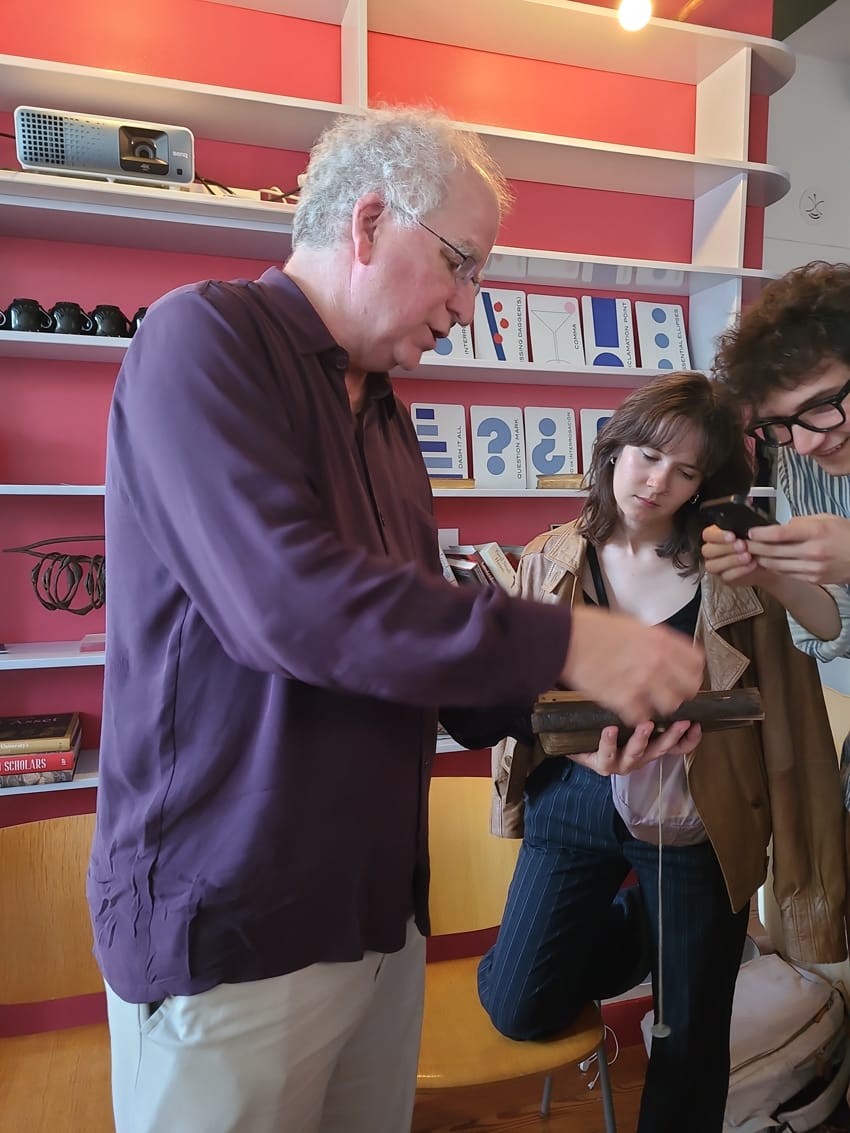
It was great to be there and to connect with librarians and archivists, technologists, philanthropists, and publishers who share our cooperative’s values and goals, and with Brewster Kahle and Mary Austin, who have been so supportive of our work developing permanently-ownable digital books and media. The Kahle/Austin Foundation and the Internet Archive have provided grants, advice, and invaluable help in the development of our BRIET platform.
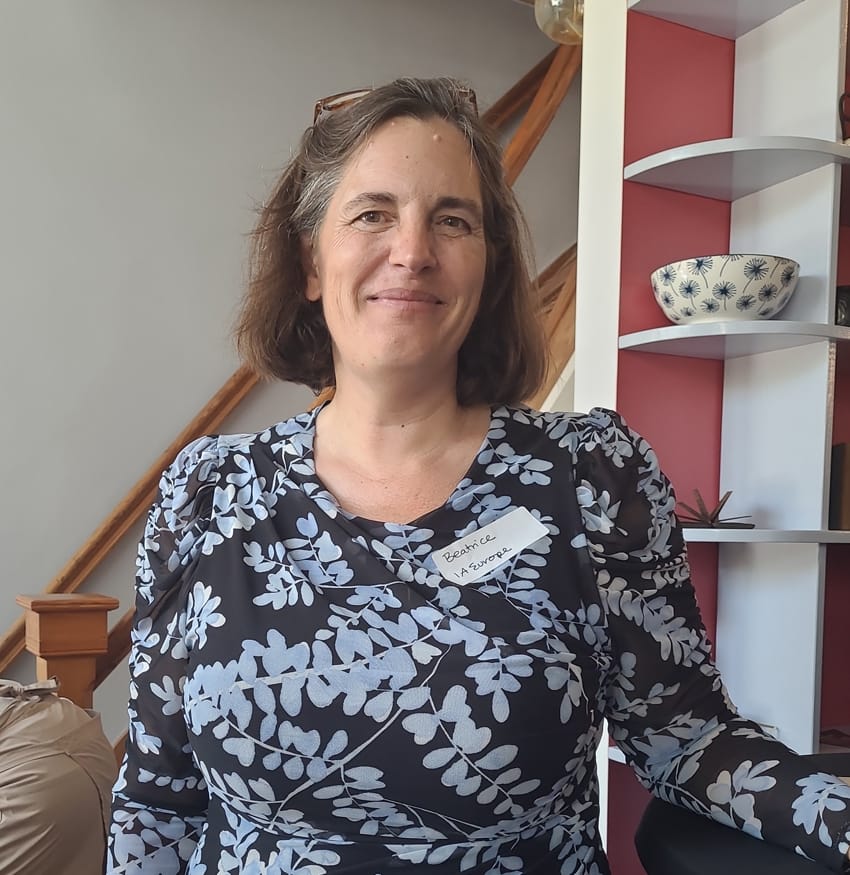
Internet Archive Europe program director Beatrice Murch wrote of the event: “The new headquarters of Internet Archive Europe at Oudeschans came alive with voices, laughter, ideas, and shared commitment. What had been a milestone in planning and construction became, for a few hours, something far more alive—an affirmation of what it means to protect, to remember, to build for the future.”
I got to sit down with Brewster for a few minutes for a chat, which has been lightly edited for brevity and clarity.
“When we started the Internet Archive 29 years ago,” he began.
Maria Bustillos: Holy smokes, really? [I knew this! But it is startling all the same]
Brewster Kahle: Yeah. We knew from the beginning that we wanted there to be multiple Internet Archives in multiple places around the world. And the first foray into that was in 2002 at the Library of Alexandria in Egypt, and finding the right concept of tools, technologies, materials that made sense within that environment. And when they launched their new Bibliotheca Alexandrina there—it’s a beautiful library—they architected the first floor to
show off the servers, their Wayback Machine, and their Prelinger movie
archive. And then we donated book scanners and they’ve been digitizing Arabic books ever since. Internet Archive Canada, formed in 2006, has been growing and growing, and has its own headquarters, and has its own data center.
In 2004 we started the Internet Archive Europe. And the interest here was to have European materials stand on European soil. They could be backed up in other places, but they’ve seen hardship in Europe, they’ve seen what happens to libraries, they understand that things change. Walls go up and down, things get bombed, relationships sour. You don’t have to tell Europeans about this.
By establishing a physical presence, a headquarters, this opportunity is a show of commitment for the Internet Archive Europe. The Internet Archive is not moving to Europe. This is another leg of the stool.
I would like to communicate something about the energy here today. I met people from so many—
Oh, people flew in from Ireland. They flew in from the United States. They flew in from Belgrade, they took the train in from London, from France, to all celebrate and to be with other people who see a positive vision for preservation and access to our cultural heritage, and bringing it to life in new ways.
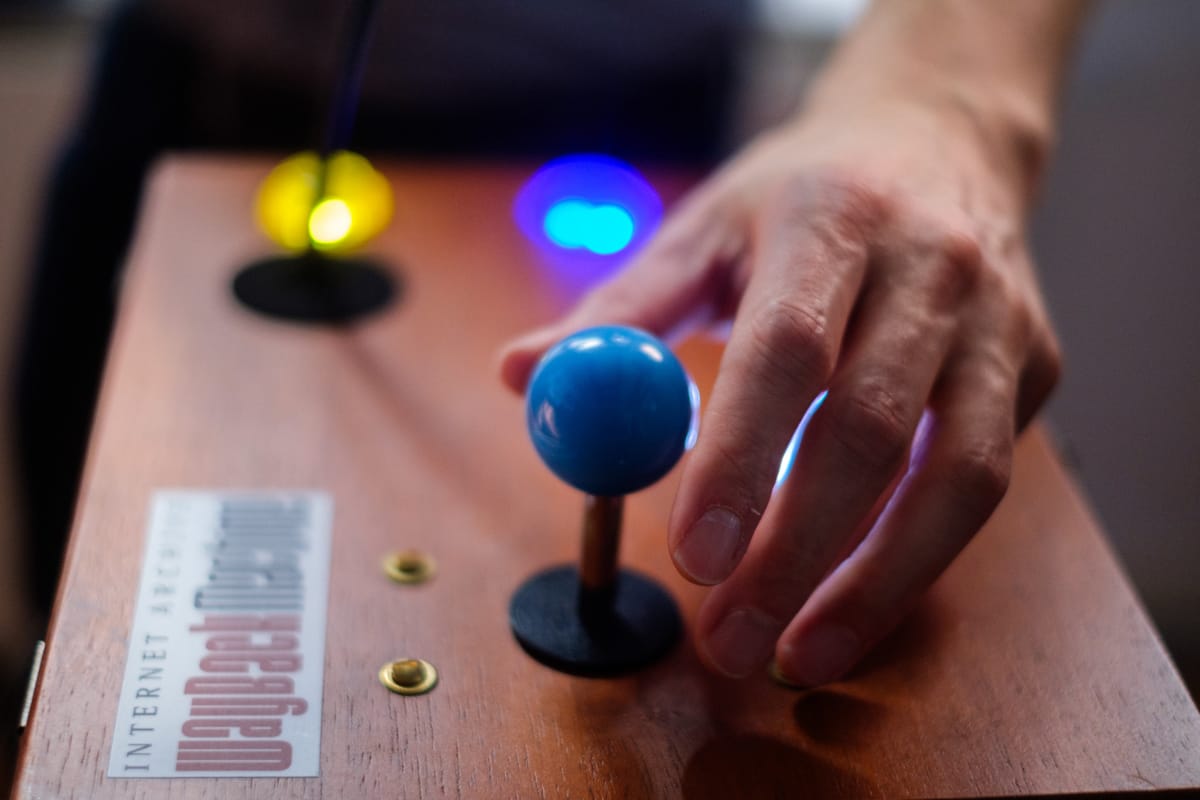
The thing that was spectacular, from my perspective, was showing these new displays designed for our cultural heritage organizations, using screen technology to bring their collections to life. You can surf around with a joystick and see the breadth of the hundreds of thousands, millions of pages, of just home pages of these websites over time.
![Preserving Digital Sovereignty: Marleen Stikker & Brewster Kahle at the KB [National Library of the Netherlands], September 17, 2025. Brewster Kahle demonstrates a new interface for surfing millions of pages at the library with a joystick.](https://storage.ghost.io/c/11/a3/11a34ed2-0d03-4467-9051-6142cc358694/content/images/2025/09/54795315401_59be4c603b_k.jpg)
So we announced this with the National Library of the Netherlands two days ago, we had a big event to show an interface to the Dutch websites over the whole time the Internet Archive has been collecting them; you can go and see the breadth and then you can go in deep, and they loved it. They’re going to be demonstrating and using that in their national library. We got requests to go and make that same interface for many other organizations, just even today.
Then there is another display using these large-scale processes to move around within book collections—to make it so that if you’re going through a library, you’re not just looking at spines of books. You can fly around based on what the books are about and pull them from the virtual shelves, open them up and translate those pages on the fly to whatever language you want, including audio. So is there a way that you can fly through the books and then say, “I want to go and borrow that book and bring it home with me”?
That capability is what we demonstrated today. And there was gigantic excitement because we have all these materials, and the Europeans are interested in bringing it all to their public in a way that is quite inspiring.
It’s exhilarating to see these new pathways for knowledge production, and for dissemination and sharing, despite all the headwinds we are facing. One last question because I know you gotta go, but tell me: How can anyone interested in freedom of information—how can the average reader help address the challenges of rising authoritarianism?
Let’s activate our libraries to help fight disinformation, to go and help encourage curiosity, to bring some level of local control to how we’re educating our children, to go and encourage many, many organizations to go and build new and different AI models.
Let’s go! Move forward with a game of many winners, and put it within our own value system.
All of this is still run by people. Let’s go and find the people we want to work with… There were so many people here that want to work together on these projects. The Rijksmuseum was here, the KB [National Library of the Netherlands] was here. There’s funders that were here, there’s technologists that were here. There was excitement all over towards a positive vision of what we can do with our technologies to help solve our biggest problems. How’s that?
Hell yeah. Love it.
Let’s do this thing.
If you enjoyed this free post, why not subscribe to Flaming Hydra?
Just $3/month