
Garden of Earthly Delights
by Anna Merlan
“You see?” my mom said, pointing out the window of our hotel room in Anaheim, California, where laborers in the field next door were picking strawberries. I was maybe eight years old or so, and she was never one to miss an opportunity. “That’s what it takes to make Disneyland. That’s who’s working while you get to play. Don’t forget that.” I think she found the idea of inducting us into the Mouse hivemind distasteful, but she had a conference nearby, and had decided it would be cruel not to bring her children along.
The H&M Fujishige Farm wasn’t a Disney farm, though. It was founded by two brothers whose family was cruelly and repeatedly uprooted by racist, anti-Japanese laws, until the farm they bought for $3,500 offered stability. The family held out for 20 years against Disney pressure to sell, until 1998, by which time the land was valued at around $90 million. Masao Fujishige had died by suicide in 1986; his older brother Hiroshi suffered a brain injury after a fall in February of 1998, and would die not long after the sale. Hiroshi Fujishige was a loved and respected figure in Anaheim, praised by city officials and employees alike.
“I began working for him when I was 16 years old, and he always treated me like a son,” said Pancho Contreras, who worked for Fujishige for 19 years, interviewed by the Los Angeles Times. “If you ever saw my boss, you would never know that he was a wealthy man. He was one of the most humble and simple men I’ve ever known.”
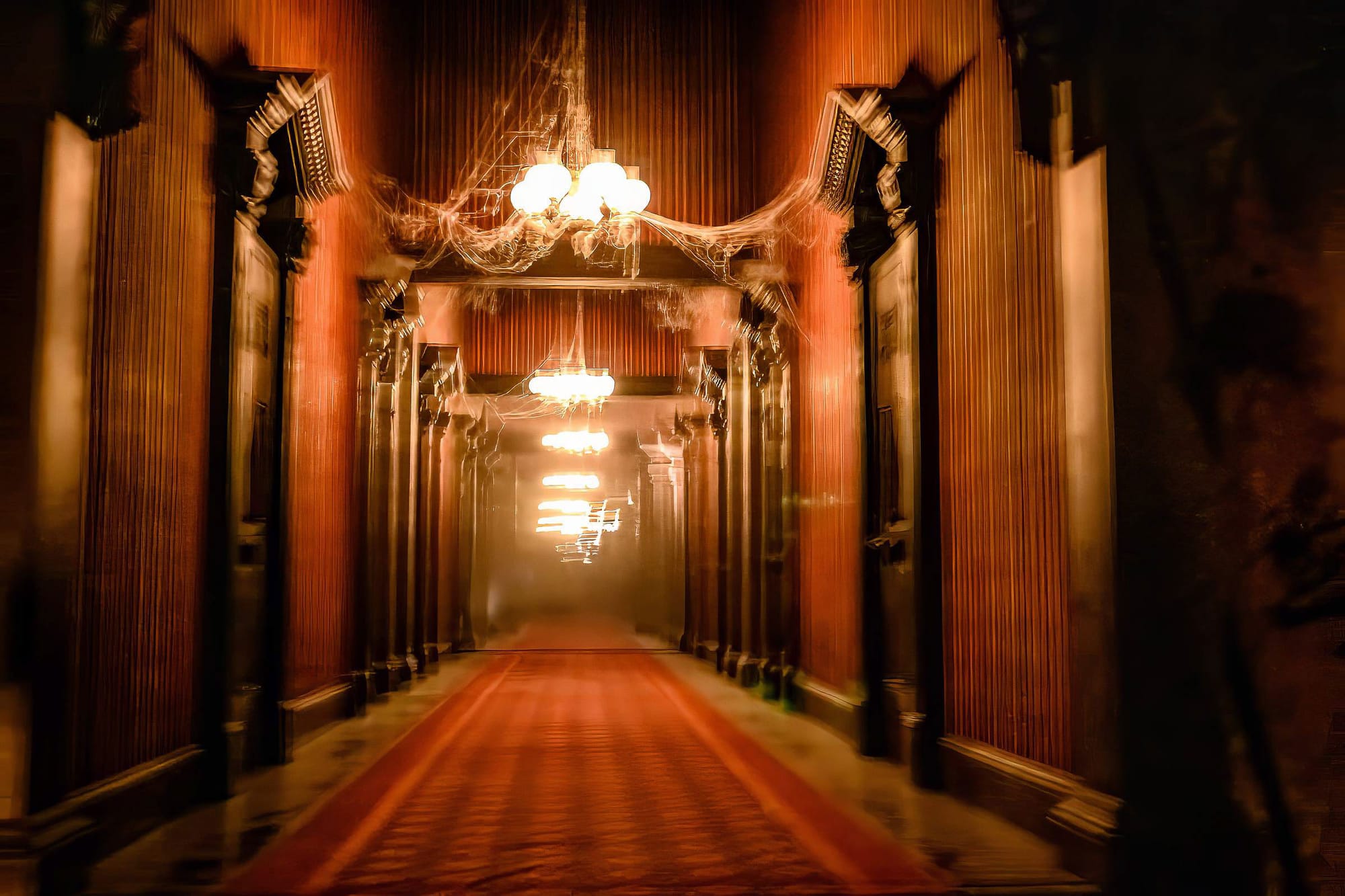
I remember exactly three things about that day: sitting in the buggy at the Haunted Mansion, splashing down through the Pirates of the Caribbean ride, and, most of all, the farm workers whom I’d been advised to keep in mind.
I never returned to Disneyland after that, until my husband and I and two friends, a journalist and an artist, planned a visit a couple of weeks before the inauguration: four childless adults wandering through the park on a random weekday. A deliberately stupid farewell to this stage in American history? Just a day off? We didn’t fully articulate any of this to each other or perhaps even ourselves, we just bought the tickets and downloaded the proprietary Disneyland app. But when the time approached, Los Angeles was on fire, and the tickets were nonrefundable. After all the delays and scheduling conflicts, we found ourselves standing at the gates in a long security line, five weeks into the second Trump presidency. Things were feeling, on balance, a lot less funny.
Every visit to Disneyland begins with a trip through the Disney security apparatus, where the digital signs about opening your bag are rendered in Mickey Mouse font (“Waltograph”). Next there’s a shuttle ride into the park itself, followed by, for me, the most intense overstimulation I’ve experienced in some time.
Disneyland doesn’t make sense. Besides its immense size, it contains too much information per square foot, a riot of colors and signs and jagged pieces of disconnected story architecture and references to characters I’d forgotten long ago. It’s like being plugged directly into the collective unconscious, like climbing into the thrumming electrical grid that underpins the American imagination.
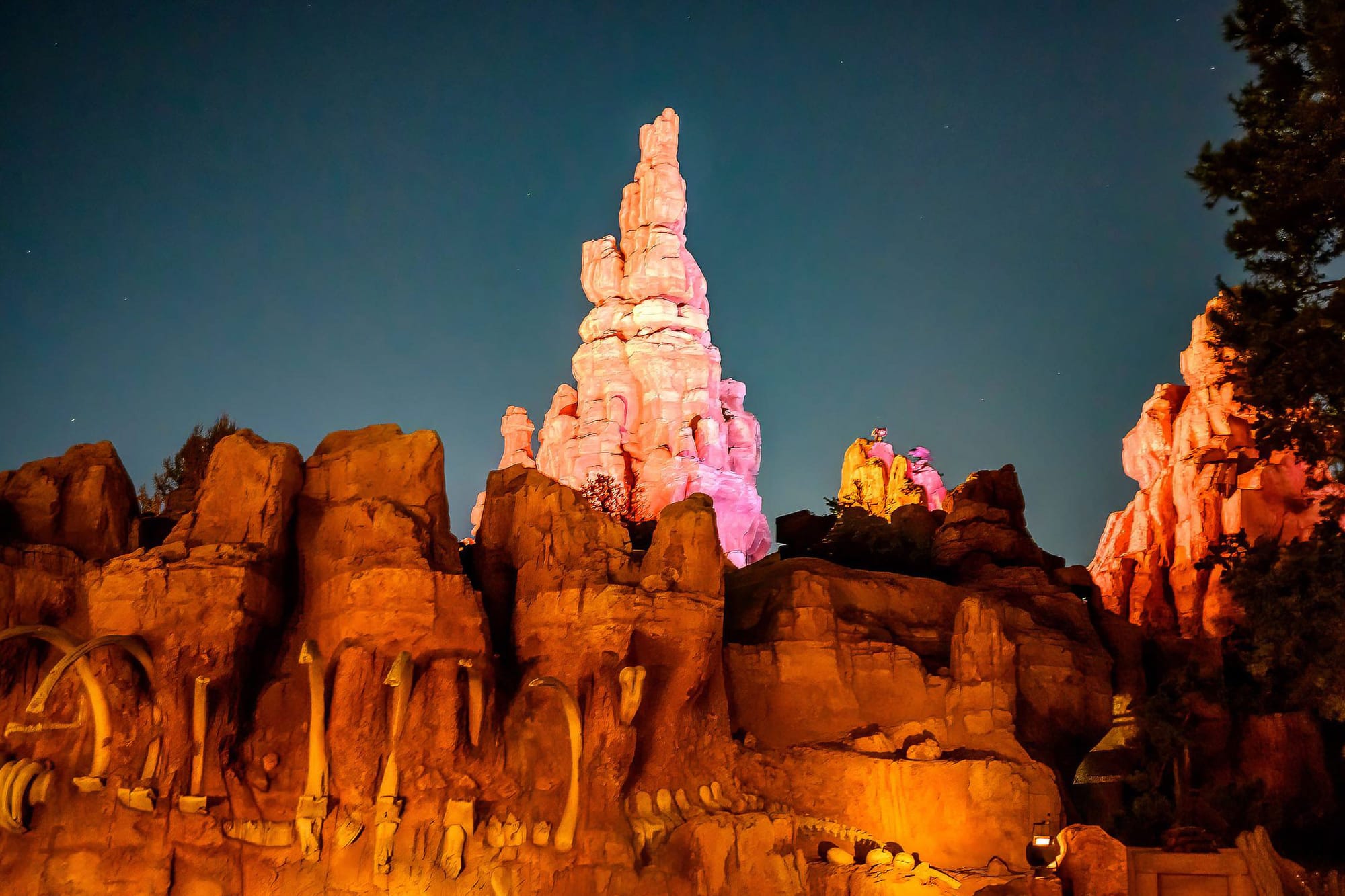
Our first view after walking down Disneyland’s Main Street is a castle, looming in the distance, a crowd milling towards it like serfs waiting to genuflect on a feast day in front of their king. The park uses complicated forced perspective illusions throughout, especially to make the castle look larger than it is as you’re walking towards it; I was as impressed as I think I was meant to be. As we entered, a red-haired princess character walked by and nodded at my journalist friend—who was wearing cosplay ears that referred to the princess’ specific movie—like a secret handshake.
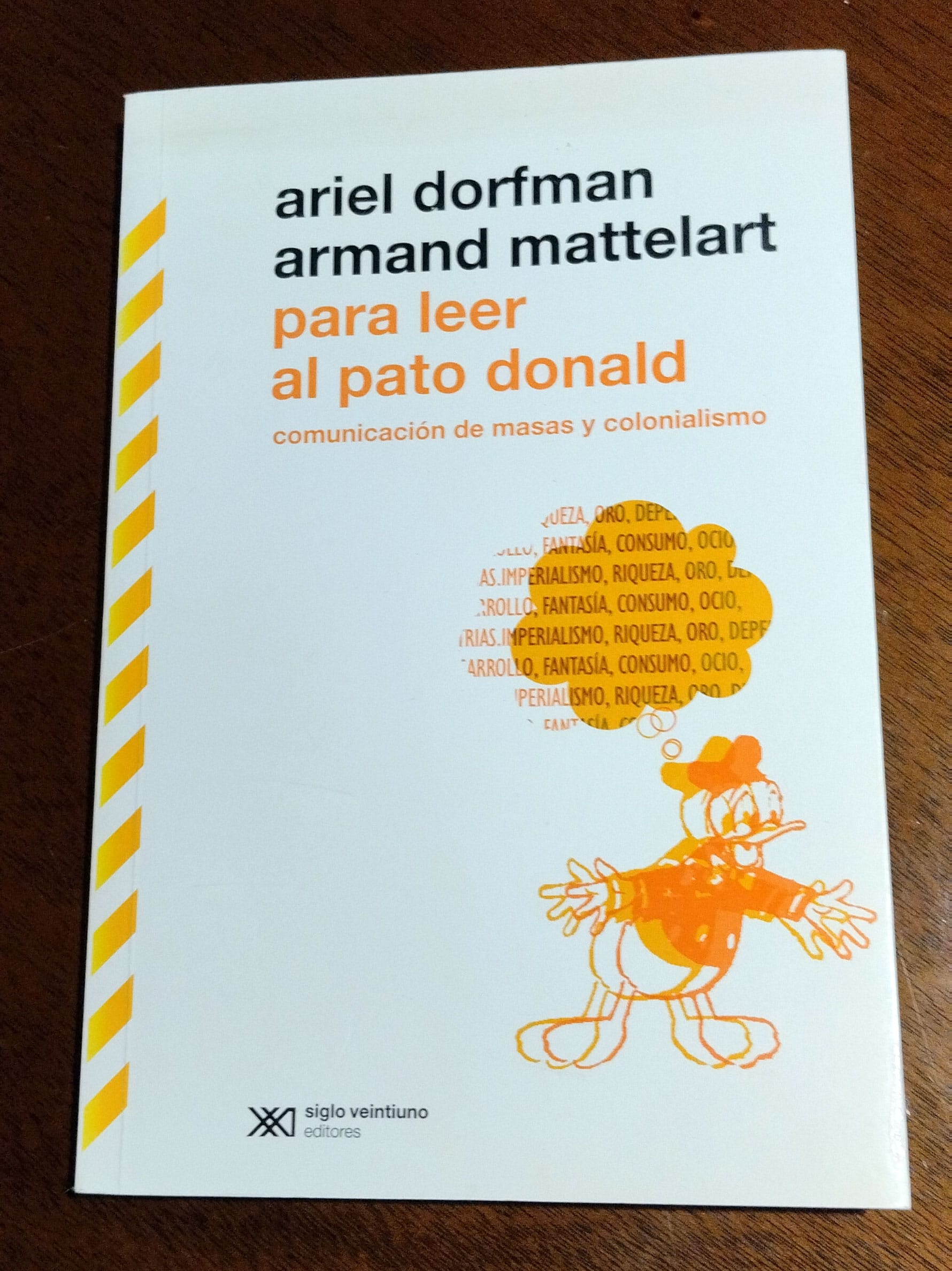
Our other companion, artist and illustrator Dorian Lynde, has a long interest in Disney’s animators and in the stories the company tells about itself. Years ago, she drew a series, “No Damsel,” rendering Disney princesses into contemporary forms. When we approached a statue of Walt Disney in a portentous pose, she told us about How To Read Donald Duck (first published in Chile in 1971 as Para Leer El Pato Donald) by Ariel Dorfman and Armand Mattelart. The book outlined for the first time the ideologies underpinning Disney’s characters and the ways they were used as propaganda abroad.
“Armand and I had denounced Walt Disney as an agent of American cultural imperialism,” Dorfman wrote in a 2018 essay, “incarnated in the life, adventures and misdeeds of Donald Duck, that innocuous icon, then one of the most popular characters in the world. Probing hundreds of Disney comic strips—sold by the million on newsstands in Chile and countless other lands—we had tried to reveal the ideological messages that underlay those supposedly innocent, supposedly apolitical stories.”
People did not like the book, particularly in Chile, where it was burned on huge pyres by soldiers after the government of Salvador Allende was overthrown and replaced with a fascist regime. The entire third printing was subsequently dumped into the ocean by the Chilean navy. When the book was first translated into English and entered the United States, Disney had all 4,000 copies impounded.
While Disney’s cryogenically frozen head isn’t actually sitting on ice somewhere, Dori said, leading us gently away from the statue, his office in Burbank is preserved, as she put it, “like the body of Mao.”
The point my mother had made all those years ago stood, and I found myself feeling guilty for the ability, the truly disgusting privilege, to spend a Wednesday walking around in the mouse ears I’d bought for $6 online, eating a DoleWhip, and riding in the Haunted Mansion buggy again. (It was as good as I remembered. We rode it twice.)
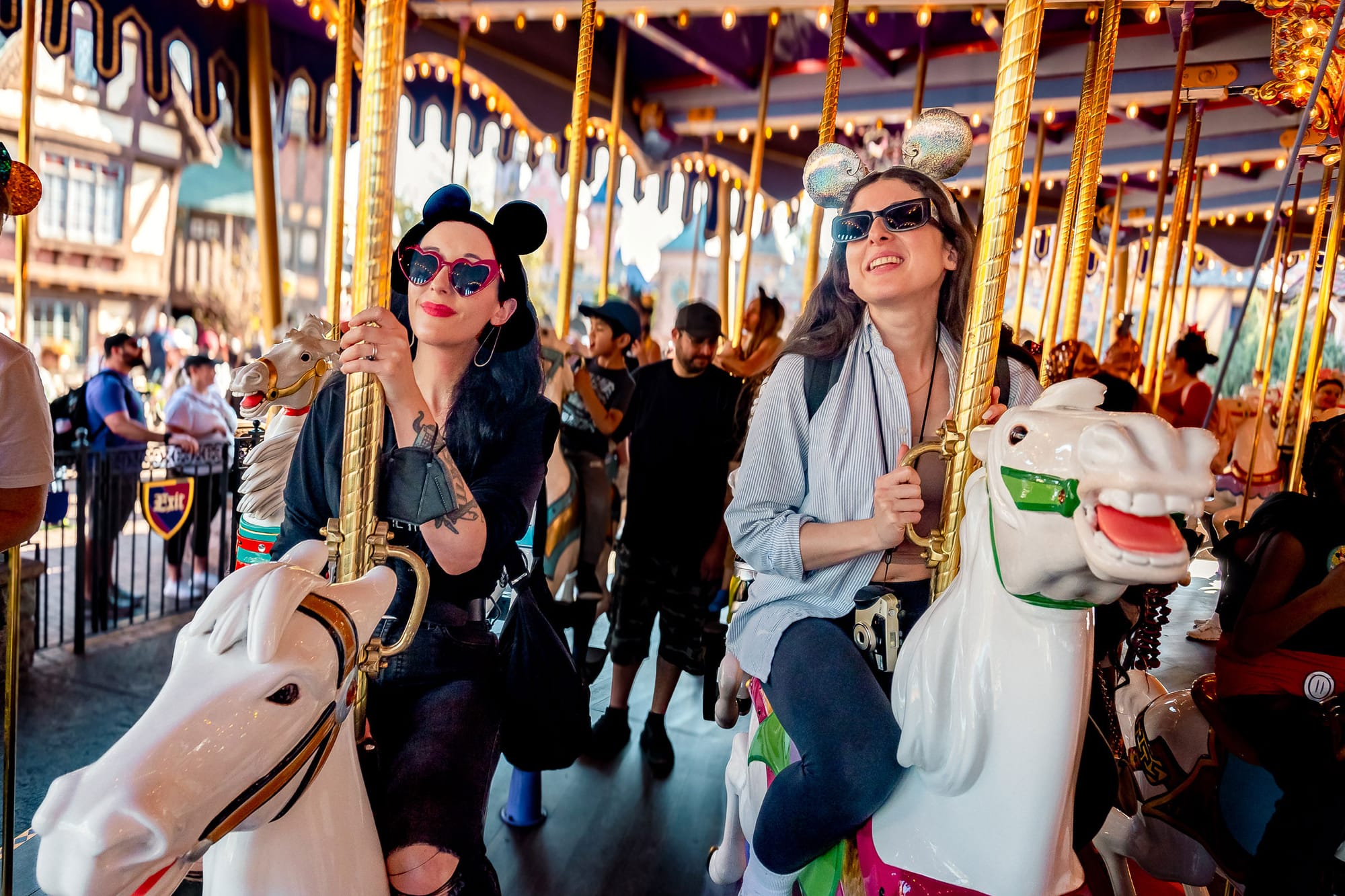
But I could not, it turned out, entirely stop thinking about the previous five weeks of obscenities and outrages, or about the possibility of getting Covid from the thousands of people jammed in next to me, or about the infamous measles outbreak that started at Disneyland in 2014. I couldn’t help thinking that Disney would probably be preserved even if the government collapsed and American democracy ceased to exist, a little diorama of what normal used to look like. In pictures my husband snapped of us on the carousel, I can tell that I’ve more or less left my body.
Insofar as you can put aside the propaganda, imperialism, and coded cultural messaging—because it’s supposed to be a fun day off and it’s important not to ruin the vibe for everyone else—Disneyland is extraordinary. It’s like drinking from an expertly titrated hose of sugary lemonade. Because we were all wearing mouse ears, we were welcomed warmly into the fold; other Disney adults in mouse ears nodded and smiled at us over the heads of their wildly excited children. I was one of many youngish and middle-aged women in all black with tattoos, because goth Disney adults are a long-organized and recognizable force.
“You don’t have to be an expert” to be a Disney adult, my journalist friend observed. “It’s different from any other subculture.” All it takes is a pair of mouse ears and maybe one of the many semiotically rich shirts we saw, like the one that read, I’m done adulting, let’s go to Disney. Others identified the wearer with a princess or a character in a romance novel.
Ultimately every visitor is The Guest, the ultimate consumer, meant to be swaddled, carefully led, shielded from every unpleasantness or inconvenience, transported in every sense of the word, awed or amazed or thrilled on cue. Disneyland works like swallowing a pill: you are acted upon whether you like it or not, and everyone around you is acted upon the same way. I didn’t need to totally understand every reference to be forcibly charmed, swept away in a little boat or a buggy or a tiny car careening through ToonTown.
Other people’s experiences there are complicated in different ways, because they go with—or are—the target audience: children.
“I grew up going as a kid, and then taking my kids when they were very young, there is a thing I feel there that is unique,” the screenwriter John Gary told me. “Comforting. Also when I’m there I feel free to consume joy in a way I don’t usually grant myself. I never get the churro, Anna. When I’m at Disneyland, I get the churro.”
Like Gary, I literally and metaphorically got the churro all day, eating and drinking absurd things, wearing both the aforementioned ears and an enormous pair of red heart-shaped sunglasses, pointing mutely at towers and Chewbaccas and animatronic elephants. Something about Disneyland feels inevitable, monolithic, all of us clinging like ants to its massive cliff face. In the moments when I wasn’t thinking about measles or the end of history, I was enormously appreciative of a day to simply not be anyone or anything in particular.
To be clear: I had a great day. It’s basically impossible not to. Disney takes you into a machinery of joy, whirls you through, presses you flat, and juices you of absolutely every ounce of fun you could possibly have. We went on something like 15 rides, and except for one accidental rollercoaster—I have several specific phobias and cried the whole time—the entire day was as seamlessly pleasurable as it was meant to be. Beside the Haunted Mansion, I particularly loved the Jungle Cruise ride, where a tour guide’s well-worn Catskill-lite patter was paired with a cute little boat ride and a look at some of the best animatronic animals I’ve ever seen. The temperature in the park was somehow neither hot nor cold. I did not get sunburned. At the Star Wars-themed Docking Bay 7 cafe, I drank an iced coffee with a sweet cream cheese layer floating on top, Cocoa Puffs embedded in the cheese, the exact kind of thing I would drink every single day if I gave myself fully over to my deepest impulses, pulled directly from the lizard part of my brain.
I told my friend Jeff Stark, a professor who’s taught classes on narrative design at NYU and Parsons, that I had both loved Disneyland and felt like I'd been cranked through a highly impersonal and disturbingly effective Fun Machine, which had squashed me like a grape until nothing was left of my own subjective experience.
“True,” he said evenly. “Like a lot of great art, it makes space for you and your experience inside a tremendous amount of control.” In many ways, he said, Disney is “the urtext” when it comes to experience design. The great rides, like Pirates, the Haunted Mansion and Space Mountain, “are masterpieces.”
By the time we left the park, I was tired to a soul level, could barely focus my eyes, and could not form a sentence for the rest of the night. I slept like the dead, and spent the following day bleary, hoarse and exhausted, as if I’d been lashed to a ship’s mast in a windstorm. I still don’t exactly know what happened to me. I think I could either return to Disneyland every month for the rest of my life, or never see it again.

Enjoy quality media. Support the journalist-owned press. Subscribe to Flaming Hydra.