
Gene Hackman Has a Pie
by John Saward
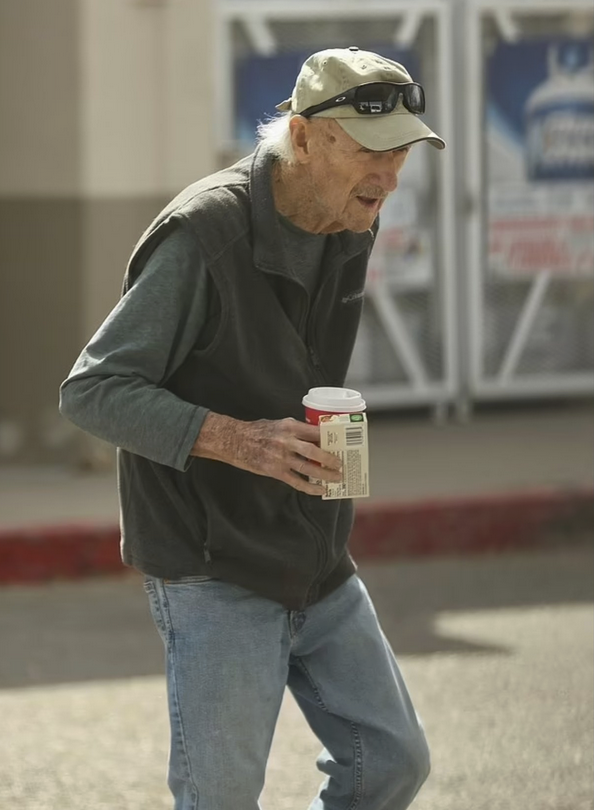
A recent photo of Gene Hackman was going around last month. He’s exiting a Speedway in New Mexico, in an outfit you might describe as, “your dad coming to jump your car in the middle of the night”—unevenly faded Kirkland-grade sweatpants, shoes with a hefty rubber sole, flannel shirt and a fleece vest, knuckly hands, and some wisps of white hair hanging out from under a baseball hat. The precise mix of function and leisure. He’s carrying a cup of gas station coffee and an individually packaged piece of gas station apple pie.
“Gene Hackman, 94, spotted in new photos wearing nearly identical outfit from weeks earlier,” said the New York Post headline.
There was nothing to the story, aside from the reminder that Hackman was miraculously still alive at all, and that he dared to continue living looking the way he did. It was written like those stories about an ancient tortoise, the last of its kind, seen trudging through sand on a distant island. There are a few cosmetic feints at celebration in the piece, but the whole thing reeks of pity and mockery. Lament, reader, at how the once-vigorous men of our times fill their final days, wandering in whatever remote town they’ve retired to, not even bothering to do laundry.
But I remembered a year ago having seen another photo of Hackman, walking out of a similar gas station and carrying the same pie-coffee combo, in clothes similar but not identical to these. All of it, it turned out, was just a sacred little ritual off a Santa Fe highway. A coffee and a piece of Theoretically A Pastry, eating it while your car idles, waiting to drive back to the rest of your life. I thought, that seems like a real good time, that seems beautiful in fact.

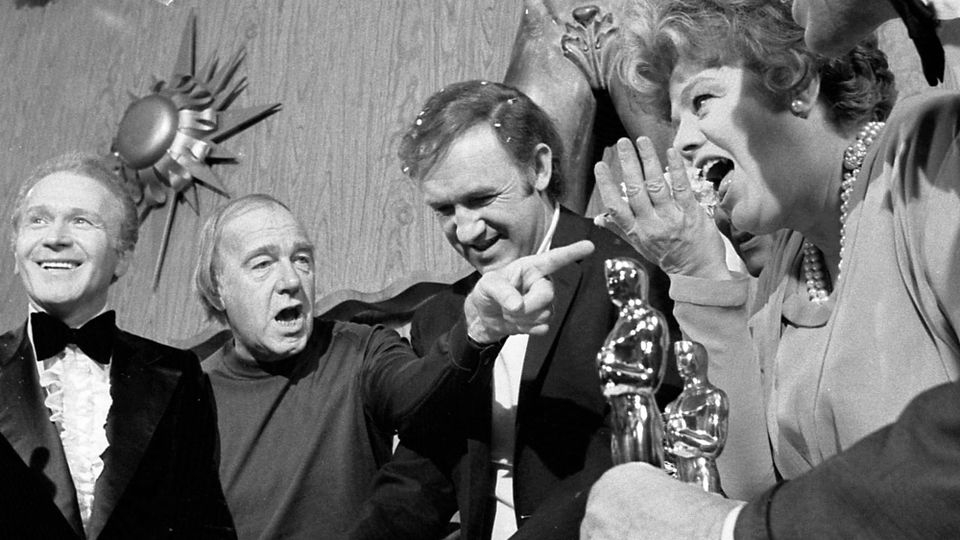
When Hackman was 13 years old, he told the papers, he was playing in the street at a friend’s house. “It was a Saturday, and my dad and I would do things on a Saturday, if he could. That day, he drove by and waved at me, and I knew from that wave that he wasn’t coming back. It was very peculiar because there had been no troubles in the house, but somehow or another, I sensed from that wave it was over, and I ran home to ask my mom what was the matter.” Hackman said that in 1989, on the set of The Package, his 50th film.
For the rest of his life he’s talked about that wave like it was a separate person altogether, a gesture with its own consciousness and motives, a fugitive out there on the lam.
“It was a real adios. It was so precise,” he said about it in 2013. “Maybe that’s why I became an actor. I doubt I would have become so sensitive to human behavior if that hadn’t happened to me as a child—if I hadn’t realized how much one small gesture can mean.”
Three years later he joined the Marines. China, Japan, Hawaii. He got busted for fighting and demoted and he came back home. He moved to New York and lived in a series of cold-water apartments with Dustin Hoffman and Robert Duvall, sleeping on the linoleum floor of the kitchen. They’d have parties sometimes and his wife would make fat pots of spaghetti for everyone who came.
He worked as a doorman; he sold women’s shoes at Saks and would steal pairs to sell on the side to actresses trying to make it. He worked for a moving company hauling refrigerators into Greenwich Village walkups. And he was acting too, auditioning for everything all the time, musicals even, reading in empty theaters where the voice of an unseen director shouted out instructions from the dark seats for parts he knew he’d never get. Turning every minor slight into a tragic kind of conflict, and in your 20s this can carry you a tremendous distance.
“It was more psychological warfare, because I wasn’t going to let those fuckers get me down. I insisted with myself that I would continue to do whatever it took to get a job.” He said that in 2004.
Sometimes he would go weeks without seeing his friends, just disappear into the night searching for something. He worked the front desk at a Howard Johnson’s and as a waiter at a French restaurant; he obsessed over all the tics and moods and little reflexes of the bizarro characters he’d see every day. He’d go into the 42nd Street movie theaters just to listen to the junkies babbling in the aisles, looking to stash away anything he heard, small gestures that he could maybe one day use in a part.
And somewhere between the stolen shoes and the apple pie he became the great symbol of eternal middle age. Weary characters mangled by the miserable weight of their careers—detectives, high school basketball coaches, submarine captains, steelworkers. Men too old to have any grand ambitions left but still too ornery to go quietly. Men who found a certain dignity in routines, in the anti-glamour of surviving one more day that was determined to kick the shit out of you. Men who sometimes seemed to have as much romance going with the grimy solitude of an overnight stakeout as they did with women.
Occasionally, after dinners with Hoffman, he’d linger outside the restaurant and sort of announce to the night, “I gotta go,” not as in go home but something more like get loose. “He had to get in a fight,” Hoffman said. “He’d go to some bar.” Hackman said: “There’s a kind of catharsis about it. I don’t want to get hit, but I don’t like to take any shit.”
He held grudges for decades, even after he became famous; they didn’t resolve but they sort of lost their carbonation with time. He won an Oscar, he got rich, and him and Hoffman and Duvall drifted apart. He bought boats, an airplane, “did the poor-boy thing,” he called it. He was on location filming for months at a time, these long interruptions in his relationships with his own kids, now. Divorce. Then he didn’t make any movies for a few years. “I was tired. I couldn’t get myself motivated to work.” He played tennis, he got into oil painting, all sorts of indulgence, but it didn’t really last, because there is always more work to do.
So he makes dozens more movies, impeccable thrillers, Westerns, a Tony Scott movie, one with Ray Romano for one last bundle of cash, and then one final time and with little ceremony, he disappears again.
When he was asked in 2011 where he kept his Oscars he said he didn’t know where they were, couldn’t tell you; the only movie memorabilia in the house was a poster next to the pool table in his basement, of the Errol Flynn movie Dawn Patrol.
You tumble around for years trying to understand yourself, starting fights, seething on four hours’ sleep; you get into debt and out of it and hit some wild jackpots. You get the big house and all the stuff to fill it with, and in the end you try to get rid of it all. There’s a sturdy logic to this. How many different outfits do you need to go get a cup of coffee?
If you enjoyed this, why not subscribe to Flaming Hydra? Just $3/month.