Grand Delusion
by Sarah Weinman
When I walked into the press preview for “Mind of a Serial Killer,” an immersive two-story exhibition running in Manhattan through June, I had a good idea of what to expect and what my reaction would be. Gift shop with “I put the HOT in Psychotic” T-shirts and serial killer puzzles and board games? Check. Banner rafters emblazoned with tabloid newspaper headlines about serial killers through history? Check.

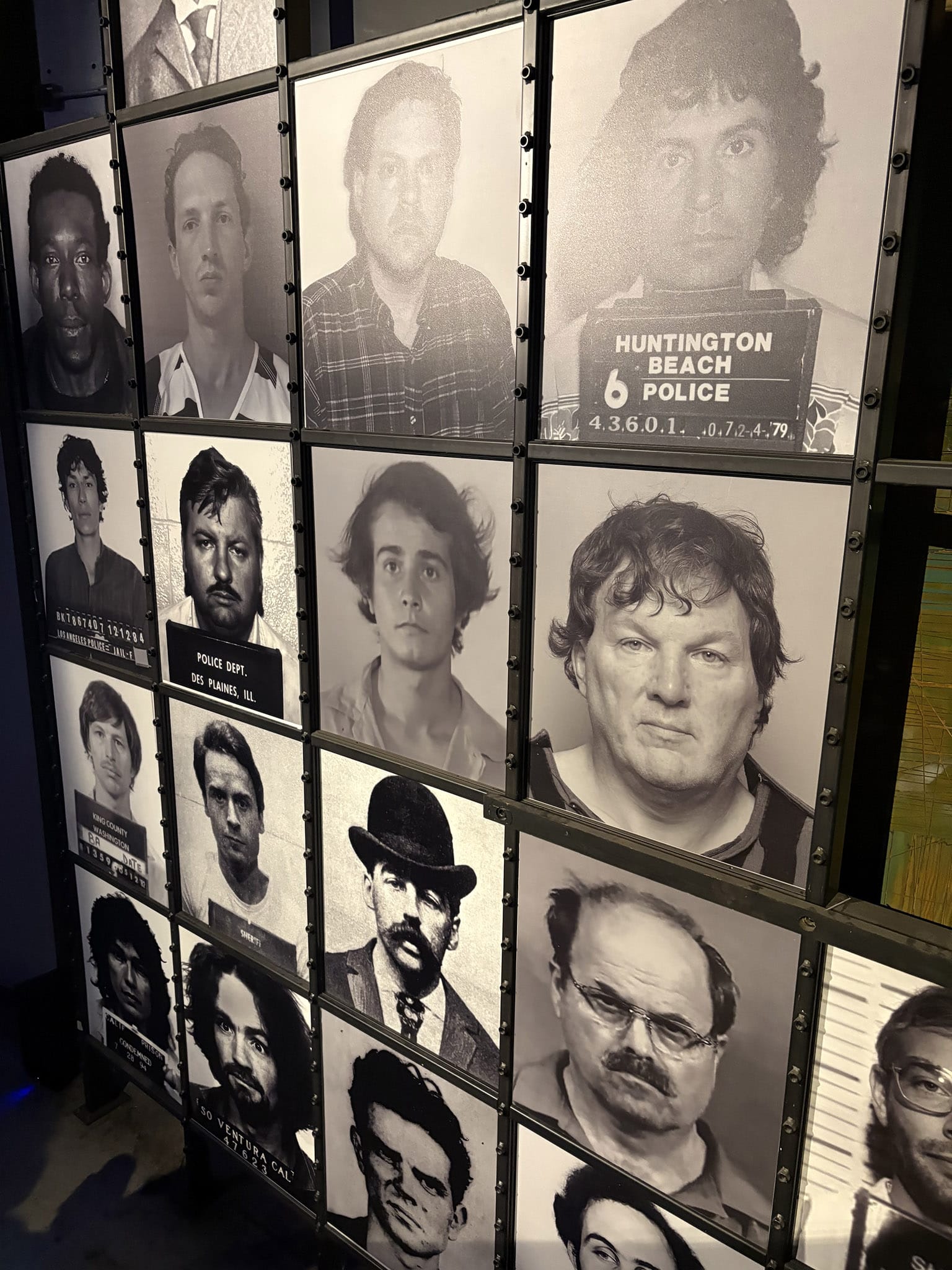
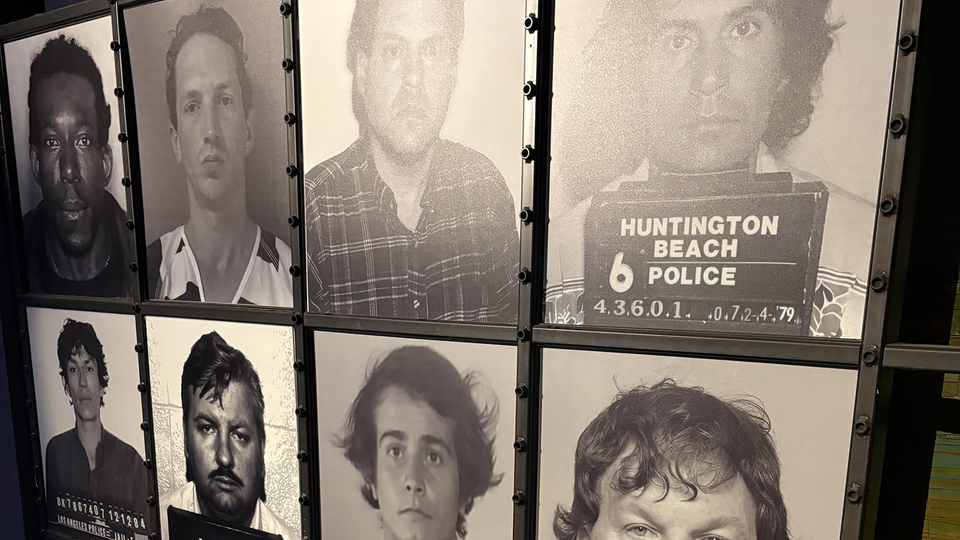
The pitch email promised an experience “that moved beyond the narratives and into the science of investigation” and “a lens to explore how human behavior, investigative science, and public safety intersect.” In her welcome comments LaKendra Tookes, the press night’s host, promised the VIP crowd that the exhibition’s organizers “weren’t glorifying serial killers,” but the giant photo array of killers’ mugshots behind her as she spoke said otherwise.
“So, it’s like CrimeCon meets Luna Luna?” This was the assessment of Elon Green, who was supposed to be my plus-one/emotional support crime writer but had to bail. And while that seems like an accurate assessment, it hardly seems fair to Luna Luna, a magnificent work of immersive art I was fortunate to see in the immediate aftermath of the 2024 presidential election. (I have yet to attend CrimeCon, so I have no official clue of the relative fairness here.) All I know is that I stuffed myself with canapés and side-eyed the selfie-taking influencers at the bar, which was serving cocktails with names like “Murder Kit” and “Perfect Alibi,” before venturing into the void.
In the “Ted Bundy Room” I found a recreation of the killer’s 1968 Volkswagen Bug adjacent to a replica plot of soil with the names of women he killed (he confessed to 30, but the true total is unknown and his victims are still being identified to this day), all of them fading into black as always happens in any retelling of this oft-retold tale, a phenomenon I call (“The Ted Bundy Problem.”) Every shred of sensitivity and care disappeared in the next space, which was devoted to Jeffrey Dahmer. There was a model kitchen. I refused to take photographs of that.

The horror displays went on and on, and I started to wonder if there was a point beyond disgust. Why did we need to see a recreation of poor eleven-year-old Josie Otero’s body hanging from the rafters, violated anew for the masses, as Dennis Rader had done a half century earlier? What possible purpose can there be for a display of replica railroad tracks with the bodies of dead children face down, covered in jackets and snow, accompanying a larger room describing the crimes of Andrei Chikatilo? I already have post-traumatic stress disorder, stemming in part from my work as a crime writer; I don't need an ersatz “you are there” experience involving multiple dead kids to trigger me, and I wonder whether anyone else does, either.
But the fakeness of the exhibition’s lip service performing sympathy for the victims of murder, from a single screen with a scrolling list of their names to a virtual-reality experience promising to offer visitors “something real investigations rarely provide: closure” (god I hate that word) was impossible to ignore, despite the many, many protestations otherwise. Real life and real people are messy, banal, living outside the boundaries of narrative. This “immersive” experience, brought to you by one of the many companies that produce “immersive” spectacles of Van Gogh paintings and The Wizard of Oz, paradoxically creates far more abstraction and distance between yourself and what you’re walking through or seeing on a wall or screen. In all the talk of understanding psychology and putting oneself in the mind of these aberrant men (plus a few women, including Aileen Wuornos and Rosemary West) there wasn’t a trace of the horror that lingers for the rest of their lives for survivors or the family members, real people who remain forever marked by emotional destruction after what these killers did.
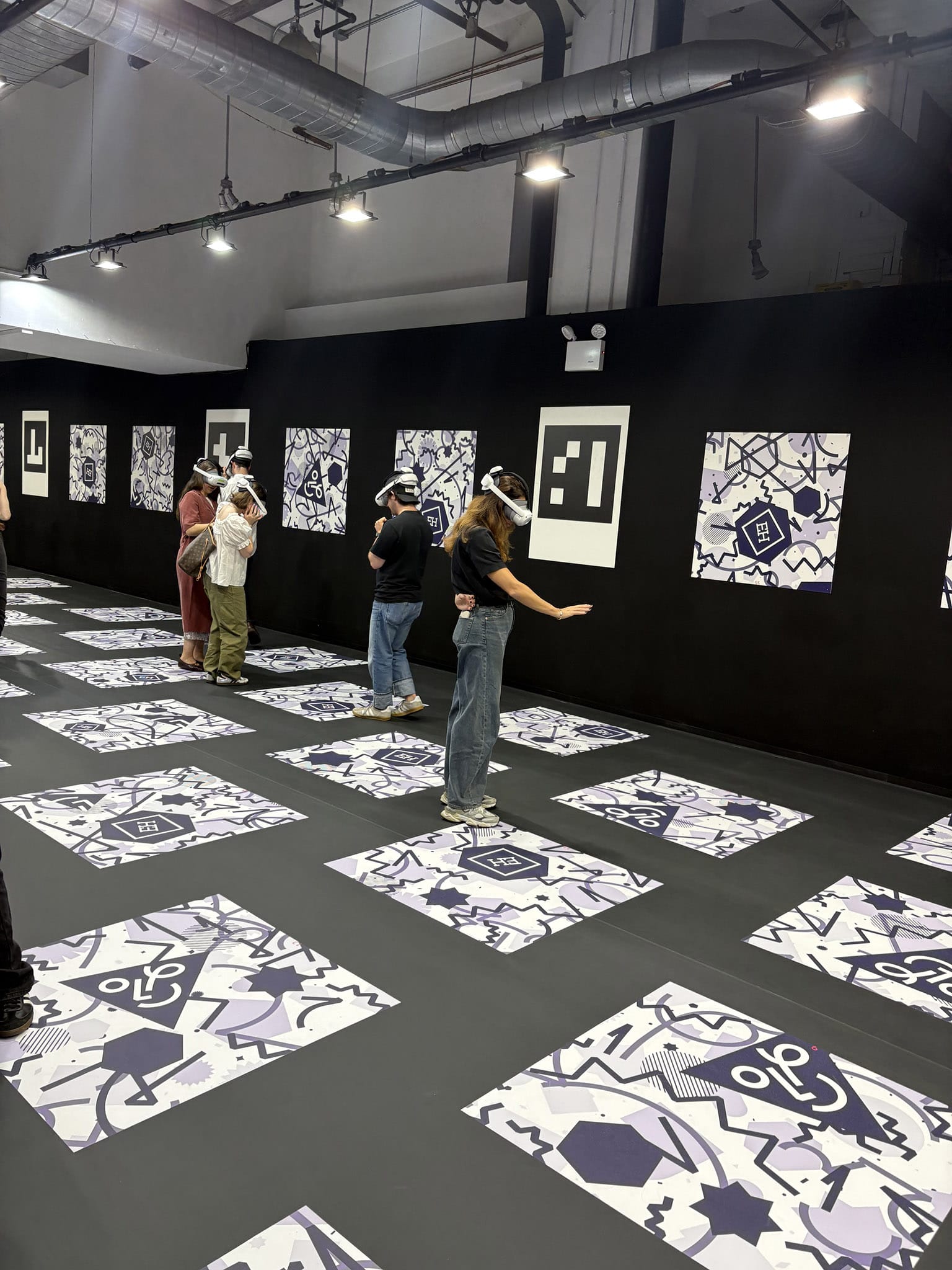
No wonder I felt a strong sense of vertigo by the time I reached the “reflection room” of mirrors and candles. It took me a full minute to recover enough to walk in a straight line again.
Earlier this month, Rex Heuermann pleaded guilty to the murders of seven women—and admitted to an eighth—in a short mid-morning court proceeding in Suffolk County Court in New York. The guilty plea brought an abrupt end to the byzantine, error-riddled investigation of what are now known as the Gilgo Beach Murders. (Never mind that the bodies of some of his victims were dumped elsewhere; once a name sticks in the serial killer canon, it’s forever.)
Hours later, it emerged that a key condition of the plea, specifically requested by prosecutor Ray Tierney, was that Heuermann had to speak to the FBI Behavioral Analysis Unit. “One of [the FBI’s] core missions is a clinical role,” Tierney said in a news conference that afternoon. “In other words, they're going to interview the defendant and gain insight into his motivations and background as sort of an academic and scientific exercise.”
What Heuermann might think about the process could be revealed at his sentencing hearing on June 17. Considering he marked up books by former FBI profilers Robert Ressler and John Douglas as if a student, treating it like “homework” and studying the behaviors and deeds of serial killers past in order to improve his own methods, it’s hard to believe Heuermann won’t relish being in the company of the very investigators who profess to know his psyche best, as he prepares to ascend into serial killer Valhalla.
Heuermann’s mug shot is already part of “Mind of a Serial Killer.” The exhibition will have finished most of its New York City run by the time of his sentencing, ready to travel to the next city (perhaps with further updates on the Gilgo Beach case.) Customers can pay $32 for a ticket for the exhibition, though its true and ideal audience of serial killers will never have a chance to see it themselves.