
Hell, Yes
by Harry Siegel
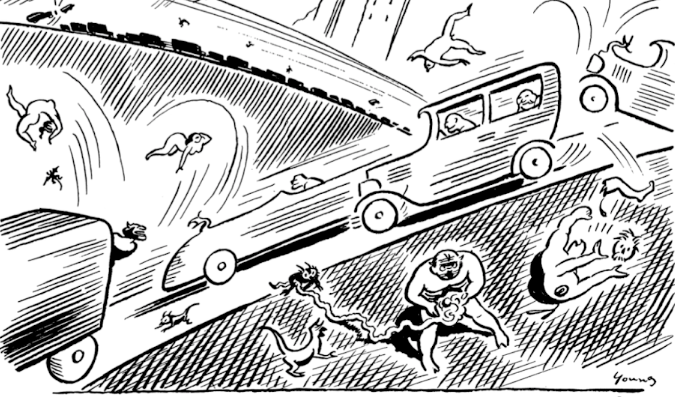
The only person to return with dispatches from three separate guided tours of hell was also the only cartoonist to be tried, twice, under America’s Espionage Act. That same man was also the only person charged with such crimes during the Great War to have a Liberty Ship named in their honor during the Second World War.
Art Young and his journalist colleagues at The Masses, a socialist magazine published from 1911–1917, were tried in 1918 on charges of conspiracy and interfering with enlistment. According to the Liberator's account, “the prosecution's evidence of conspiracy consisted solely of the open publication by these men of their opinions about the war and about the principle of conscription, and the rights of conscientious objectors, in a magazine which they owned and published without profit for the sake of individual expression.”
After a single holdout hung the jury, they were retried later that year. In that trial, Young was asked to explain a drawing he'd published in the magazine the previous year, months after President Woodrow Wilson—who’d won reelection on the slogan “he kept us out of war”—abandoned neutrality, signed America’s first national security and secrecy laws, and sent American soldiers for the first time to fight in Europe because “the world must be made safe for democracy.”
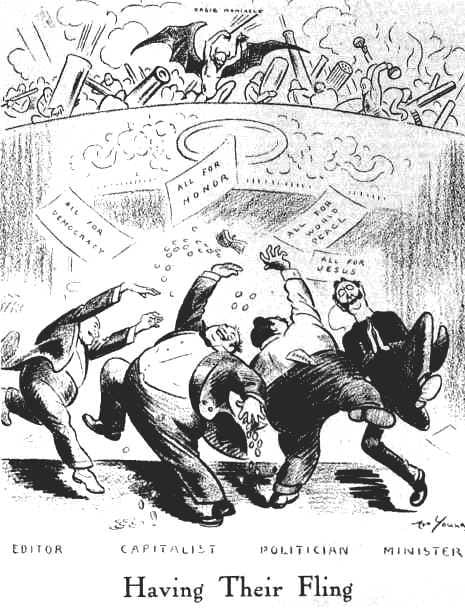
If war is hell, Young testified, who but Satan would be the conductor?
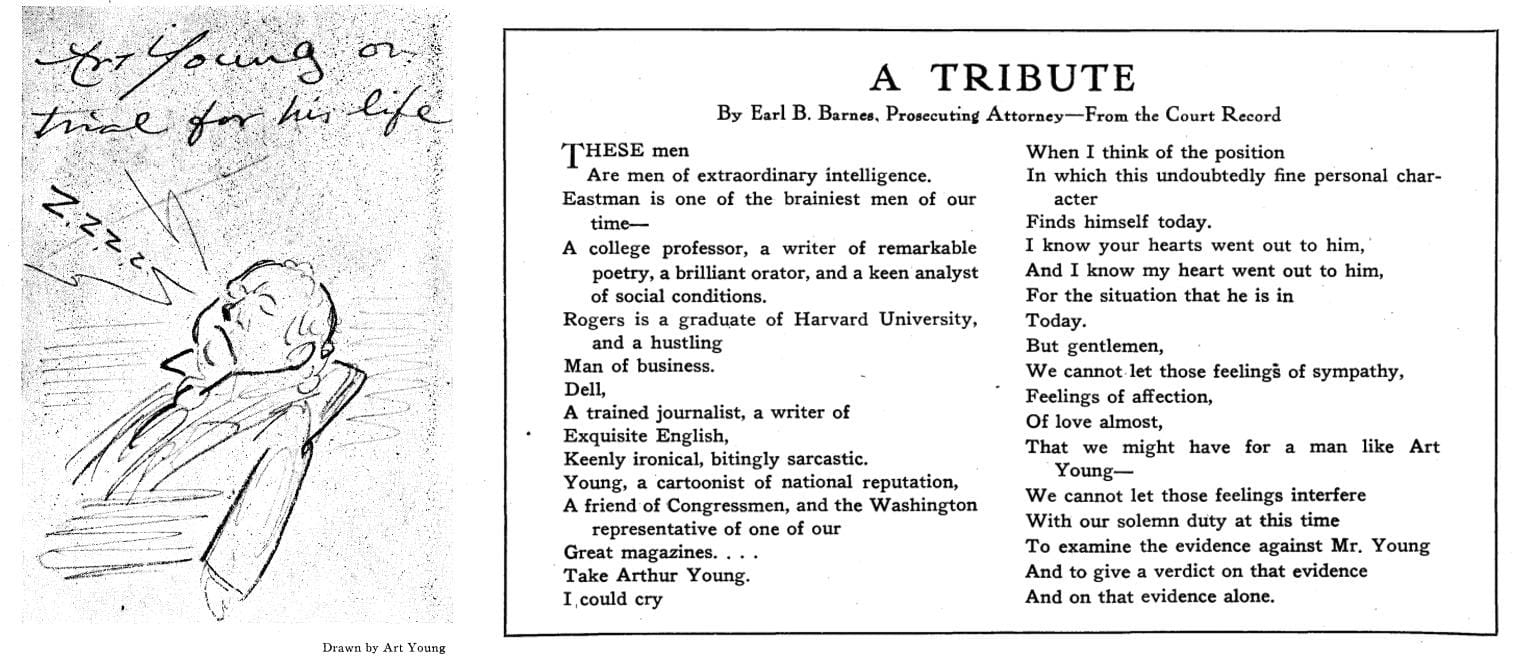
After that second jury also hung, Young published a sketch to accompany an article about the government’s bid to make criminals of the staff of The Masses, writing in the caption “Art Young On Trial For His Life.”
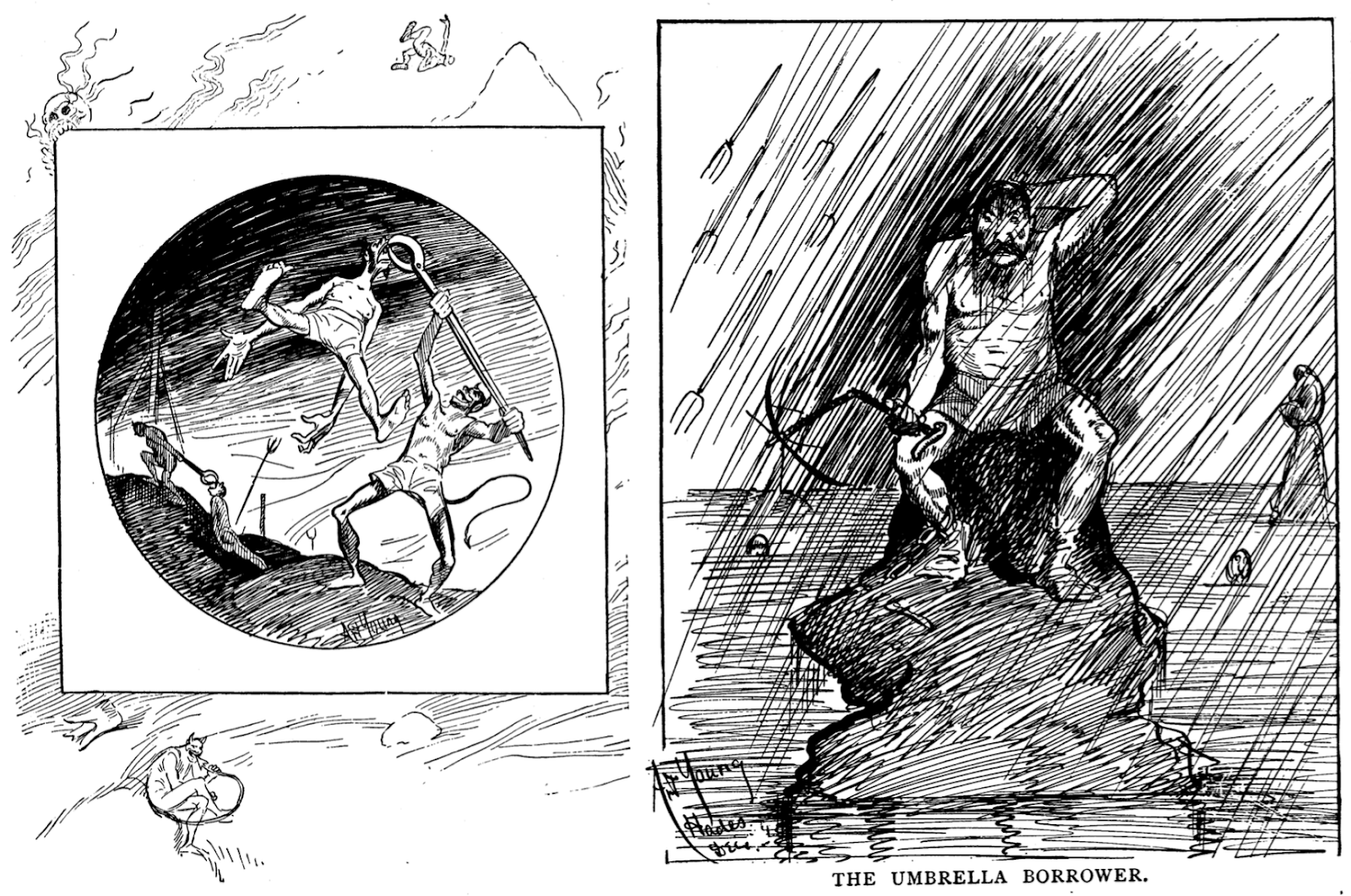
Speaking of Satan, Young, who was born the year after the Civil War ended and died in the midst of the Second World War, was 25 when he published his first illustrated account of that ever-hotspot, Hades Up To Date, in 1892, nearly 30 years before his trials.
That excursion was credited to a “R. Palasco Durant, special correspondent” who’d supposedly been assigned by his editor to follow up on Dante and “learn if the region of fire was the same as old, or whether it kept pace with the triumphal march of progress.
“The author found it right in line. Even Hell is now run on the broad, American plan.”
The book—mixing broad political swipes with more general fare about umbrella-snatchers and dentists, tailors who won’t learn their trade and confirmed writers of bad poetry, each getting the torture their kind deserves—was popular enough to be reprinted the following year, with the slightly spicier title of Hell Up to Date.
Nearly a decade later, having established himself as one of his generation’s most successful cartoonists, Young published the lengthier Through Hell with Hiprah Hunt in 1901. The update, with 70 new illustrations along with reprints and reworkings of images and gags from the earlier book, replaced his stand-in journalist with a preacher who “continually and earnestly advocates the justice of future punishment.”
Hunt, Young wrote of his made-up stand-in in a brief introduction under his own name, “meant to convey the hope he feels for all sinners like himself, that some relief of a slightly humorous nature may be found even in Hell.”
The first two tours have a cheerfully sour sensibility that at some points feel dated and corny but at others feel right on time a century and change later—a hell of a thing, for a dedicated practitioner of a popular and fundamentally disposable form.
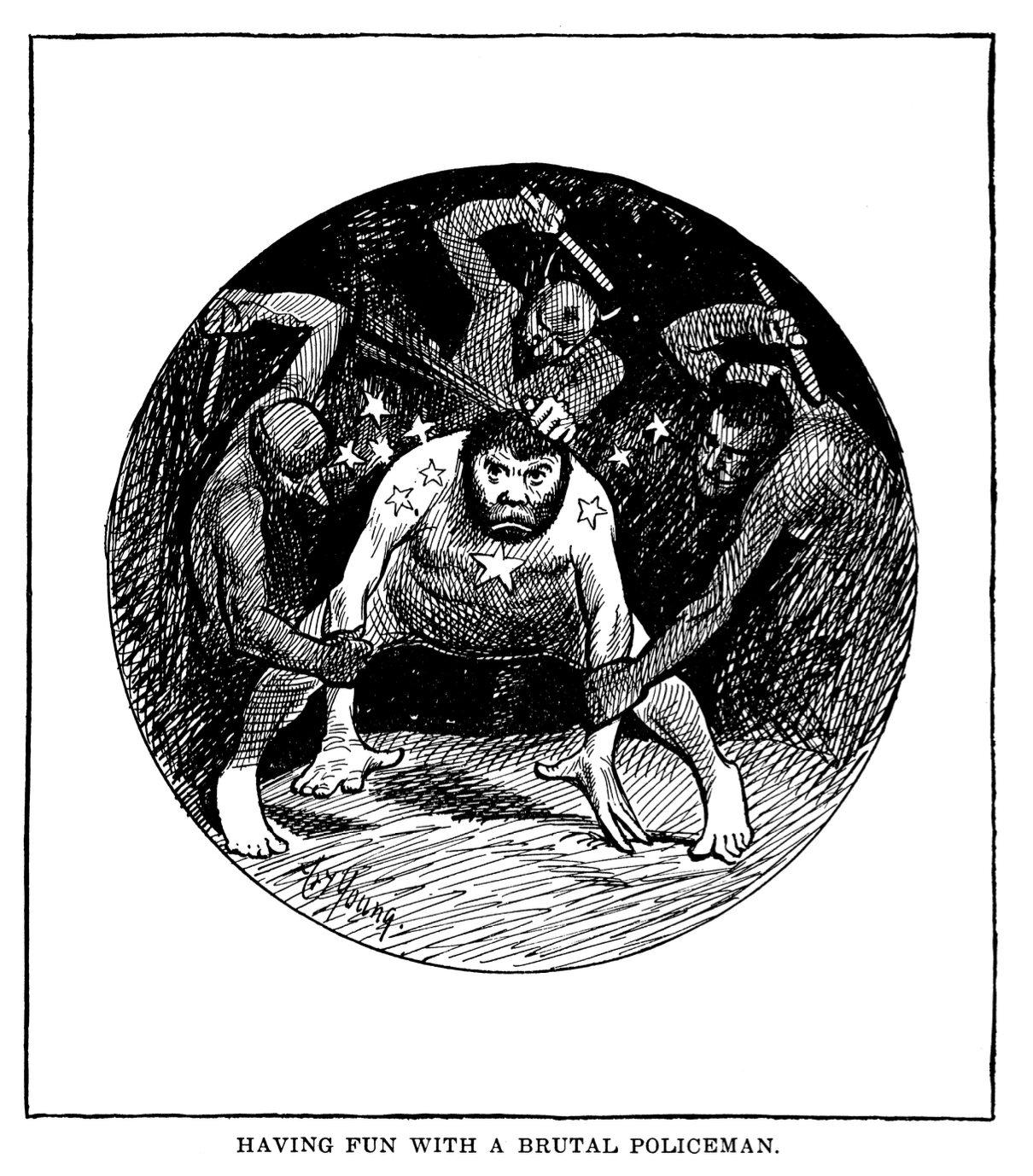
These hells anticipate but don’t quite express the anti-capitalist politics Young would come to embrace in his work beginning in the nineteen-teens, when he was in his 40s—inverting the line later attributed to Churchill, about how any man who’s not a socialist at 20 has no heart, but any man who remains one at 40 has no brain.
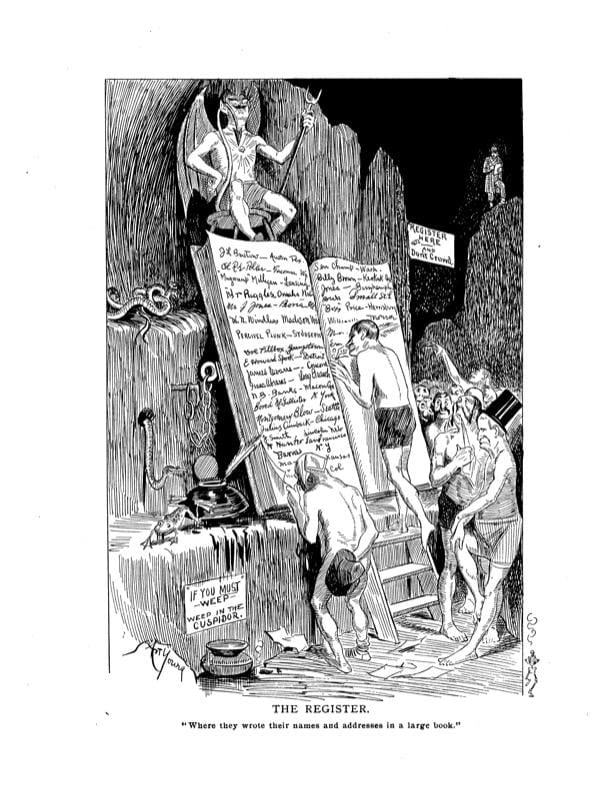
Early on there’s a glimpse of Hell as an up-to-date place where the “guests” sign themselves in.
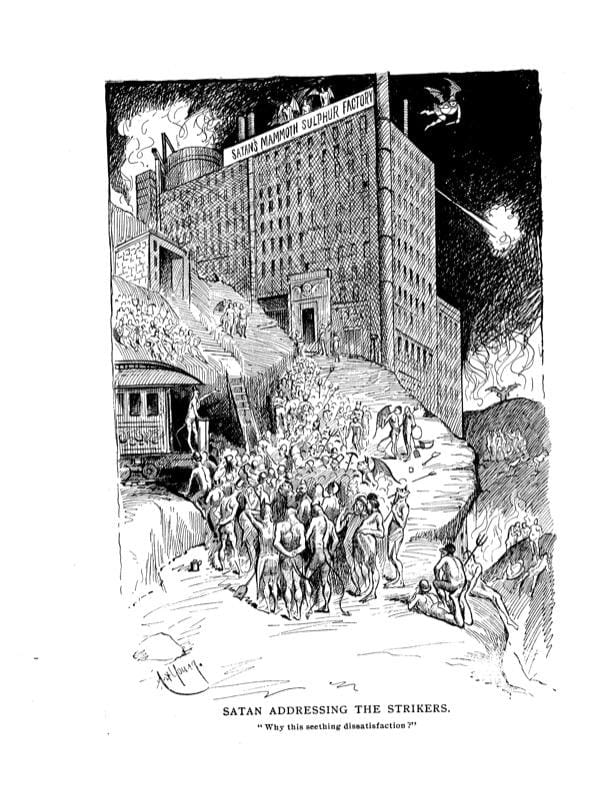
Later, there’s Satan talking down strikers at Satan's Mammoth Sulphur Factory: “Throw grenades of reason on your smoldering discontent. Let your motto be: ‘Well enough is Hell enough!’”
Art Young’s Inferno, published in 1934, is something else. This is the work of a popular artist in his late 60s who’d been through trials, figuratively and literally, over a quarter century, and drawing everywhere from The Masses to The New Yorker, the Liberator to Cosmopolitan, the Saturday Evening Post and Life (where a handful of the book’s illustrations were first published), to his own short-lived magazine, Good Morning.
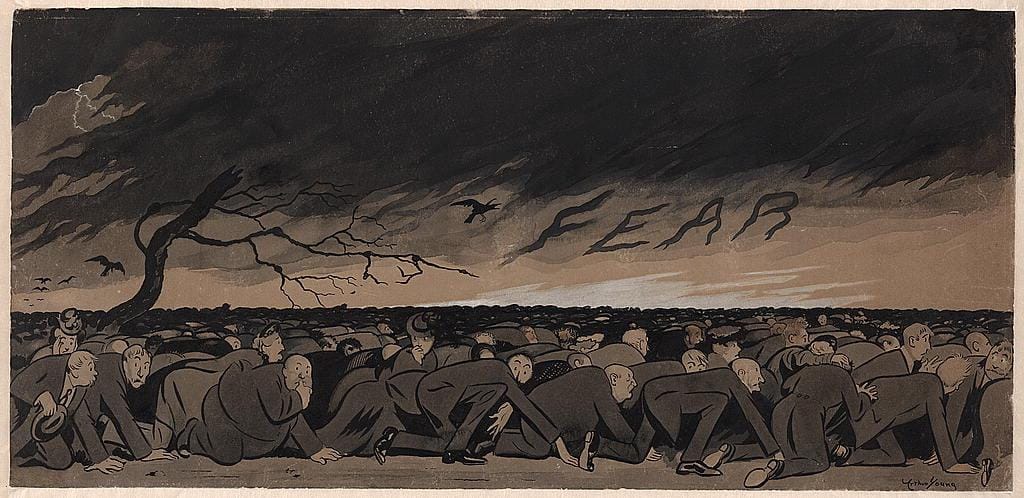
He’s sure now of his craft and his sense of the world and how it tracks the underworld he kept revisiting, as he weighs in under his own name on this final descent.
“The once proud Lucifer,” Young relates, has been edged out by the modern moneymen, and is “now a mere figurehead in his own realm,” as the entrance to hell has been updated from “‘Abandon all hope, ye who enter’” to “You Are Now Entering Hell: Welcome.” Another sign declares “No Parking.”
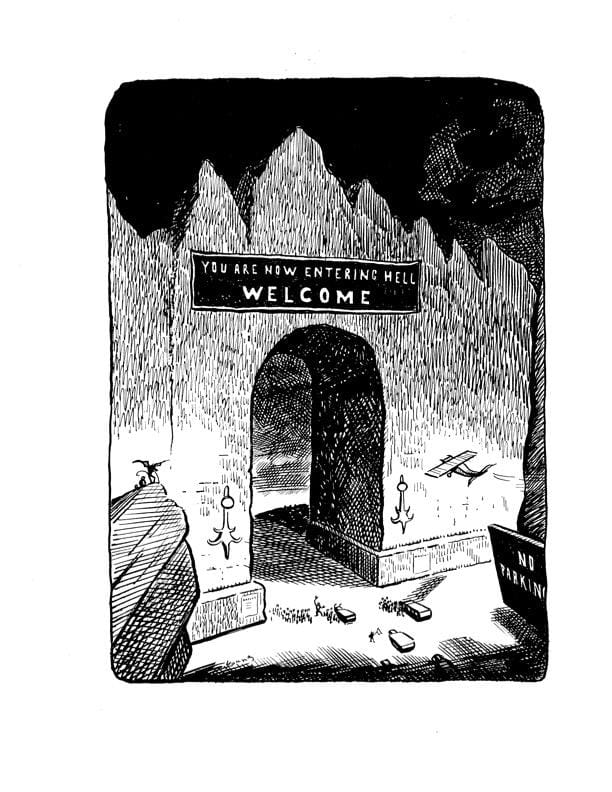
What follows feels remarkably of the moment in 2024, nearly a century of vast technological and social changes later, right up to and including the “NO PARKING” sign.
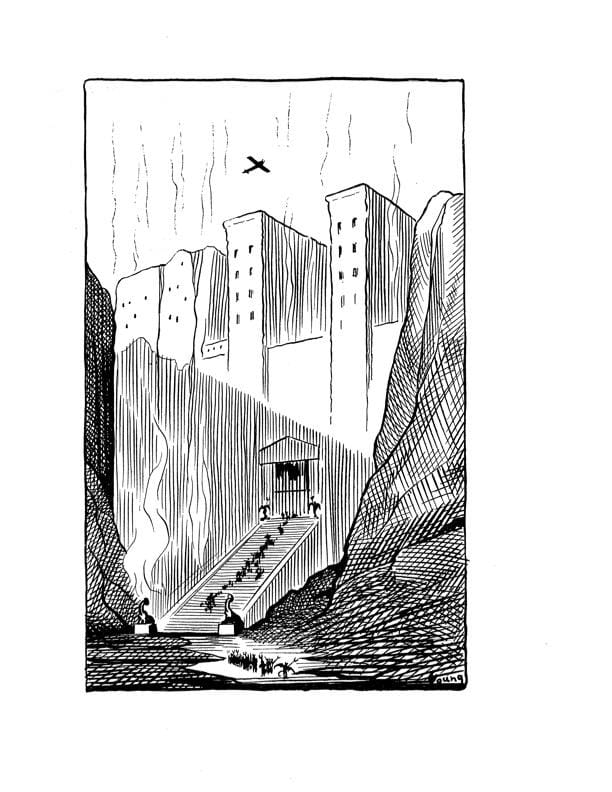
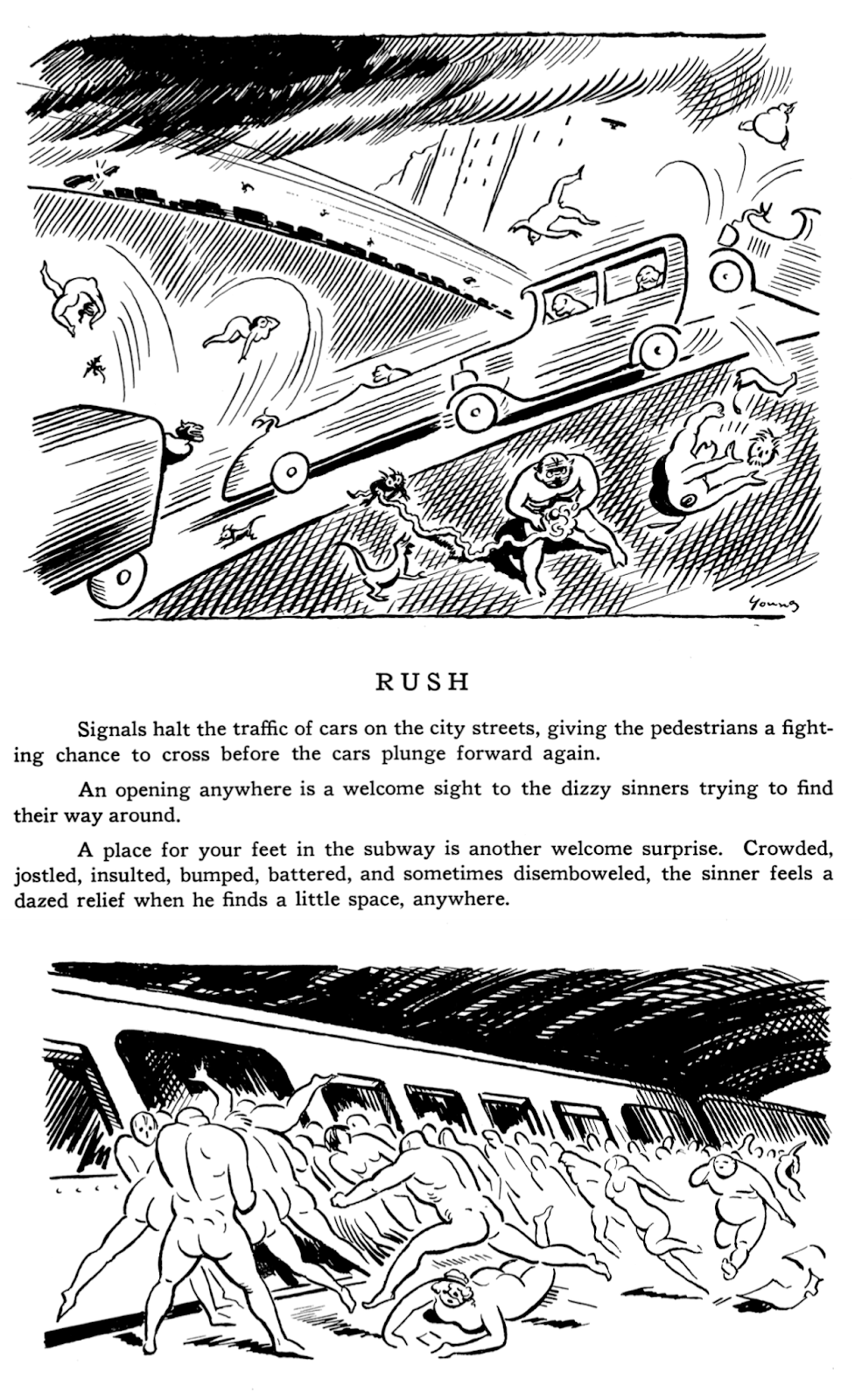
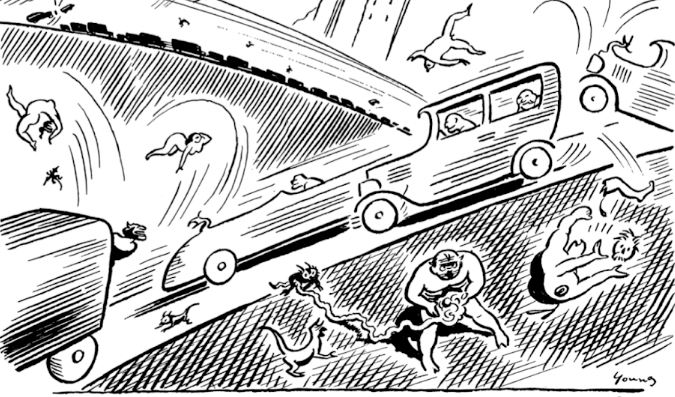
There are killer cars, and jam-packed trains.
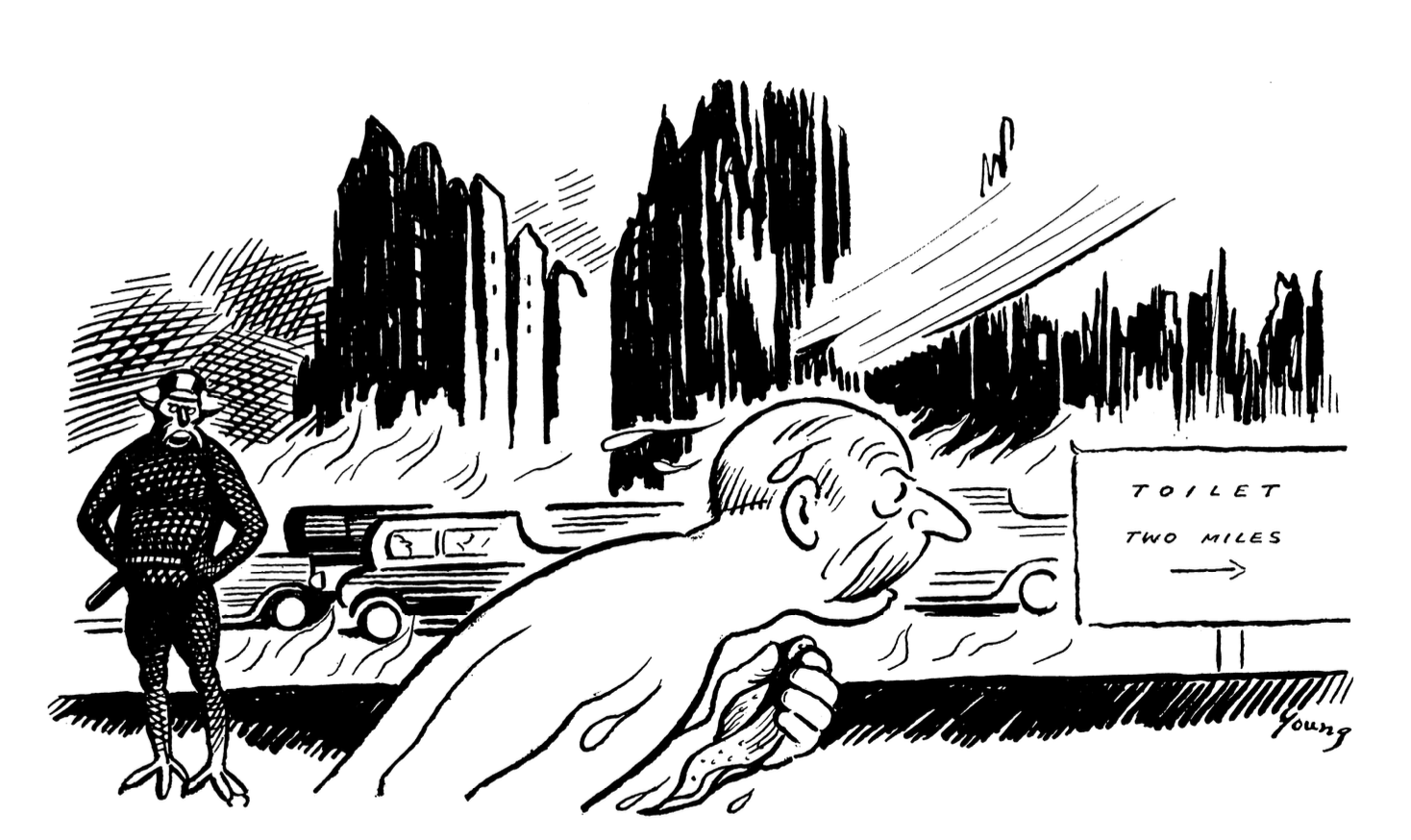
In spite of “Hell’s boasted progress,” there, as in Manhattan, it’s miles to the nearest bathroom if you can’t pay to use one.
In hell, as in Manhattan, “Under the strain of speed and worry, sinners are always blaming one another for wrongdoing.”
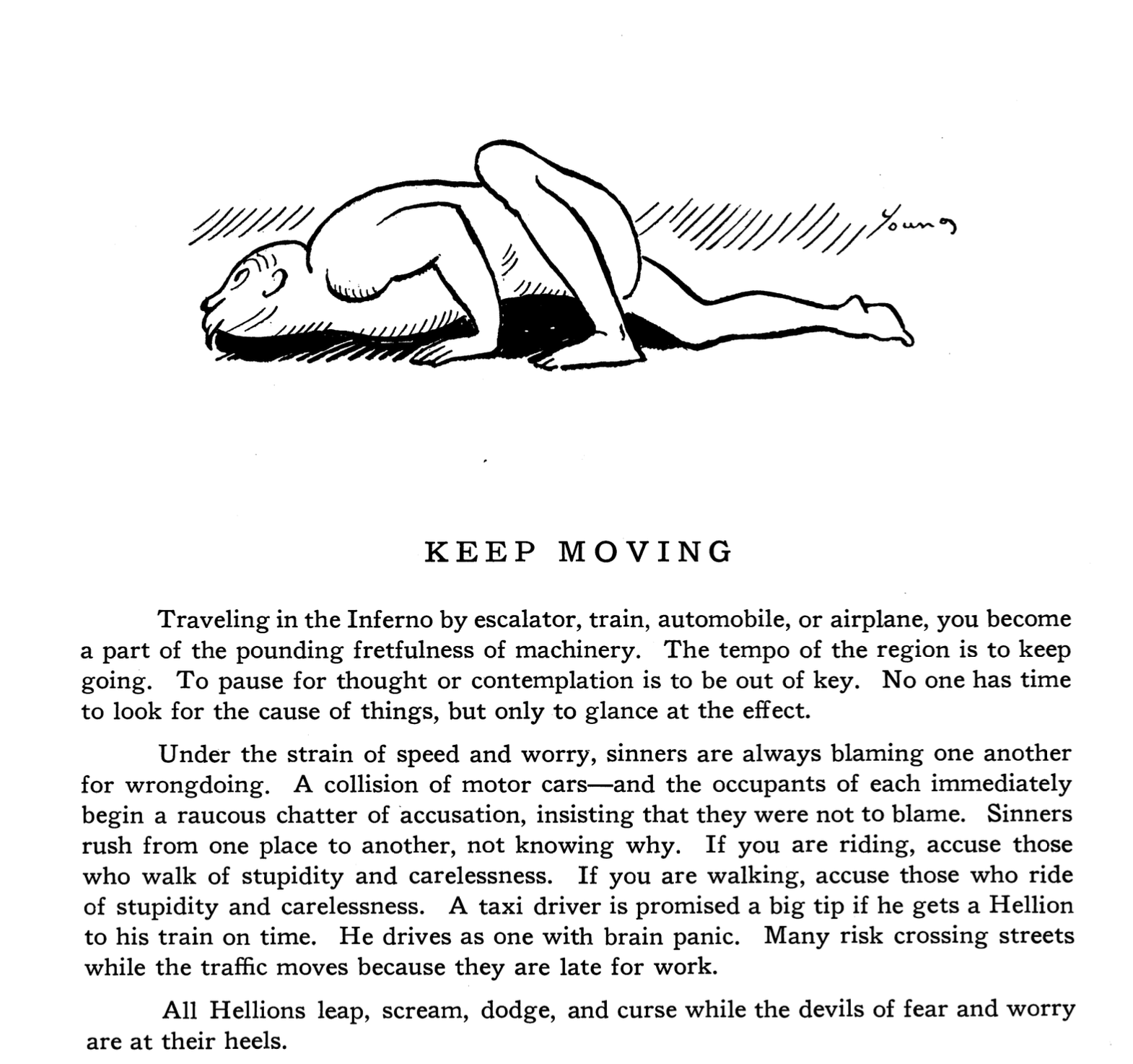
There’s much more that still hits home, most all of it available in a new edition of Art Young’s Hell published by Fantagraphics in 2020. Young's fellow cartooning Art, Spiegelman, wrote a really nice appreciation of it at the time for The New Yorker, as well as an earlier essay about Young’s enduring relevance for Harper’s—and all three trips to hell are online at the treasure trove of cartoons and other imagery at Marxists.org.
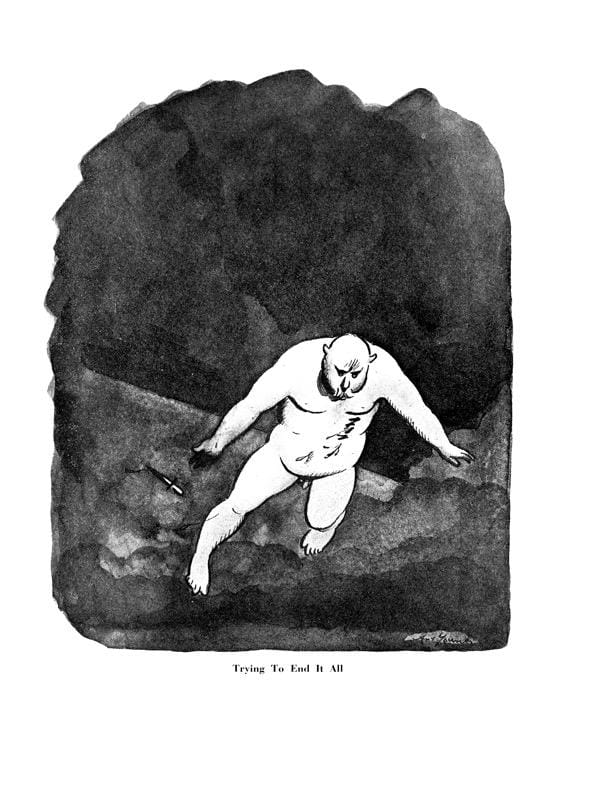
There’s a special place in hell for editors. In Hiprah Hunt’s excursion, those specifically include
Editors who never credited stolen articles.
Editors who threatened public men with abuse if they refused to do as they dictated.
and
Editors who were very careful not to publish disagreeable information about people of wealth, and so-called “social station,” but never hesitated to print anything about people outside this select circle.
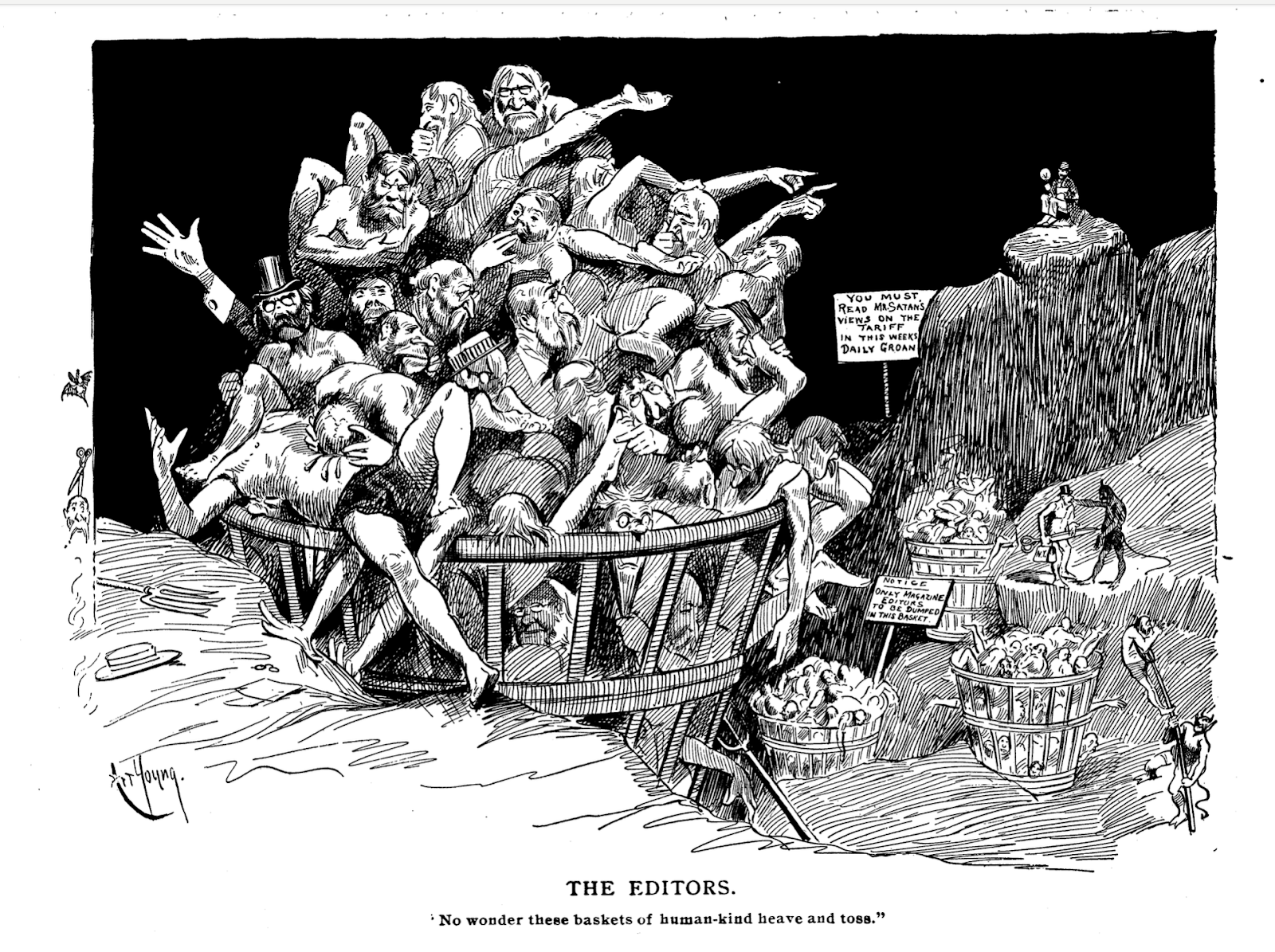
“Huge red-hot waste baskets hold them, the worst offenders being at the bottom.”
That was published a couple years after Ambrose Bierce, compiler of The Devil’s Dictionary, had defined Editor, n., in part as “a severely virtuous censor, but so charitable withal that he tolerates the virtues of others and the vices of himself.”
Near the end of his Inferno, Art Young printed what he called The Hell Dictionary:
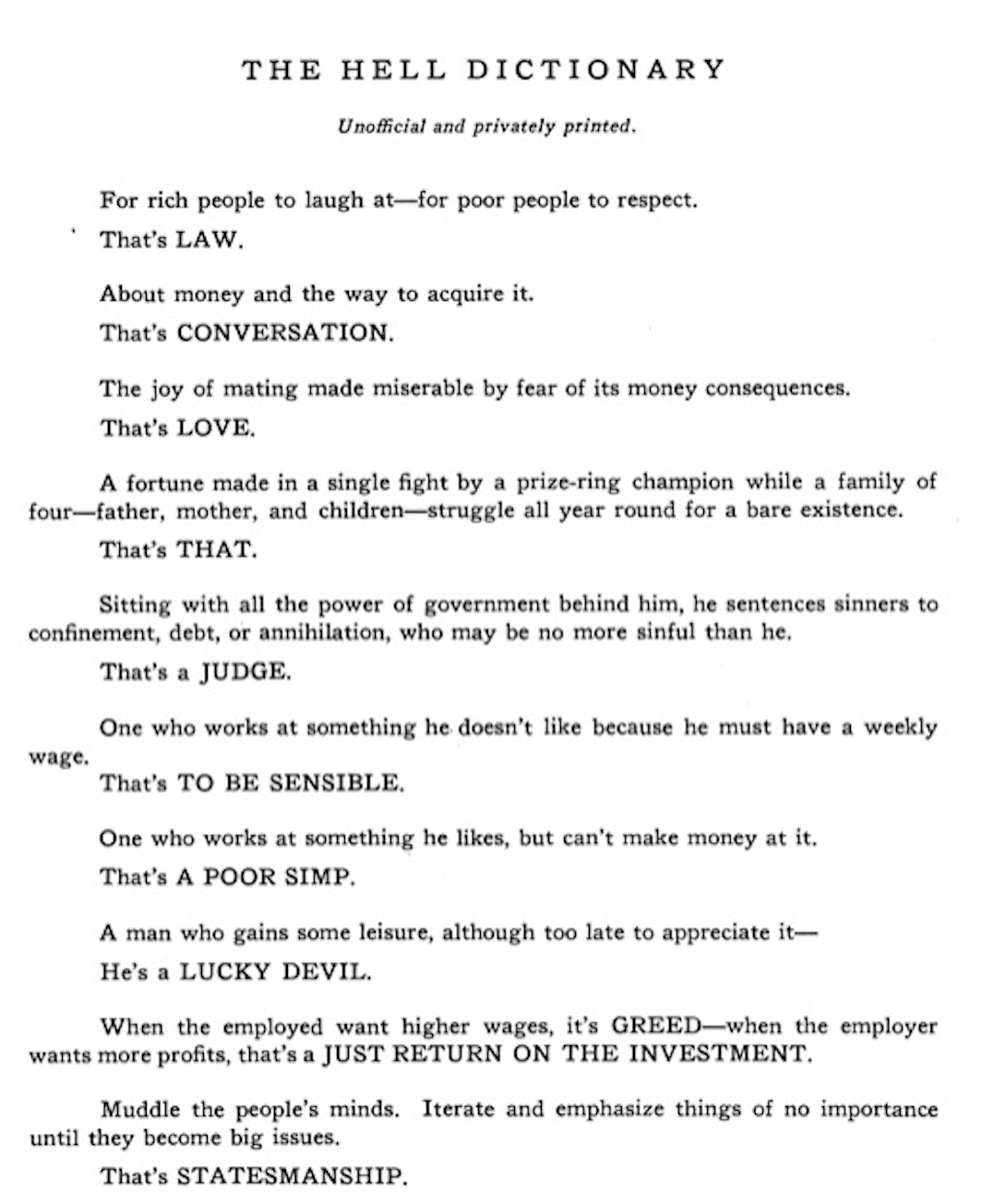
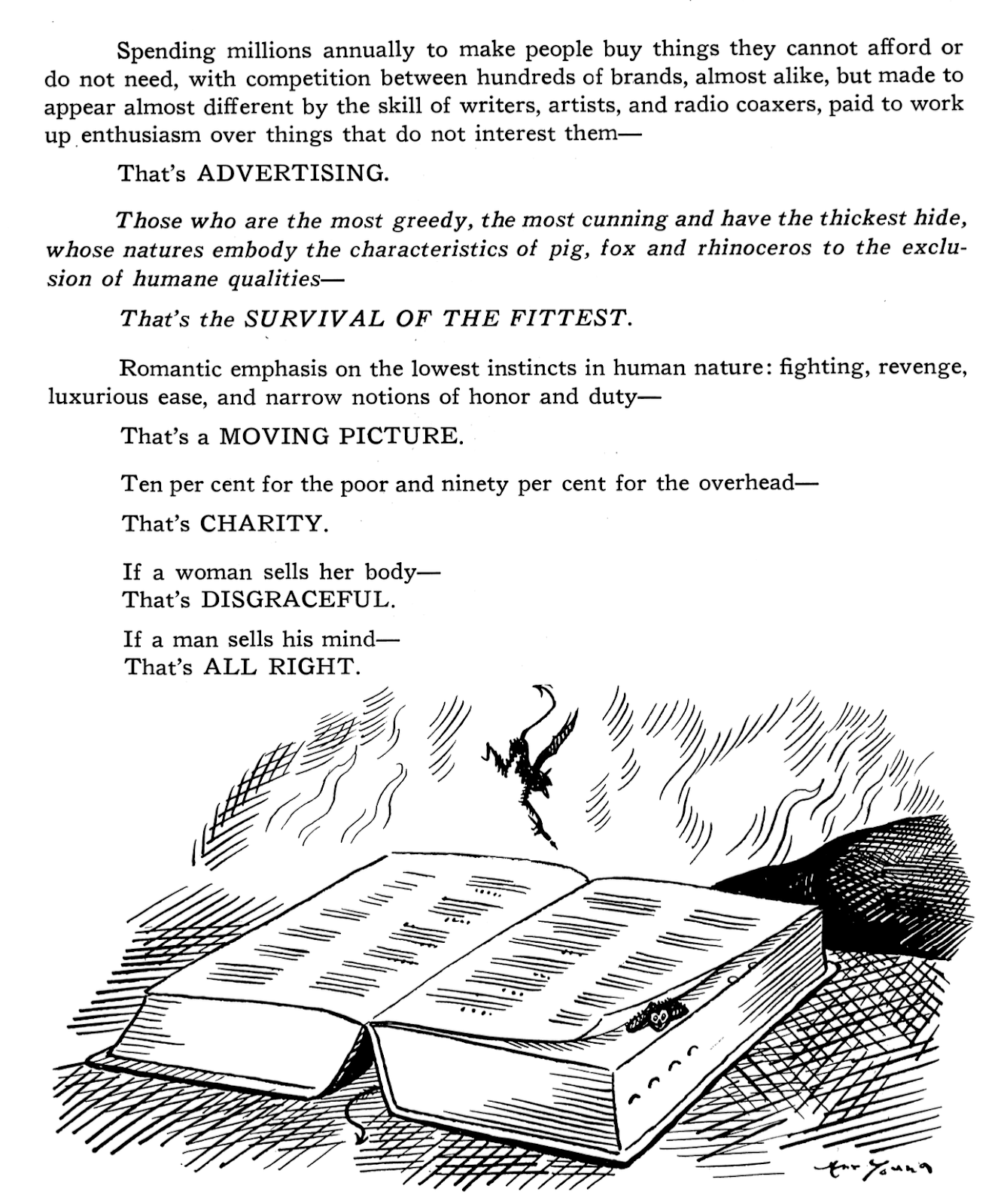
Same as it ever was, ALL RIGHT.
If you enjoyed this free post, subscribe or donate to Flaming Hydra and receive incandescent essays, comics, criticism and more from us each weekday.