
“I shouldn’t have done this.”
by Felipe De La Hoz
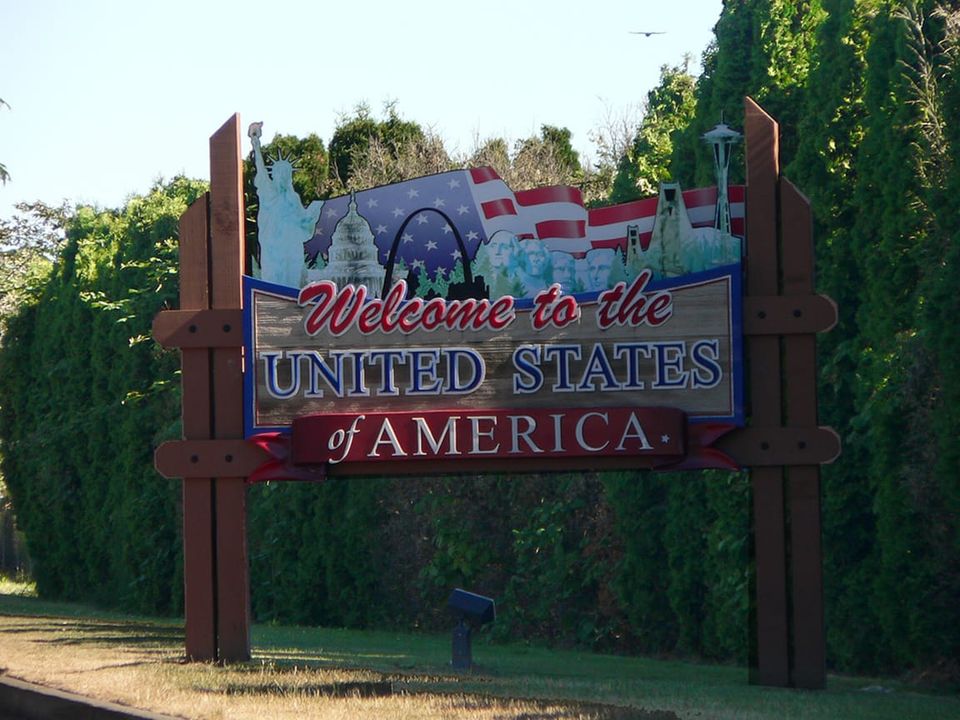
The arc of my career in immigration journalism just about tracks the arc of Donald Trump’s prominence in political life, beginning right around mid-2017, as he—or more accurately his viziers, like Stephen Miller—were trying to figure out how to shape the government around the totalizing anti-immigrant agenda that formed the crux of his first presidential campaign.
In the years since, having traveled from farms to jails to boardrooms and everything in between while speaking to immigrants all over the country, I’ve noticed a phenomenon that is seldom discussed publicly, even as it’s grown more common in my conversations: a deep-seated regret, among immigrants, for having come to the United States at all.
There are, in my view, two main drivers of this regret. The first is the continuing cultural dominance of the U.S. in recent decades, a sort of default, ambient cultural presence coexisting globally with local output of music, TV, and so on.
Conspiracy-minded types might argue that the type and tenor of U.S. cultural exports have been uniformly shaped by shadowy hands, the CIA or what have you, but I don’t really think that’s necessary for a certain consistency of message. American exceptionalism has been a persistent foundational mythology that reached a fever pitch in the post-Cold War order, and our movie and TV studios hardly needed an outside force to advance that understanding, both internally and abroad.
The problem is, while many here inside the U.S. understood cultural messages of peace and prosperity to be at least partly aspirational, people living farther away often took the message a bit more literally. I’ve had numerous conversations with people from around the world who have told me, often with a tinge of frustration and/or embarrassment, that they had assumed that there really weren’t people in dire poverty in the United States. They had seen or read story after story depicting people who had problems, yes, but had been able to overcome those problems through grit and resourcefulness and heart.
They had thought to themselves, “well, I have grit and resourcefulness and heart,” and figured, understandably, that this formula would work for them, too. This isn’t because they’re stupid or simple, it’s because propaganda actually works quite well. They expected challenges, but practically every piece of public-facing information about the United States told them that the challenges were basically navigable if you could, in effect, prove yourself worthy and take advantage of the ample opportunities that abounded everywhere. They expected a system that worked logically and rewarded effort fairly. And many came to find too late that this was more of an ambition than a reality.
It is an acutely difficult decision to leave everything you’ve ever experienced behind and launch yourself into the unknown, and the more you can convince yourself that you do know what awaits and that what awaits will be better than what you’re leaving, the more you can actually commit to your decision. That means that countervailing evidence is likely to be rationalized away.
The fantasy necessarily crashes into reality at high speed, and the harsher that reality, the greater the mental carnage of the collision. That brings me to my second point, which is that the result of forty years of retrenchment on immigration—a contrast to a mid-’80s status quo which, while very far from perfect, saw Ronald Reagan himself sign a mass amnesty for millions of undocumented immigrants—means that the sacrifices required no longer seem functionally worth making. Stephen Miller, and the army of committed xenophobes and bigots who came before him, have worked single-mindedly to foreclose the possibility of stability and advancement for all immigrants, from undocumented laborers to high-tech work visa holders; the latter may at least have some global mobility, but the former find the mirage fading fast, and have little ability to go back, or go elsewhere.
It’s not just the ICE and CBP raids and the indefinite detention in squalid, dangerous circumstances. The Trump administration has stripped millions of people of their existing statuses, leaving them in limbo after the federal government had itself already granted them protections or welcomed them in. It has made even high-tech visa pathways confusing and all but unattainable. It has attempted to terminate the asylum and refugee programs. It is trying to forbid public services to documented immigrants. All this while Trump has been working mightily to torpedo the economy for native-born citizens and immigrants alike, tossing the government into shutdown over a refusal to consider making healthcare a bit more affordable.
The feeling that many recent immigrants have described to me is something close to betrayal, all the more bewildering because the broken promise was not made to them by any specific person. It was made by a country, or rather a country’s longstanding collective presentation of itself, and why would they have any reason to question the story we’ve all known all our lives? As the studio lights fade and the cold sets in, the recriminations turn both outwards and inwards: “Why did they say this country was governed by predictable and rational laws? Why did they say it was the land of the free? Why didn’t I question that? What am I going to do now?” They all boil down to the one fundamental question: “Why did I do this?” Followed, perhaps, by the uncomfortable answer: “I shouldn’t have done this.”
A good number of immigrants still believe and indeed have found that, whatever the difficulties, their U.S.-born children do seem to have a better shot at stability and self-actualization than they would ever have in their countries of origin, despite the broken promises and uphill climbs tainted by deep unfairness, racism, official and unofficial sanction, and so on (though of course the MAGA crowd’s current obsession with birthright citizenship is attempting to squash even that potential). But that’s increasingly not the case.
The deep regret is something I’ve heard more and more frequently over the past few years, mainly from recent immigrants who’ve never known a time before the open venom and malice of Trump’s immigration crackdown. Even those who haven’t ended up in prolonged detention or on a fast track towards deportation increasingly feel like their situation here is either fundamentally unchanged from, or a bit worse than, what they left behind. The sting is especially sharp for those who’ve sold all their belongings and trekked three thousand miles through hostile terrain for a chance at a better life.
No one really seems to have an incentive to talk about this. Those of us in left-leaning media, pro-immigrant elected officials, nonprofits, aid organizations, and so on are reticent to broach this topic because it feels a bit like validation for the fascists. To speak of it is to admit that in many ways they have succeeded in making conditions here so inhospitable for immigrants (and everyone else) that it really is not worth it anymore; it has the ring of capitulation, or of acknowledgement that they were correct, that these people should never have come here, which of course has the causality backwards. It is a dream ruined on purpose by people who are fine with having miserable lives, as long as they can be sure they’re making others more miserable still.
As for the xenophobes, the fact that many immigrants regret having ever come to the U.S. complicates their narrative that immigrants are eagerly stampeding into the country, hoovering up benefits and robbing hard-working Americans. The notion that people are disappointed by the United States also runs against the grain of their grotesque, extreme nationalism. So, in the end, hardly anyone ever brings it up. If we survive this moment, I’ll measure our recovery not only by how many people choose to start over in this country of possibility and hazard, but by how many are happy they tried.