
Complex fats
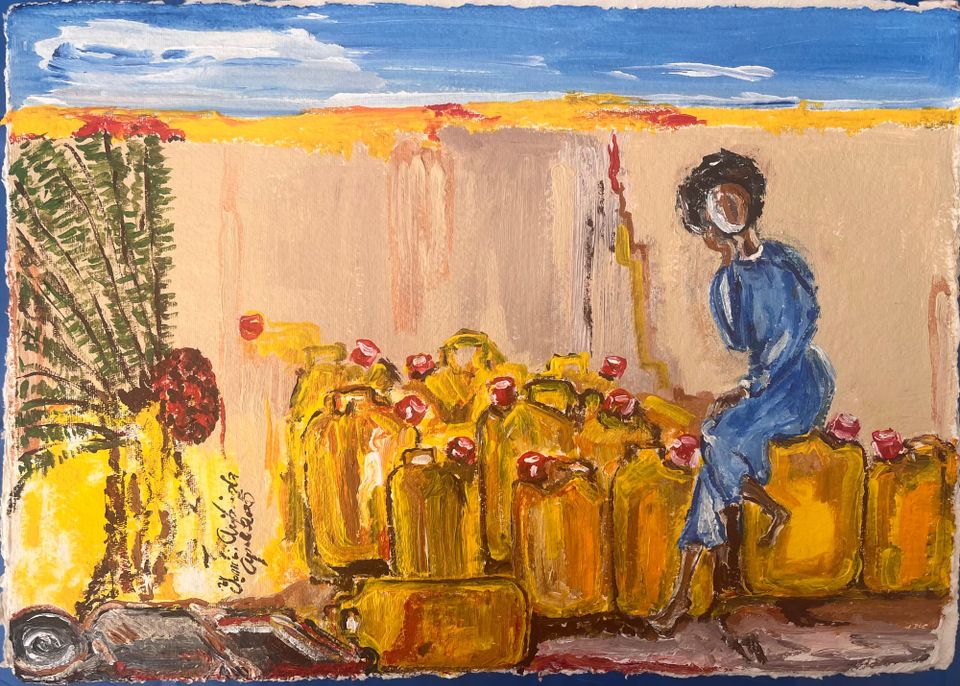
Today: Yemisi Aribisala, writer, editor, essayist, painter, and author of Longthroat Memoirs.
Issue No. 306
Of Men and Palm Oil
Yemisi Aribisala
Of Men and Palm Oil
by Yemisi Aribisala
In February 2021, Evan Kleiman, a North American chef and radio personality broadcasting from Santa Monica, California, asked me about palm oil. She said “It’s such an intrinsic part of your cuisine, not at all what we think about when we think of palm oil. Explain the difference.” I knew that this question was for the education of an audience who already had their machetes out for the Nigerian who is destroying the environment by eating palm oil.
She understood that there was a global misunderstanding and the corresponding need to clear it up, before people would “really” listen to anything else I was saying. I had been thinking about my answer for a long time before the interview, yet I couldn’t answer the question as eloquently as I had scheduled in my head when it came time to speak.
I wanted to say persuasively: the problem, the real problem is with the unsophisticated global generalisations that the media has led readers to expect. Social media in particular has given readers an insatiable appetite for simplistic memes and slogans. They are the sofa of the mind when there is so much trauma to process.
The media proposal that all palm oil is bad for the earth’s climate is an easy conclusion for the hyperactive mind junk-feeding on headlines to make. But if you don’t know the “small” story of palm oil, the backyard story, if you don’t follow it back home to Nigeria, Ghana, Malaysia, or Indonesia, then you cannot understand palm oil. The real answers are too subtle, or too complicated, or too simple for social media or for the global feed.
The bleached, deodorised thing hidden in the cookies in a British supermarket is not our beloved Nigerian food ingredient. That adulterated, dangerous, reviled thing is in fact the West’s own mysterious derivative product. It is the production of this foreign bleached odourless fat in everything from candles to Oreos that is destroying the most biodiverse forests in South America. Palm trees are being planted in place of rainforests to satiate the cavernous appetite for Northern Hemispherical processed foods.
Keep us breathing fire!








For $3/month you can read this whole post and get our weekdaily newsletter too!