
Quitting the Union / Shutting out the world
Today: Please join us in a warm welcome for our latest Hydra, science journalist, columnist, podcast host, and science fiction writer Annalee Newitz, author of Stories Are Weapons, The Terraformers, and the forthcoming Automatic Noodle; and Trevor Alixopulos, author of the graphic novels Lipstick Traces and The Hot Breath of War.
Issue No. 360
The Fall and Rise of the California Republic
Annalee Newitz
HYDRANYM No. 8
The Editors
Entrance Exam
Trevor Alixopulos
The Fall and Rise of the California Republic
by Annalee Newitz
The Trans March in San Francisco is usually pretty chaotic—there are no fancy floats or formal activities—but this year a group had gotten their shit together to make an enormous, street-spanning trans flag. Its pink, white, and blue stripes stretched for nearly a quarter block. It felt like there was an unofficial flag theme this year: enormous red-and-green Palestinian flags unfurled in the air over us, rainbow flags floated alongside them, and a lot of groups handed out small trans flags that marchers carried, too.
There were no star-spangled banners. But there were some California flags flapping above the crowd, with the state’s golden bear looking slightly stoned above an LGBT rainbow band. There was patriotism here, for a country that almost exists.
Californians have started talking about seceding again. The second Trump regime has stepped up economic threats and military violence targeting the state, particularly in Los Angeles, where a recent show of force by the military and federal law enforcement in MacArthur Park drew Mayor Karen Bass out in person to demand their departure. With its population of more than 39 million, and a gross state product exceeding $4 trillion, the California Republic has long operated like a country-within-a-country. The place lends itself well to fantasies of secession, and I’m not immune: my new book, Automatic Noodle, is about what happens to California five years after winning a war of independence.
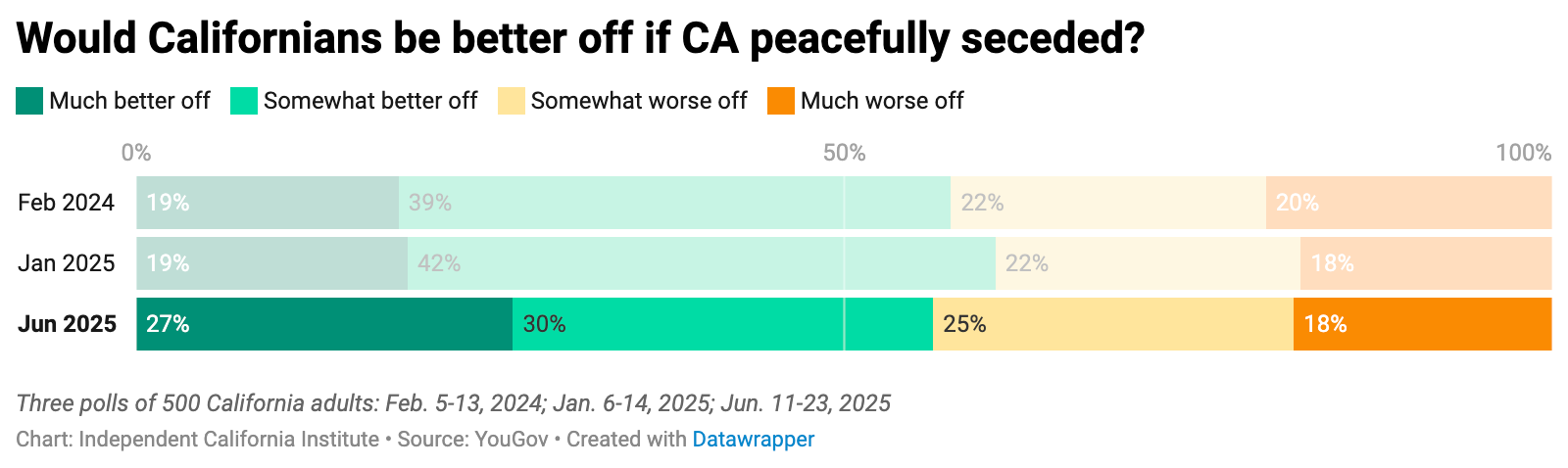
Since Trump’s inauguration, secessionist organization CalExit’s leadership claims they’ve gotten a huge spike in signatures for a ballot measure that would ask Californians to vote on whether they would like to see the state become “a free and independent nation”; they’ll need to gather nearly a million signatures by mid-August. Meanwhile, the Independent California Institute, another pro-secession outfit, commissioned a YouGov poll to gauge Californians’ interest in “autonomy.” Over 50 percent of people polled agreed that the state would be better off if it seceded.
This dream of independence has deep roots in California. Even before the state joined the Union in September 1850, one of its first senators, William Gwin, was a proponent of California nationhood. But his brand of CalExit is dramatically different from what Californians talk about today.
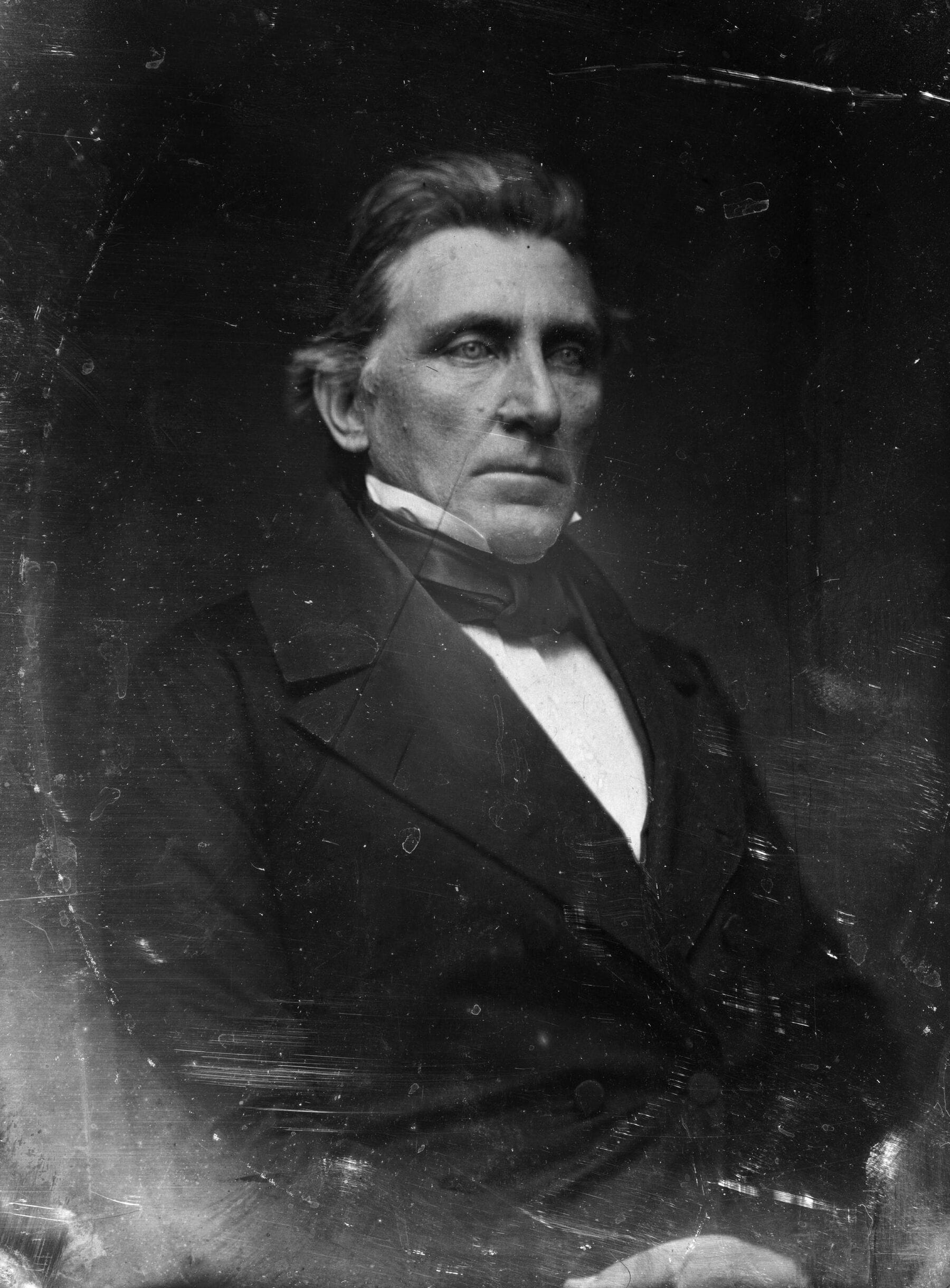
Gwin was a pro-slavery Mississippi politician who relocated to California after a financial scandal. Joining the massive migration of Southerners to California in the mid-19th century, he re-invented himself as a state-maker, participating in the 1849 California Constitutional Convention as a “shadow” senator. He also founded the pro-slavery Chivalry faction of the Democratic Party. Known as Chivs, this group was California’s flavor of southern Democrats.
When the South seceded, Gwin returned to his Mississippi plantation to support the not-yet-lost cause, and many of the Chivs went with him. Historian Kevin Waite, author of West of Slavery, wrote that Gwin connected the Confederate cause to California independence. “Ultimately, Gwin hoped to return to a California free from U.S. control… With a Confederate victory, he hoped to ‘put down the Yankees’ in his former state and live out his days as a citizen of a newly proclaimed republic.”
According to census records, historian Dan Lynch told me, “Most white Americans [in Southern California] were from slave states.” He added, “They voted as a bloc too.” Lynch’s work focuses on Civil War-era California. He pointed out that though Abraham Lincoln won California overall in 1860, his opponent, the Southern Democrat John Breckinridge, won in Southern California.
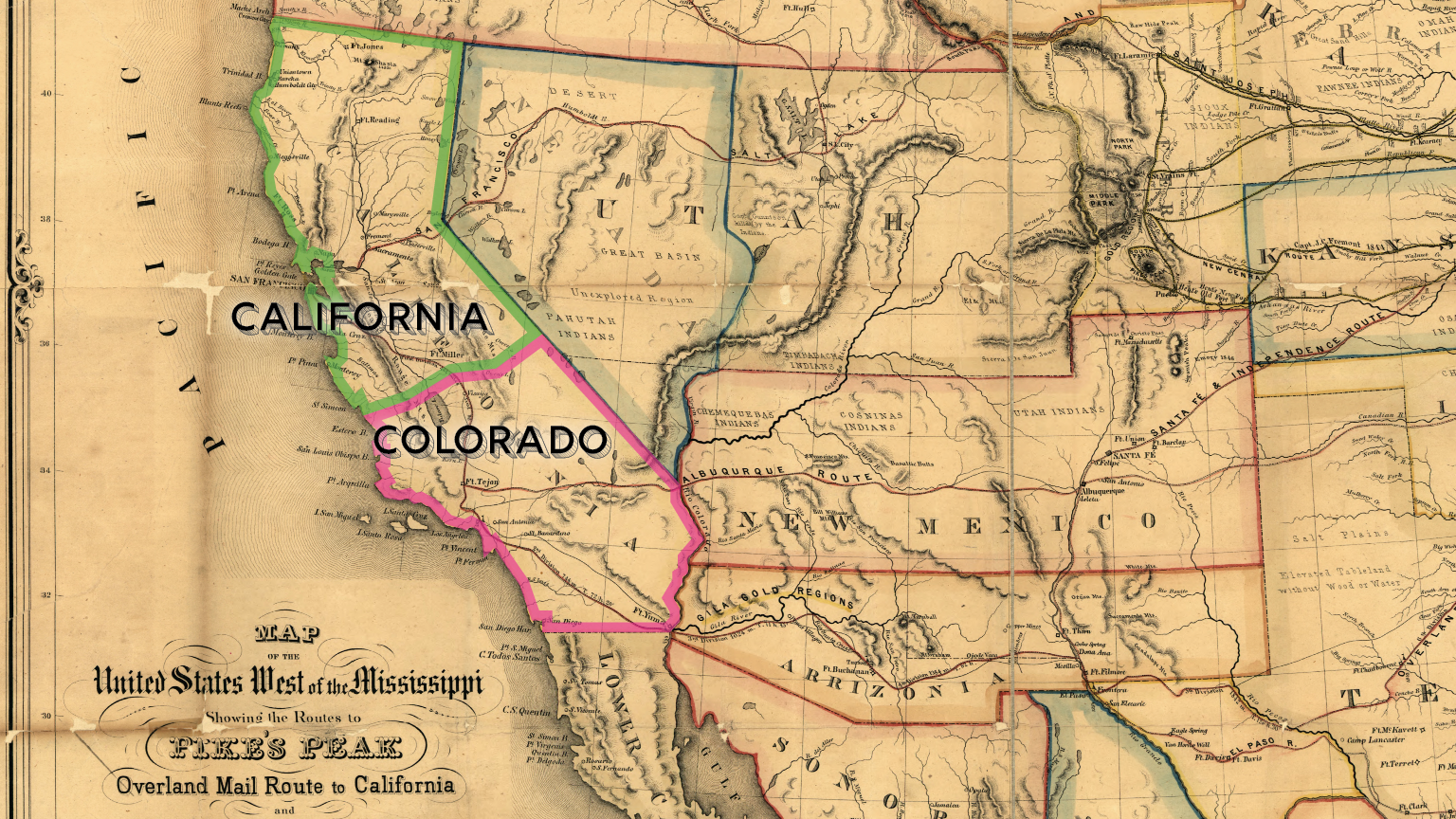
The political split between north and south in California was so intractable that in 1859 the state voted overwhelmingly to pass the Pico Act, which would have divided the state in two. Los Angeles County and everything south of it would become the Territory of Colorado—and thanks to the Dred Scott decision, this would also have allowed the former Southern California to become a slave state. The outbreak of the Civil War meant that the proposal never came to a vote in Congress. But the state itself had spoken: there were two Californias, and one of them was pro-slavery.
The Confederate influence on Southern California continued well into the twentieth century, fueled by continued migrations. I should know: I’m one of its products. My mother’s family moved to the San Fernando Valley from Weatherford, Texas in the early 1950s. When she married my dad, who was Jewish, it drove a permanent wedge between her and the rest of the family.
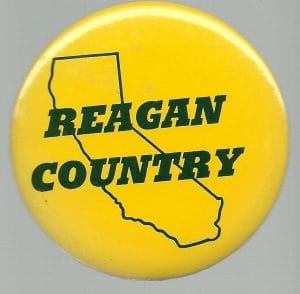
By the 1980s and ’90s, when I was growing up in the SoCal suburbs of Orange County, locals called the region “Reagan Country,” in reference to the arch-conservative president whose career began there. Bombarded by neo-Cold War propaganda, surrounded by aerospace and industrial plants, and culturally remote from relatively free-spirited Los Angeles, teens of our era would joke that we were trapped behind the Orange Curtain. Our county’s only LGBT center was hit more than once by homemade explosives. Local policies were often set by conservative Christians, who demanded prayer in school, control over curricula and books, and other repressive policies. They would absolutely have identified as Chivs in Gwin’s time.
Even now, a version of the Chiv voting bloc is still a major force in California politics, though the divide is no longer so explicitly between north and south. In 2016 and 2024, California’s rural inland counties voted overwhelmingly for Trump. This too was an echo of deeper issues that divided California in the 1850s, Lynch explained. At that time, Southern California’s economy depended on ranches and farms, while the northern part of the state devoted itself to mining and industry. In today’s California, the inland farming and logging regions map almost perfectly to the red zones on voter maps.
![The cover of ECOTOPIA by Ernest Callenbach (1975), bright yellow, with faces in an abstract pattern in blue and bright red: 1999. America's Northwest has seceded from the United States. Now, embark on an astonishing voyage to a world of infinite possibilities! [BLURB] "The newest name after Wells, Verne, Huxley and Orwell." --Los Angeles Times](https://storage.ghost.io/c/11/a3/11a34ed2-0d03-4467-9051-6142cc358694/content/images/2025/07/ecotopia.jpg)
And yet, over the decades since the Civil War, fantasies of an independent California gradually became the purview, not of the state’s reactionary right-wing factions, but of liberal dreamers. In 1975 the mega-bestseller Ecotopia, by Berkeley author Ernest Callenbach, caught the imaginations of hippies and progressives with its story of a war of independence that made Northern California, Oregon, and Washington a new nation devoted to what many in the 2020s would recognize as Green New Deal policies. In the country of Ecotopia, all materials are biodegradable and everything is recycled. Resources are shared communally, women run the government, and Black people run the few remaining prisons.
Despite California’s obvious right-wing leanings—the place was more Reagan Country than Ecotopia in the ’80s—the Callenbachian idea of California as a liberal haven has stuck. It was ground zero for free love and the Free Speech Movement, after all. And, as California nerds like myself love to point out, it was even the future home of Star Trek’s Starfleet Academy, a profoundly utopian institution.
The reinvigoration of CalExit, ironically, comes alongside calls for California to somehow save the Union. The Democrats cannot imagine defeating Trump and his authoritarian goons without a California politician at the helm. If Kamala Harris can’t save us, then maybe Gavin Newsom can. Call it California exceptionalism. Whether as defector or savior, the state plays a starring role in liberal tales of a better tomorrow.
Let’s put that shit to bed right now. California is the source of money and ideas that have underwritten some of the Trump regime’s most reactionary excesses. If the state were to attempt to secede, its citizens would be at odds with each other, fighting the same battles the rest of the Union is having over immigration, social spending, education, LGBT rights, and climate science.
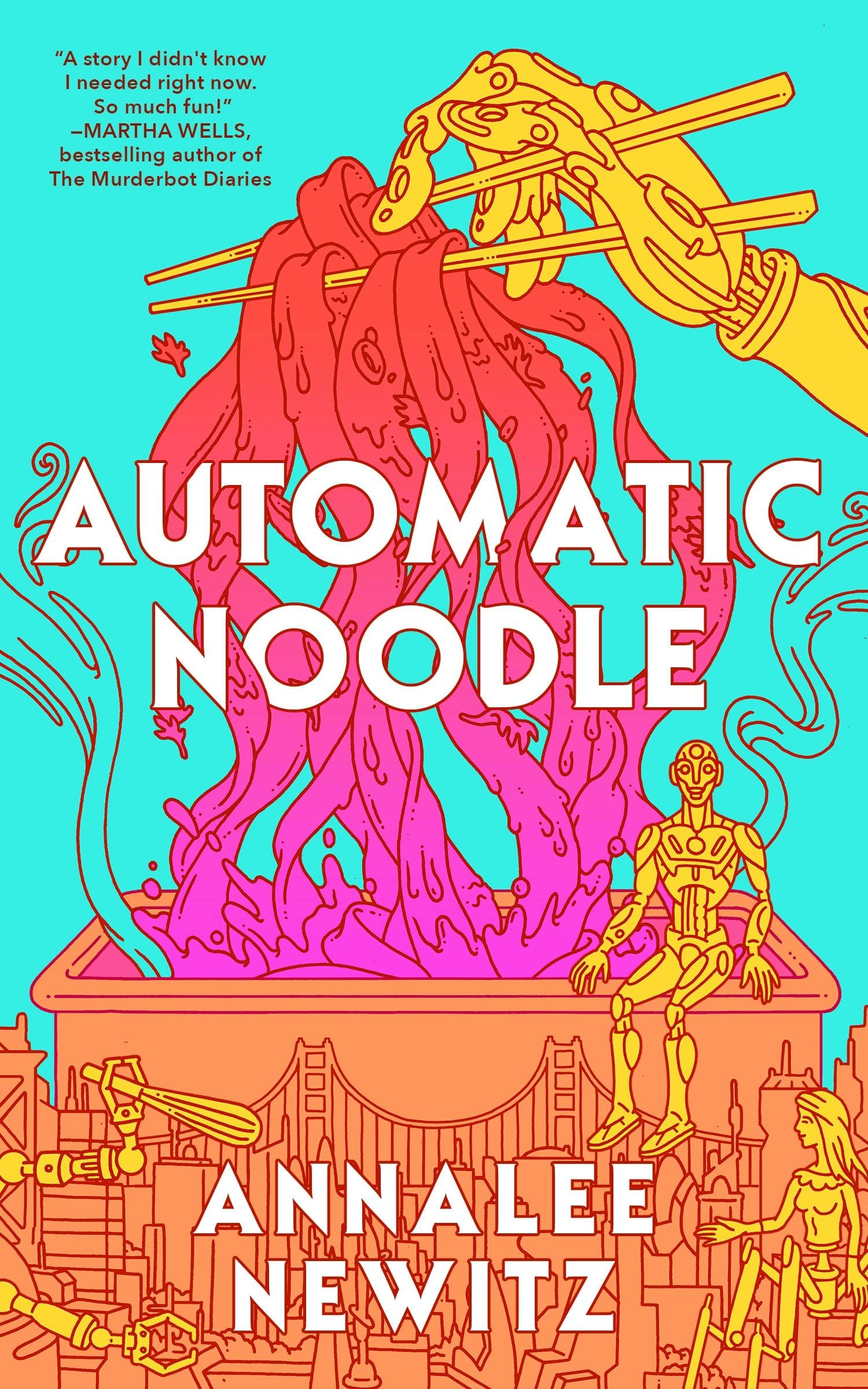
All this was on my mind while I was writing Automatic Noodle, the story of four AI-powered robots just trying to get by in post-revolutionary California. The young nation has granted them limited civil rights, giving them the right to work and little else. Though they are clearly people, with complicated feelings and social lives, they can’t vote, open bank accounts, get married, or own property. Our protagonists exploit a legal loophole to open their own noodle restaurant. But just as they are starting to make enough money to get out of indenture, they are review-bombed on the delivery apps by robophobic propaganda groups.
Independence wouldn’t mean an end to all our problems with labor and civil rights. There is no Ecotopia in our future. CalExit, if it were ever to come to pass, would be violent and traumatizing and create at least as many problems as it could solve.
And yet, as the federal government continues to destabilize the United States, calls for California secession are starting to sound better and better. When I asked Dan Lynch where he thinks the state is going, he pointed out that the period after World War II, with its consensus about national boundaries, was “exceptional.” He suggested that people now have returned to seeing the future of the state as more “fluid,” much as it was after the Gold Rush and during the Civil War. “In America, the norm is to break up as much as connect,” he said. And perhaps that is where our future lies.
SPORTS TALK
![Bluesky post from John Saward: Francesa has an 8-minute bit in today's show on the new Superman, and it's some of the great grumpy work of his career - an incredulous riff on SuperDog, some Actually Good thoughts on extended universes - but particularly his pronunciation of "Green Lantern" is one for the Long Island Hall of Fame. [REPLY from Colin McGowan]: Looked this up. He was on an absolute heater. "Who came up with a dog with a cape?" Listing second-tier superheroes as if they were Yankees infielders who have personally disappointed him. A pitch-perfect circa 1994 disgust with "politics." Great stuff, man's still got it.](https://storage.ghost.io/c/11/a3/11a34ed2-0d03-4467-9051-6142cc358694/content/images/2025/07/image-26.png)
HYDRANYM No. 8
by The Editors
PLAY the word game just for Flaming Hydra subscribers.
THE RULES
Create an ENTERTAINING and APT acronym from the letters provided. Use only the initial letters—use all of them, and in the order shown.
If there is a theme specified, your HYDRANYM should refer to it in some way. For example if the theme were
GLASS
and the letters were
U M D G
a possible submission would be:
Unfilled?! My daiquiri... Gone?
On Thursday, July 17, we’ll publish a form where you can read—and vote—on the best 21 entries received, as judged by a panel of Flaming Hydra editors.
Winners will receive bragging rights and their name and winning entry will be posted on the ANNALS of HYDRANYM page.
CLICK HERE TO PLAY TODAY’S HYDRANYM
CAKE IS GOOD

Entrance Exam
by Trevor Alixopulos
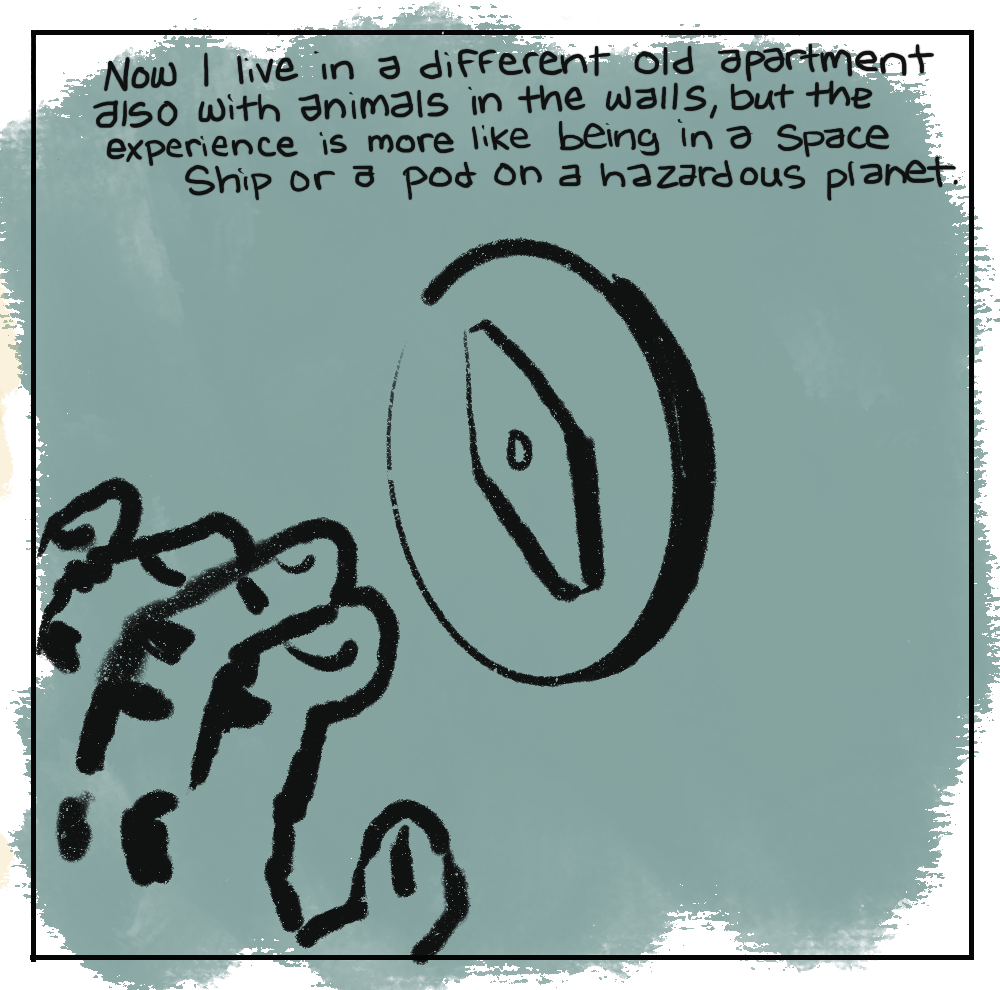
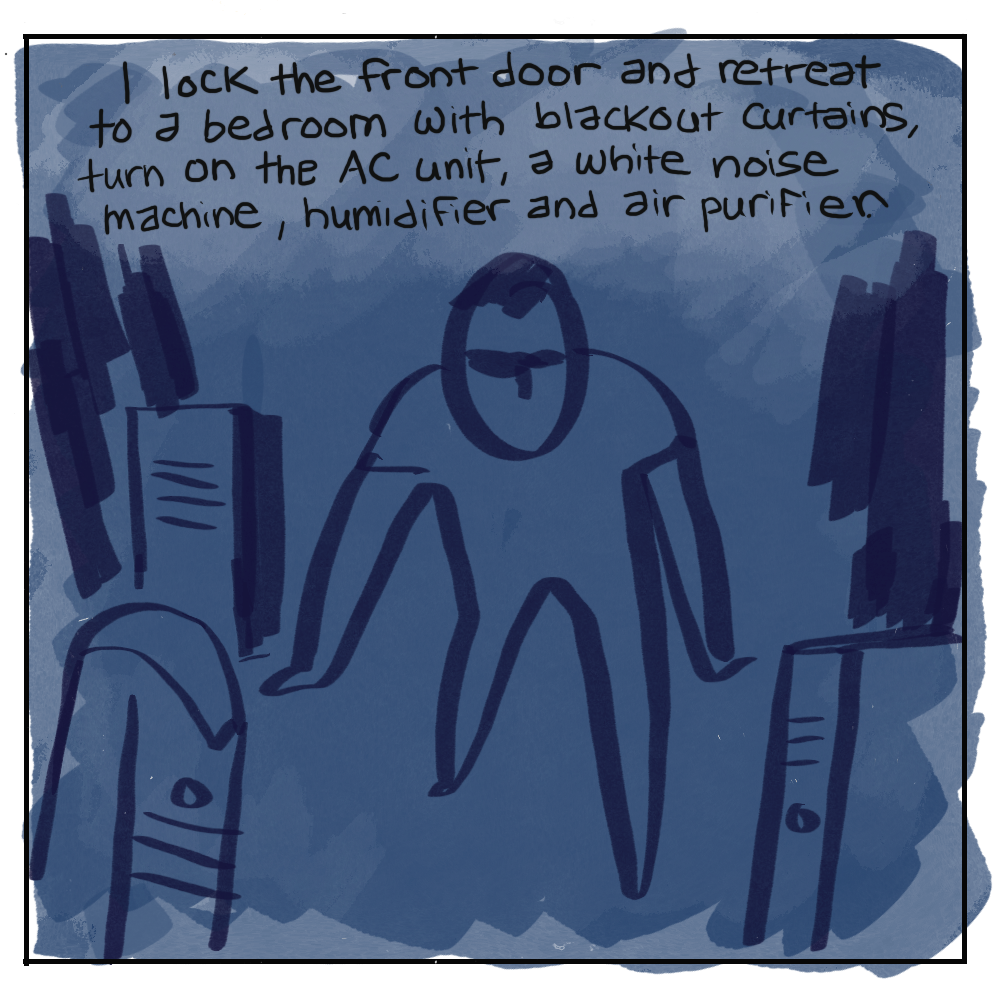
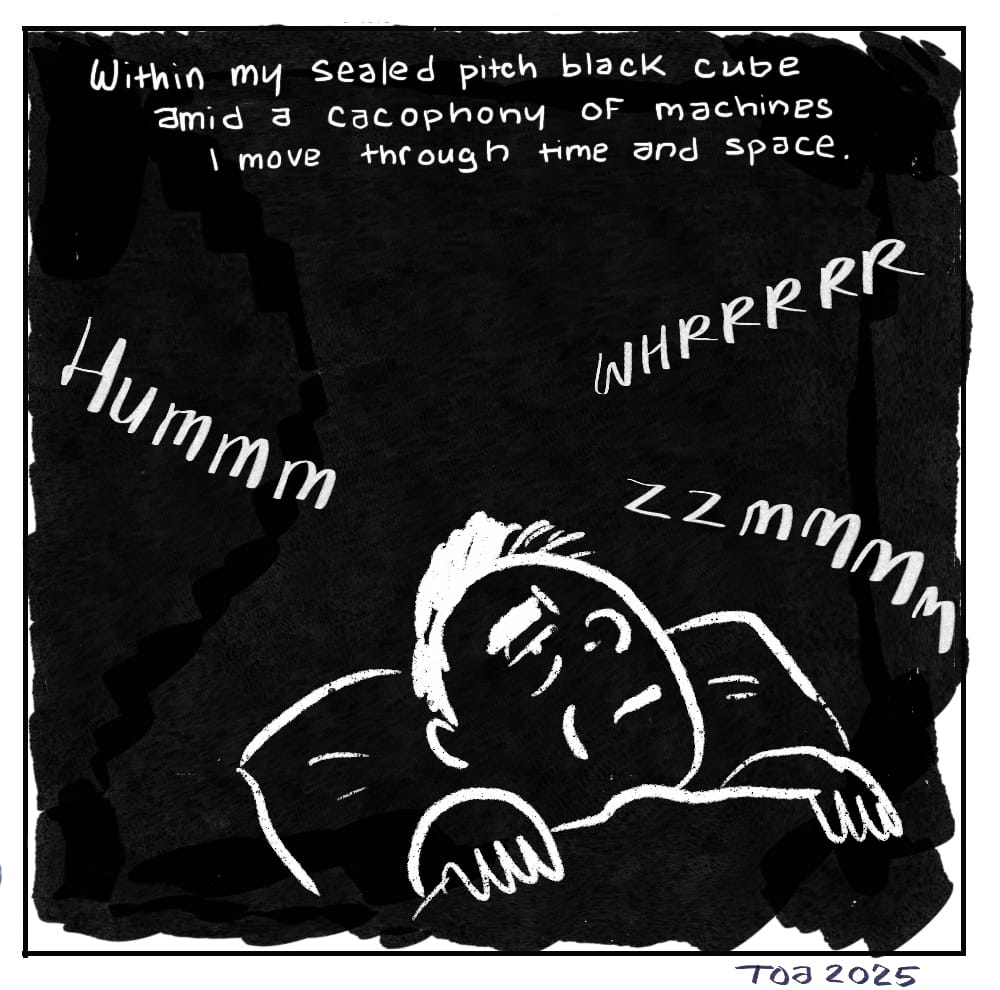
Talk About It