
Making it stay / Letting it go

Today: J.D. Connor, who teaches Film and Media Studies at USC; and writer and artist S.I. Rosenbaum.
Issue No. 505
Certified Rotten
J.D. Connor
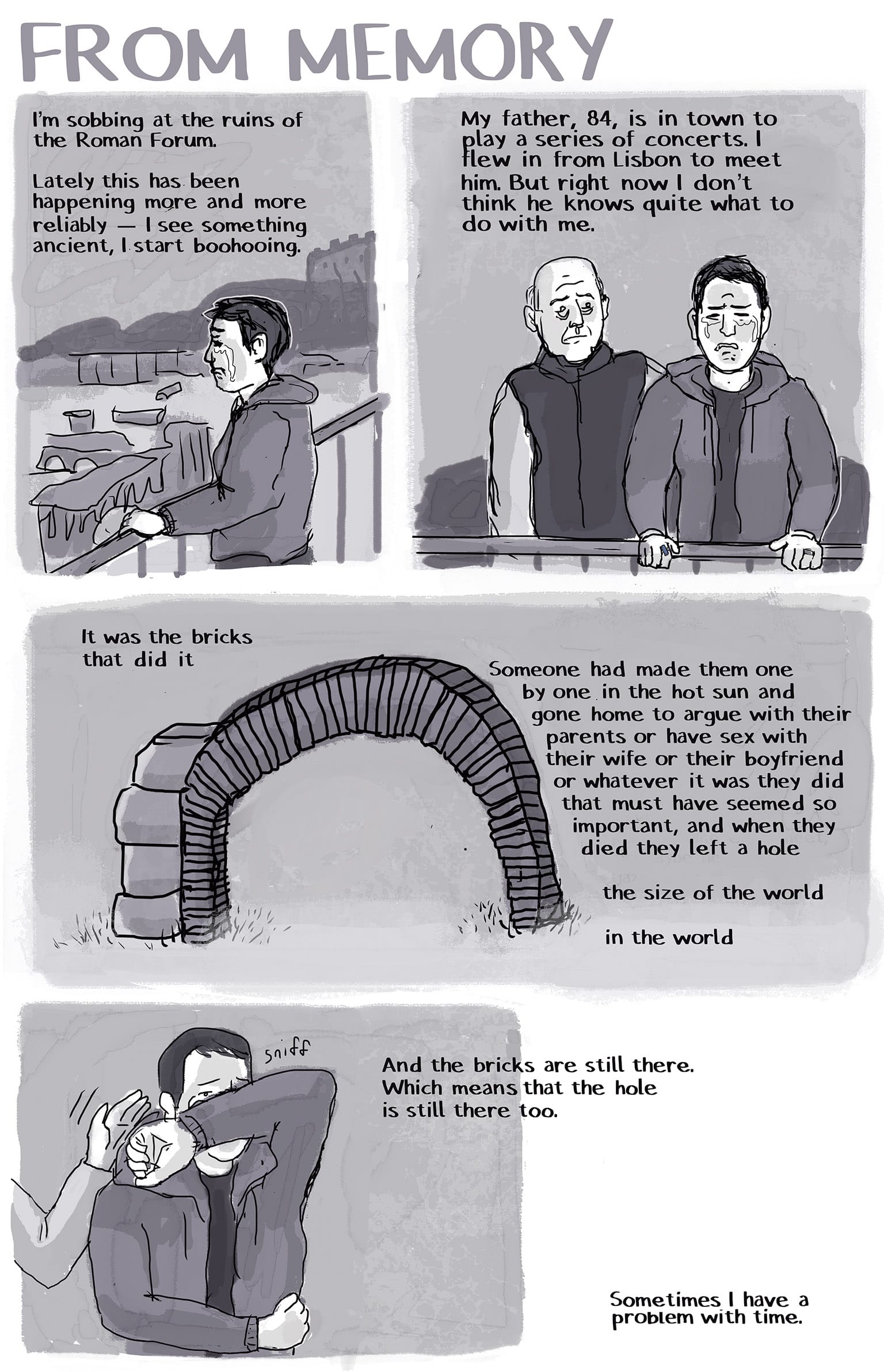
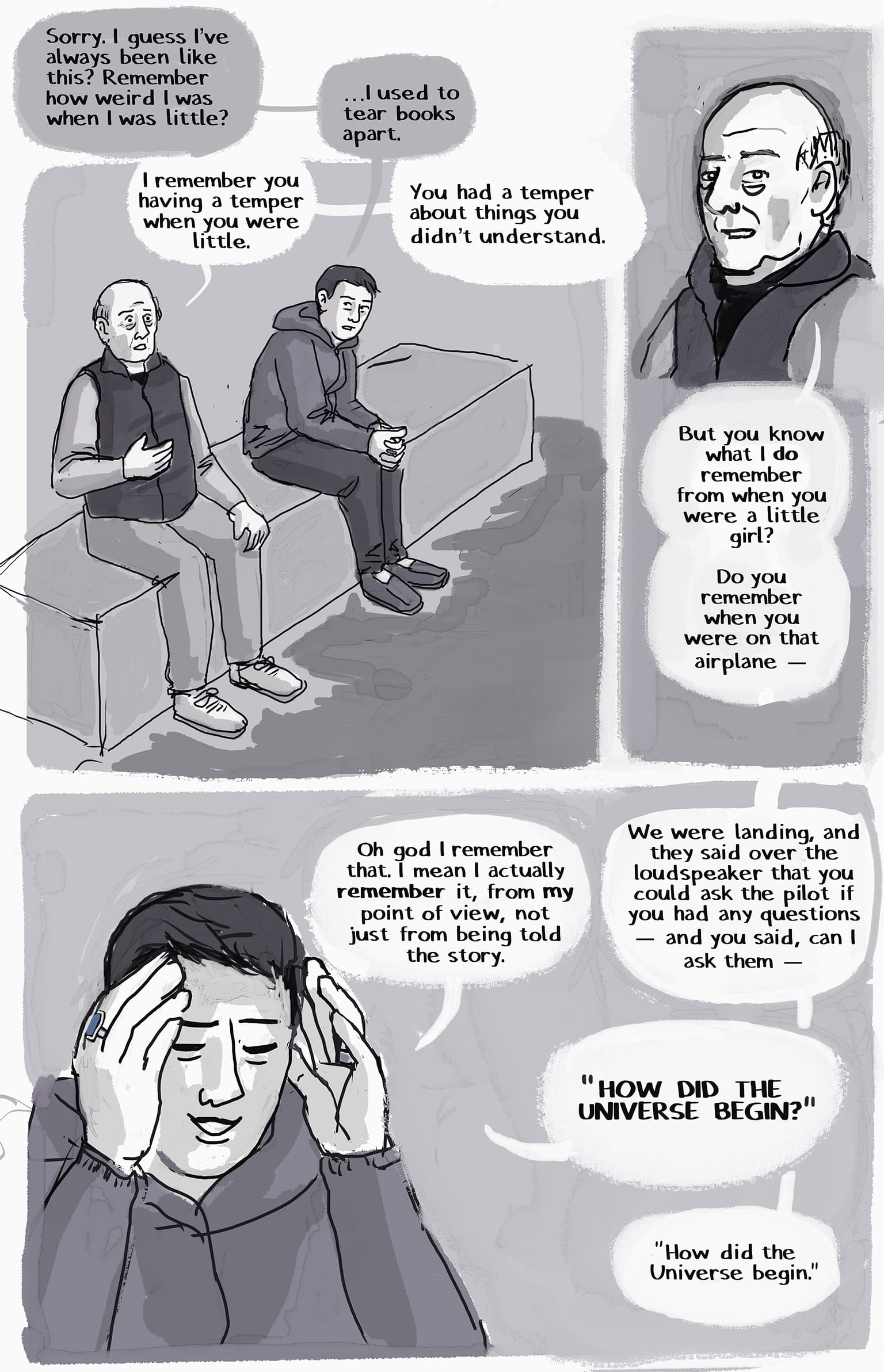
TEETH BEACH: From Memory
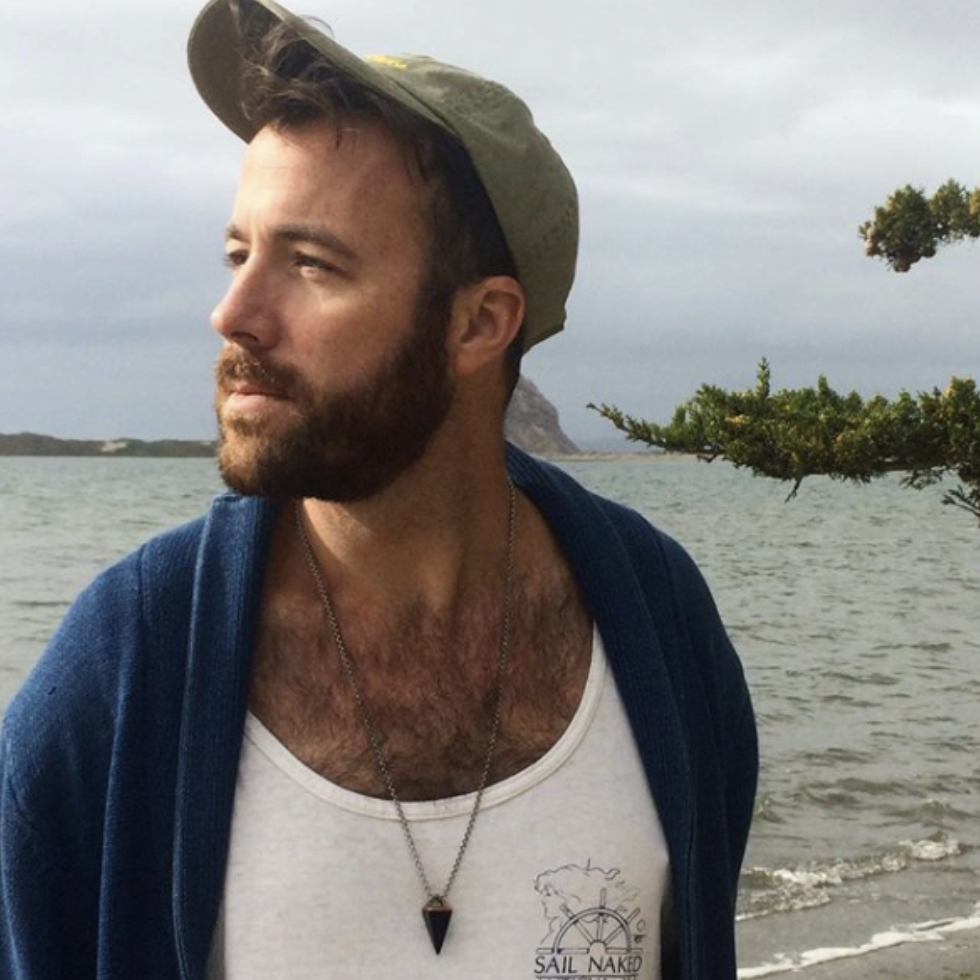
S.I. Rosenbaum
Certified Rotten
by J.D. Connor
“Nowadays, when a person lives somewhere, in a neighborhood, the place is not certified for him,” wrote Walker Percy in his novel, The Moviegoer. “More than likely he will live there sadly and the emptiness which is inside him will expand until it evacuates the entire neighborhood. But if he sees a movie which shows his very neighborhood, it becomes possible for him to live, for a time at least, as a person who is Somewhere and not Anywhere.”
In this way Percy captures the importance of seeing your own world on the big screen. The narrator and his cousin/girlfriend emerge from a screening of Panic in the Streets and she says, “Yes, it is certified now.”
In related news I took the 101 to see Crime 101 at Universal CityWalk. There isn’t enough 101 in Crime 101, the same way there was not enough accounting in The Accountant 2. But there is a bunch of L.A. in Crime 101, and there is a welcome swagger to it in the form of that longstanding chauvinism that assumes that if you care about movies, you should care about the geography of Los Angeles.
Percy’s idea of “certification” is his usual maneuver, in which a bit of existential desperation can be glossed over by what looks like an inevitable surrender to postmodern rootlessness. But his certification has a clock on it—“to live, for a time at least.” He’s sad about this outcome in a way Warhol never would have been. A real postmodernist would revel in it: In the future, Everyone will be Somewhere for 15 minutes.
A lot has changed in the 65 years since The Moviegoer was published, and New Orleans no longer needs the certification it might have lacked in 1961. If you want to see a bystander video of Shia LaBeouf doing battle in the French Quarter, it’s in your pocket. You might think we don’t need big screen certification anymore.
L.A., or most of it, has been playing itself too long. This results in a unique phenomenon where certification is turned inside-out, a kind half-masquerade, where the place dresses up as something else, but imperfectly, incompletely. The way corgis crossed with other breeds look like corgis in disguise [r/incorgnito]. When that happens, location mavens like to gather all the sites together—not to produce shocking revelations but more to resolve the nagging tension in the feeling of oh-I-thought-I-knew-that-place-but-couldn’t-place-it.
A place like Dayton, Ohio, though—where I continue to say I am from—can be certified, even now. Like in the video for The Breeders’ “Divine Hammer,” which shows Kim Deal dressed in Sally Field’s Flying Nun garb drifting along the streets of my home town. But that was 1993—how long can the certification last? The city is not, I can assure you, the same. When certification fades, it becomes documentation, time capsule, artifact. Document a place enough times and you can become a revered local chronicler, like documentarian Julia Reichert was for Dayton, or Studs Terkel was for Chicago.
Certification can also be killed off. A couple years ago I bought an Ohio University t-shirt like the one bassist Josephine Wiggins wears in the “Divine Hammer” video, but because it was made by those slipshod thieves at Fanatics, the fabric wasn’t cut on the bias. It stretches strangely, and I wear it less than I would if it had been made properly. It doesn’t remind me of Dayton. It reminds me that capitalism sucks.
It’s picky to note that the climactic robbery in Crime 101 takes place at the Beverly Wilshire Hotel, which is not “off the 101,” or that our rooting interests all end up living near the beach, which isn’t near the 101, either, until you get well away from Los Angeles and up to Ventura. You can’t hold that against the movie—L.A. movies are full of such secret passageways that jump from the kitchen to the study. De Niro’s crew in Heat can emerge from a downtown bank and then Tom Sizemore can run through a fountain in Santa Monica.
But—and you may have heard this—L.A. production is in sustained collapse. Film and TV shoots are just a third of what they were before Covid, and half of what they were as recently as 2022, according to Luminate. Films that should be shot in L.A.—like Good Luck, Have Fun, Don’t Die, which is set in a Norm’s diner on La Cienega—are shooting in South Africa instead, to “make the number.”
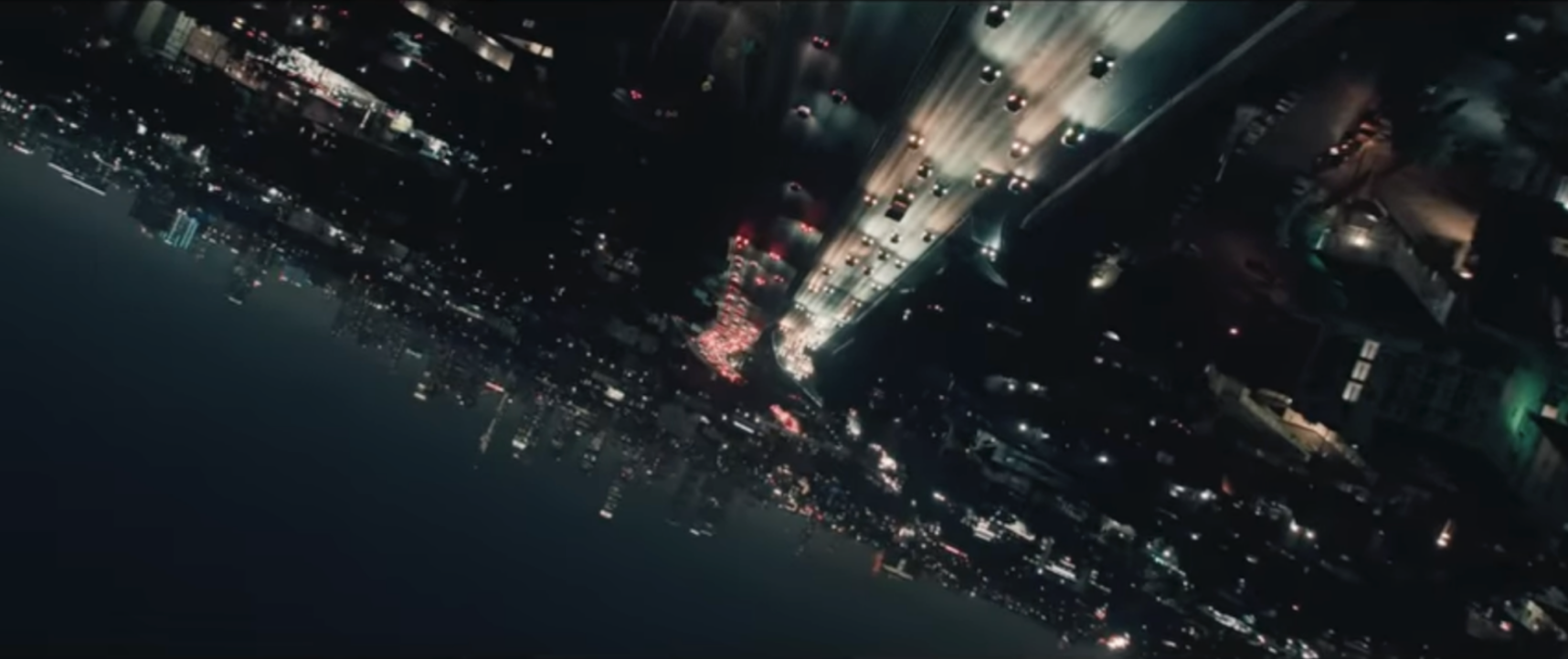
That decline may explain not only the local fondness for prestige statement series like The Studio or I Love LA, but for genre swings like Crime 101 or ambuLAnce or Den of Thieves or Sugar where guys drive around the city and half-landmarks flash by in the blur—that’s your Trader Joe’s; that’s the Downtowner Motel; over and over, that’s the 2nd Street Tunnel. The landmarks are at least as important as whatever Jake Gyllenhaal, Gerard Butler, or Colin Farrell is up to. The rest of the world might not need big-screen certification, but in Los Angeles seeing the city in IMAX—even if wedged in between showings of Wuthering Heights—matters. The city now needs to be certified, to certify itself, in ways it maybe never did before. When Hollywood plops down on the couch, one of the things it wants most of all is to see itself, as it did in The Rockford Files or I Love Lucy or Insecure. In Crime 101 this becomes most obvious in the slowly rotating shots of the city turned upside down.
I built an academic career on the interpretive gambit that at precise historical junctures individual pieces of art could reshape whole aesthetic systems, the way that uprisings against fascism in a single city might become signal and model for uprisings everywhere. That grandiose metonymy is thoroughly played now. Social solidarities matter more than ever; Minneapolis is the model. But mass artworks may no longer have that traction.
Yet every time Chris Hemsworth takes a corner in Crime 101 he fishtails the hell out of whatever he’s driving—a Chrysler 300, Dodge Challenger, or a sweet 1968 Camaro. Here he is on the press tour: “I did a lot of driving in this film and…there needed to be something kind of gritty about it. Didn’t want to look too slick and relaxed. It needed to be on the edge. Like things could go wrong at any minute.” As the emblem of an industry and a town and a world on the edge of losing it, that will do.
SERPENTS SHINE
![Bluesky post by Sam Thielman: "Ideally the Turkish consulate" [QUOTE POST] onion person @junlper.beer it’s so funny how many liberal pundits claimed this guy was the future of the democratic party lol [QUOTE POST FROM TWITTER] Eric Adams: "Free" isn't free. It's just a bill someone else has to pay.](https://storage.ghost.io/c/11/a3/11a34ed2-0d03-4467-9051-6142cc358694/content/images/2026/02/image-71.png)
![Bluesky post by Mark Yarm: My hobby is collecting oversized novelty cups. [QUOTE POST]Emily Nussbaum @emilynussbaum.bsky.social · 4h MY HOBBY IS COFFEE premium.boingboing.net/p/caffeinate... Caffeinated coffee may stave off dementia According to a study comprising 43 years of data on over 130,000 patients, drinking caffeinated coffee was associated with a lower risk of dementia. premium.boingboing.net](https://storage.ghost.io/c/11/a3/11a34ed2-0d03-4467-9051-6142cc358694/content/images/2026/02/image-72.png)

TEETH BEACH: From Memory
by S.I. Rosenbaum
Keep us breathing fire!






For $3/month you can read this whole post and get our weekdaily newsletter too!