
Tracking changes / Stalked by fame
Today: Shuja Haider, senior editor at The Nation; and Amy Chu, artist and publisher of Camoot.Journal.
Issue No. 54
The Drama of Editing
Shuja Haider
Candace Chen Needs A Friend: Part I
Amy Chu
The Drama of Editing
by Shuja Haider
In the 1990s, Hollywood often dramatized stories about journalists—it was a much better-paid and potentially even glamorous occupation, back then. As a dramatic character, the journalist has a similar appeal to that of a police detective: both professions entail contact with various important, strange, or dangerous people, and each sets out to find the answers to unanswered questions. The role of a fictional editor, in turn, corresponds to that of the beleaguered police captain, barking orders and furrowing brows, granting either official censure or grudging permission to a protagonist who had enough gumption to bend the rules. These kinds of things do happen, but in my experience, most conflicts between writers and editors take the form of protracted correspondences about sentence structure.
With newsrooms thinning out and per-word rates declining, journalists may have lost some of their former dramatic allure. But they’ve started to appear with more frequency in movies and television again—perhaps as a result of the trend for screen adaptations of gossip and scandal reporting, which are among the few remaining meal tickets in the industry for an ambitious writer. A fictionalized example of this phenomenon is The Girls on the Bus, a recent TV adaptation of Chasing Hillary, Amy Chozick’s chronicle of her experience covering Hillary Clinton’s 2016 presidential campaign for The New York Times. The series borrows its title from Timothy Crouse’s book The Boys on the Bus, a classic account of the journalists who covered the 1972 presidential election.
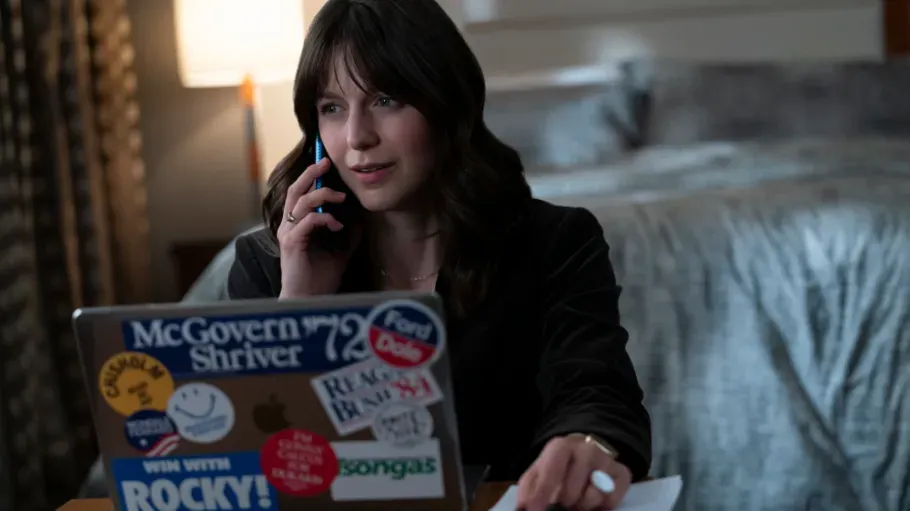
The main character in the show, Sadie McCarthy, is a reporter for “The New York Sentinel,” and her sole personality trait is that of being a major journalism nerd: she chats with the ghost of Hunter S. Thompson, and her laptop is decorated with bumper stickers for the presidential campaigns of both George McGovern and Ronald Reagan. Her reporting bears little resemblance to anything you would read in a daily newspaper. (“Isn’t a presidential primary just a higher-stakes version of The Bachelor?”)
Fair enough, given that it’s a fictional election. Neither Hillary Clinton nor Donald Trump appear to exist in its universe, though somehow the Steele dossier does. One of the candidates in the show’s Democratic primary is a young congresswoman who speaks in social media bromides and is obviously based on Alexandria Ocasio-Cortez; another, a movie star who portrays a superhero called “AguaBro,” must be based on Jason Momoa. Sadie’s voiceover narration depicts her internal struggle between going “gonzo”—which apparently refers to the kind of writing that invites readers to “heal with me”—and the directive from on high to conduct herself as an “objective newsman,” emphasis on the final syllable. You might think that neutrality wouldn’t be a problem for someone who is a supporter of both McGovern and Reagan, albeit in elections that took place before her birth, but her concern for the state of what she calls “our fragile democracy” tends to lead her astray.
Sadie’s foil in this dilemma is her editor Bruce Turner, who is based on the Times’s media critic David Carr and is played by Joan Didion’s nephew Griffin Dunne. He is generally depicted reclining on a couch and smoking cigarettes in a dimly lit office with a skyline view, reading printouts of our heroine’s drafts aloud. What he is not depicted doing is any editing. I’ve never worked at the New York Times, so I can’t speak to their indoor smoking policy. But I do work as an editor at a national magazine, which is why I regard stories like these with grim fascination.
In Hollywood’s conception of a newsroom, the editor is invariably the boss. But in the real world, editors are just as often working stiffs who answer to people above them, and who can also be treated as subordinates—by publishers and other managers, by owners, and by writers with profiles high enough to call the shots. Our work is primarily that of reading, asking questions about what we read, and answering many, many emails. Admittedly, this kind of activity doesn’t lend itself to dramatic onscreen reenactment.
For that reason, I usually describe myself as a journalist when asked what I do for a living, because it’s roughly true. This has its own risks: I once told a punkish-looking guy in a train station that I was a journalist, assuming that his reaction would register somewhere between indifference and mild approval—perhaps, at best, some vague interest in a vocation that speaks truth to power, and all that. Instead, I was treated to a rant about the liberal media, and I think he wanted to punch me. Shortly after that, I described myself as an “editor” to someone I met at a party, who responded in confusion, “Can’t writers edit themselves?”
It’s a fair question, the answer to which is “not really.” I know this primarily through my experience as a writer, rather than as an editor.
In a universe full of complexity, very little approaches the complexity of human communication, the attempt by one sentient being to make a thought legible to another. When a writer files a draft to an editor, that writer is asking one essential question: Do you understand what I mean? There are secondary questions, like Do you agree? and Is this correct? and Did you enjoy reading it? but they all follow from the first. This is the craft: an editor has to be able to say I don’t understand and go about trying to extract the writer’s meaning, achieving the writer’s intention, so that future readers will be able to answer, Yes, I understand.
Some of the most consequential interventions an editor can make don’t sound like much, but they can make all the difference. Writers hold so much information in their heads when putting together a draft that it can feel impossible to keep track of how much a reader knows at any particular point. There might be material in paragraph three that is difficult to grasp until you learn something that comes up in paragraph four; something that is merely a point of fact in paragraph two might become a stunning plot twist, or a great joke, if withheld until paragraph five. Not infrequently, a writer will compose an ideal first paragraph and bury it in the middle of the piece. It takes an editor to notice.
An editor is simply a first reader, in other words; a role that is both mundane and profound. It’s mundane because writing is everywhere, and reading is the only thing anyone can do with it, and profound, because any given piece of writing is only brought into existence by its encounter with a reader’s eyes. The level of attention to the meanings of small details in speech or text required by editing is not unlike that of psychoanalysis, and the editorial relationship is a kind of transference, with the editor standing in for all possible readers the way the analyst stands in for the people in a patient’s life. There is a corresponding risk of countertransference, should the editor attempt to impose personal foibles on a writer, who may then feel obliged to cater to them; most writers have experienced this frustration. Worse still is the enforcement of ideological or institutional consensus—resulting in, for an extreme but commonplace example, the use of passive voice in establishment media when describing killings by the U.S. police or military, or by the IDF. For what’s essentially a clerical task, editing can have significant consequences.
The ability to self-publish online is by and large a good thing, expanding the range of voices the public is able to hear from and allowing for necessary challenges to orthodoxy. But while the institutional boundaries of legacy media deserve to be overthrown, the practice of editing is too often an undeserving casualty. In the new media regime, much of what we read in newsletters or blogs does not pass by a dedicated first reader’s eyes before publication, and it shows: stream-of-consciousness missives, not only replete with errors but lacking structure and form, crammed with inside jokes and inscrutable tangents.
Even if Hollywood doesn’t know what an editor is, readers can feel their absence. I don’t expect to see someone sitting at a desk and switching on a word processor’s tracking function in an HBO series, but that’s what happened when I filed this piece. In my original draft, the first paragraph of the version you’ve just read was somewhere in the middle.
NEWS FROM THE LAIR
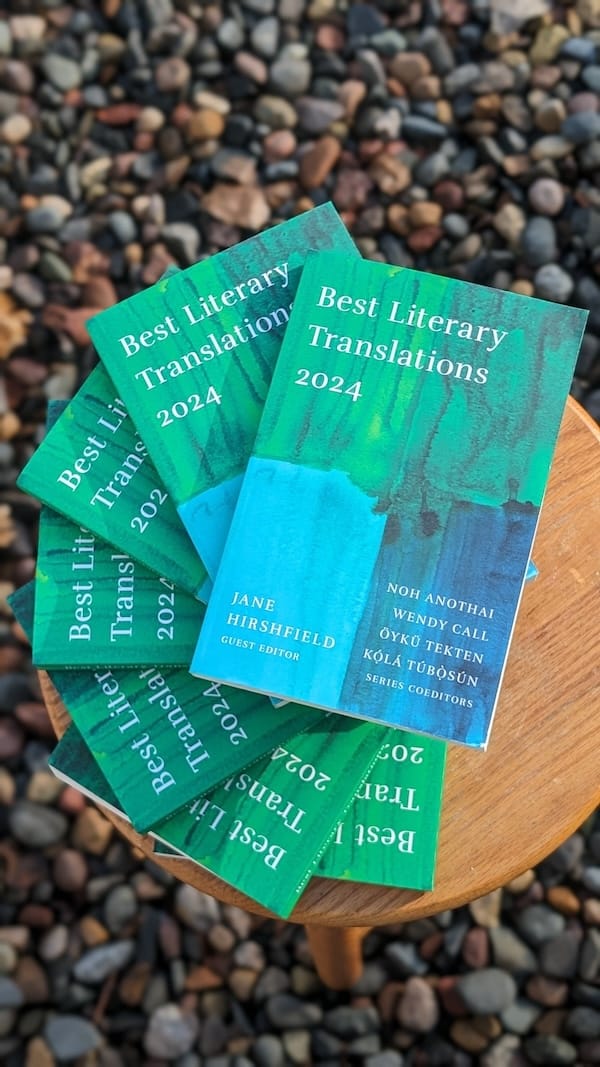
This year’s Best Literary Translations anthology is out! Flaming Hydra Kọ́lá Túbọ̀sún co-edited this celebration of U.S. translators in 19 different languages. Each work is accompanied by a short note from the translator. Release events in April and May 2024 can be found here.
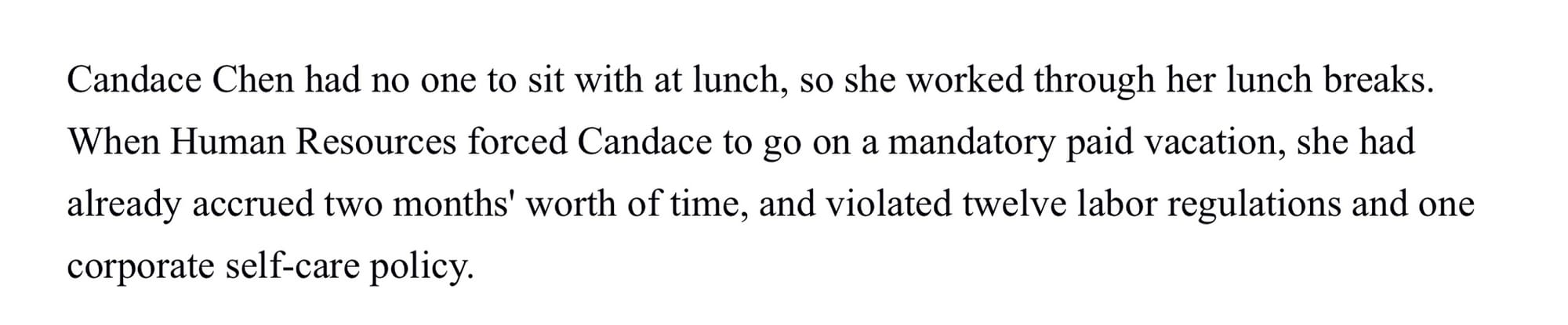
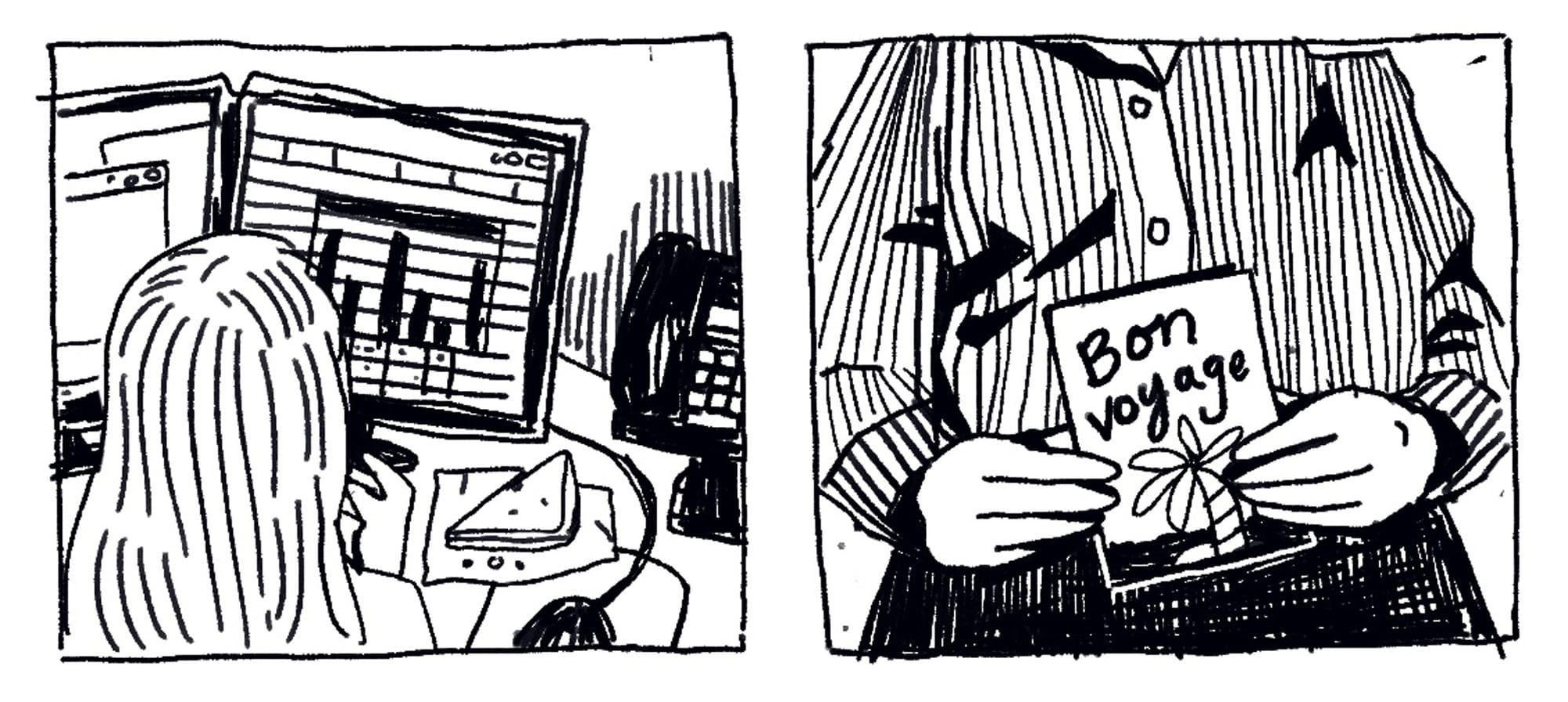
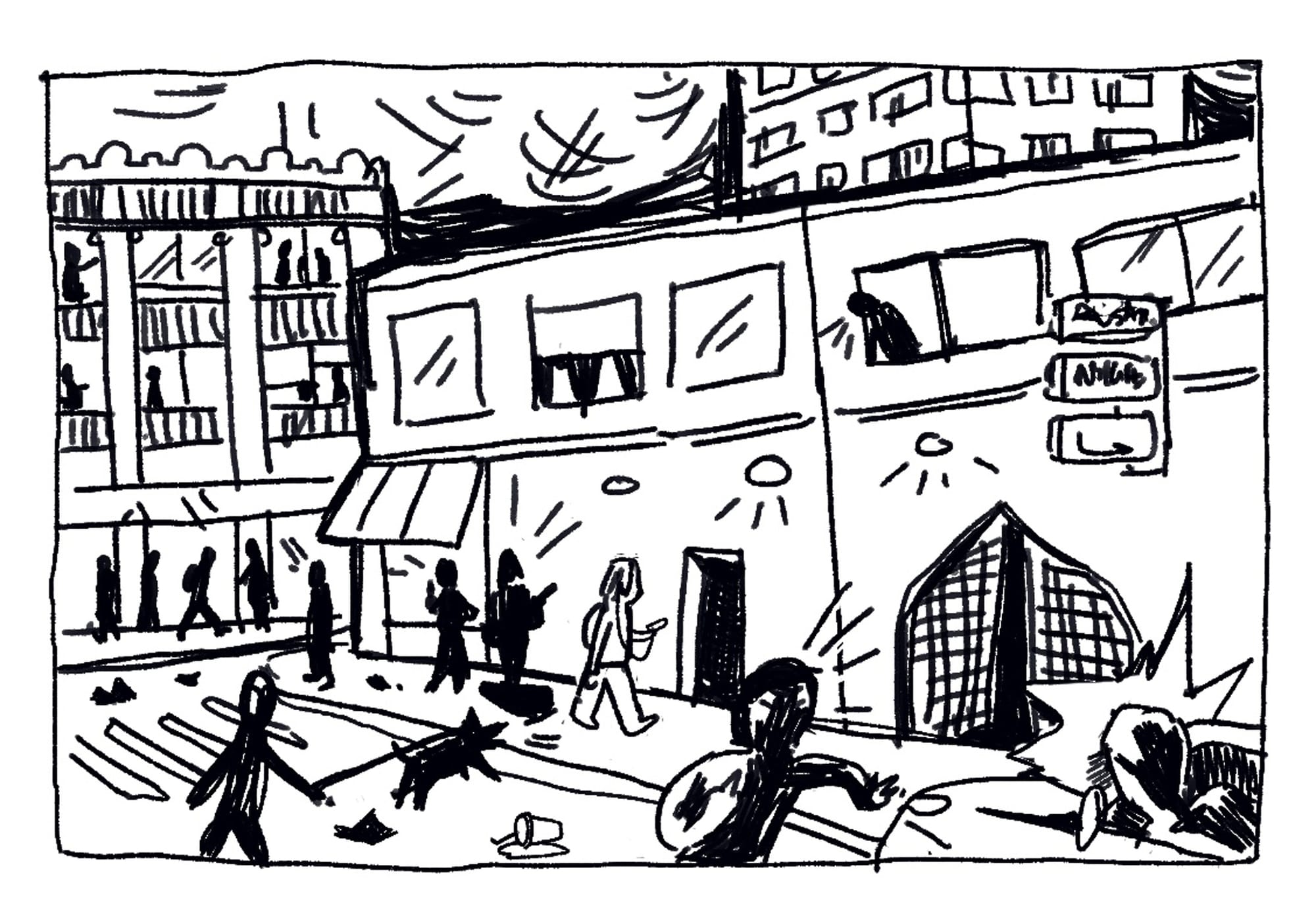
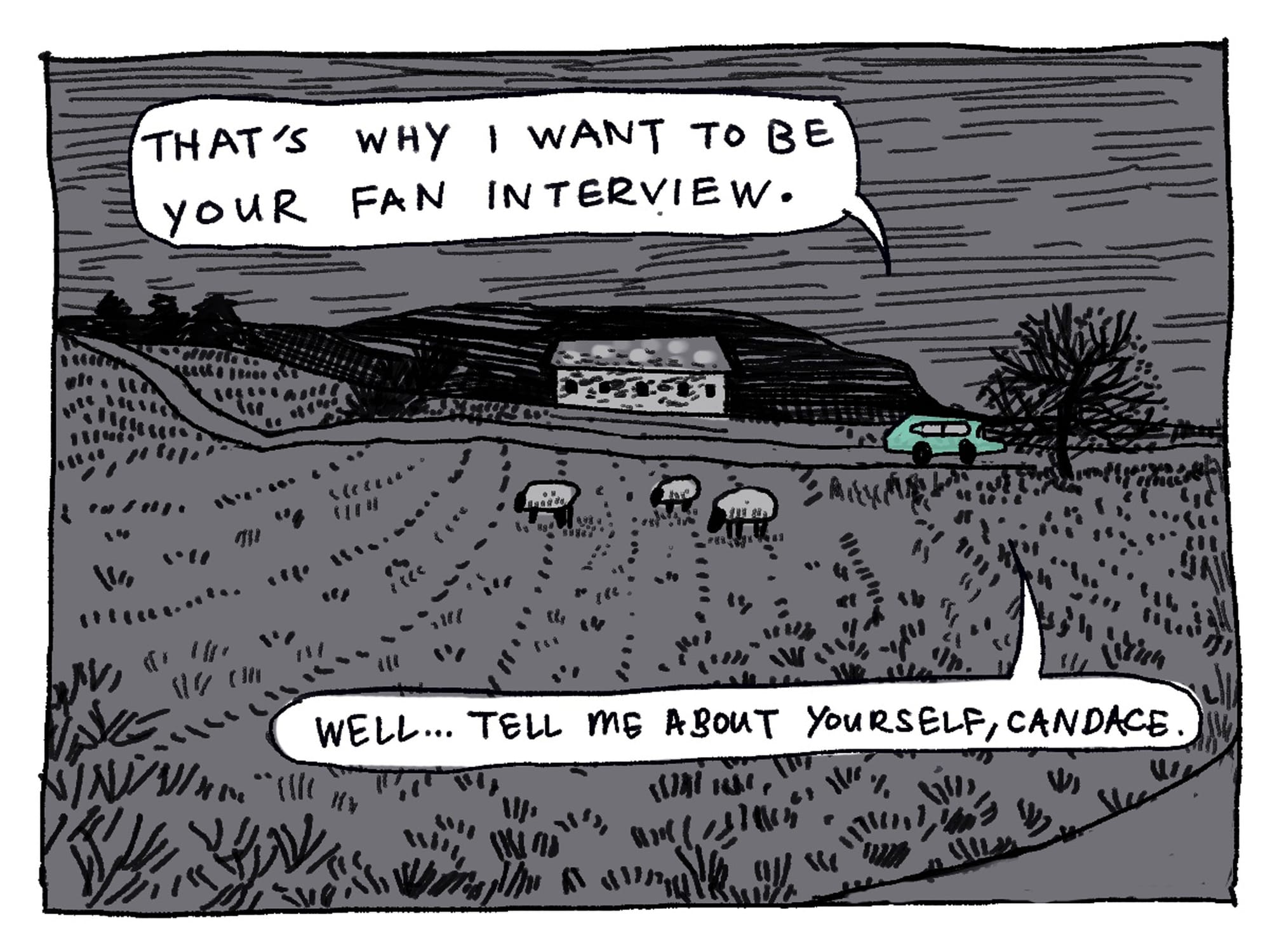
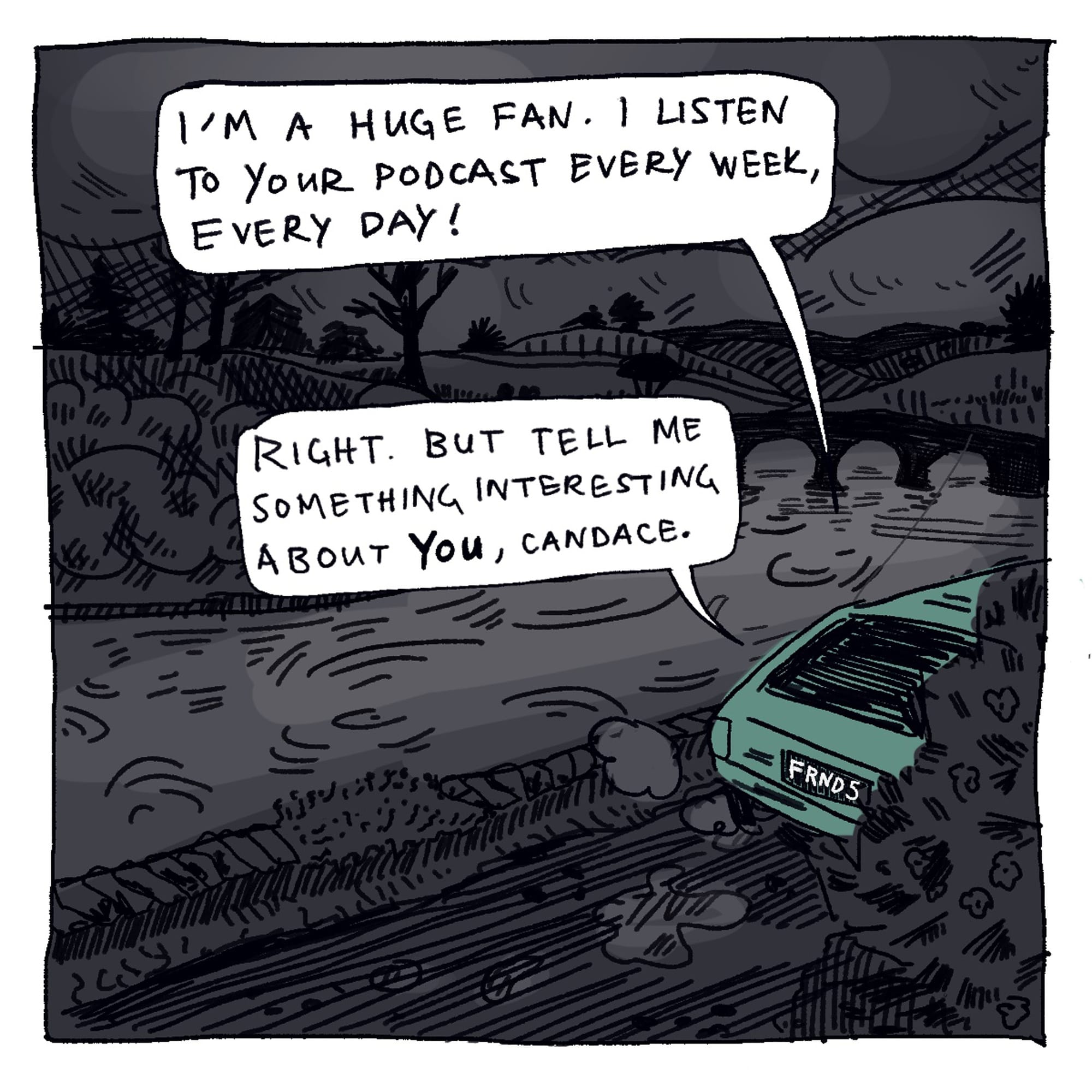
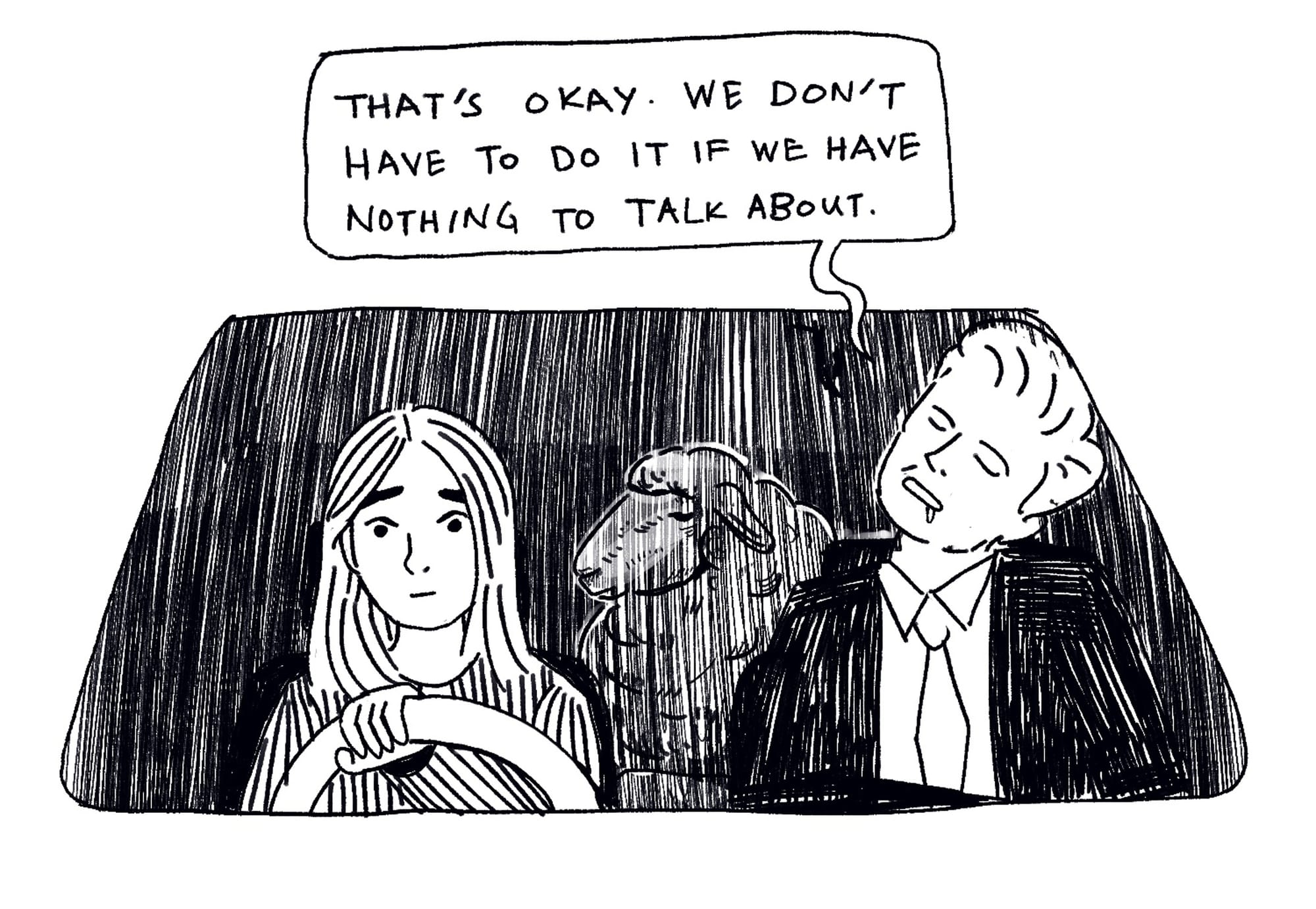
Candace Chen Needs A Friend: Part I
by Amy Chu



FLAMING HYDRA IRL
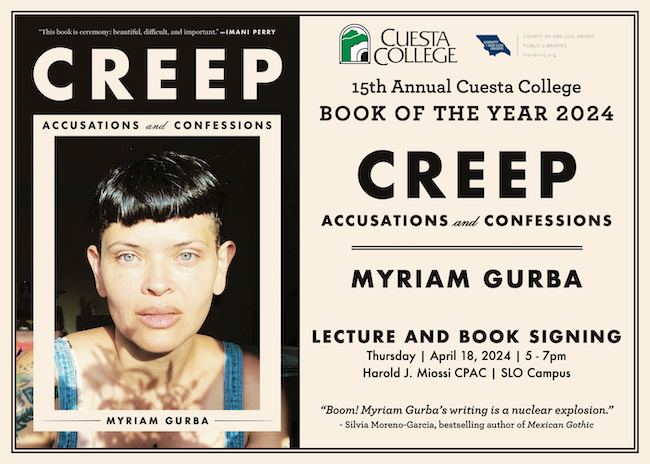
Myriam Gurba’s book Creep is Cuesta College’s Book of the Year—and she’s doing a lecture and book signing to celebrate!! In San Luis Obispo, California, on April 18.
Talk About It