
THUK ZWEEP PLAF / Loss lesson
Today: Zach Rabiroff, a writer on books, comics, and culture living in Brooklyn, New York; science journalist, columnist, podcast host, and science fiction writer Annalee Newitz, author of Nebula, Locus, and Hugo Awards finalist Automatic Noodle; and Amy Chu, artist and publisher of Camoot.Journal.
MAD WEEK BEGINS
When I was growing up, my grandparents used to keep a book on their living room table called the Big Book of Jewish Humor by William Novak and Moshe Waldoks. This was the first edition, mind you, with its iconic yellow cover, and amid the morsels of Neil Simon, and S.J. Perelman, and Saul Bellow that I glossed over, there was exactly one entry in the anthology that caught my eye. It was a parody of Fiddler on the Roof called Antenna on the Roof by artist Mort Drucker and writer Frank Jacobs, plucked from the pages of MAD #156 from 1973.
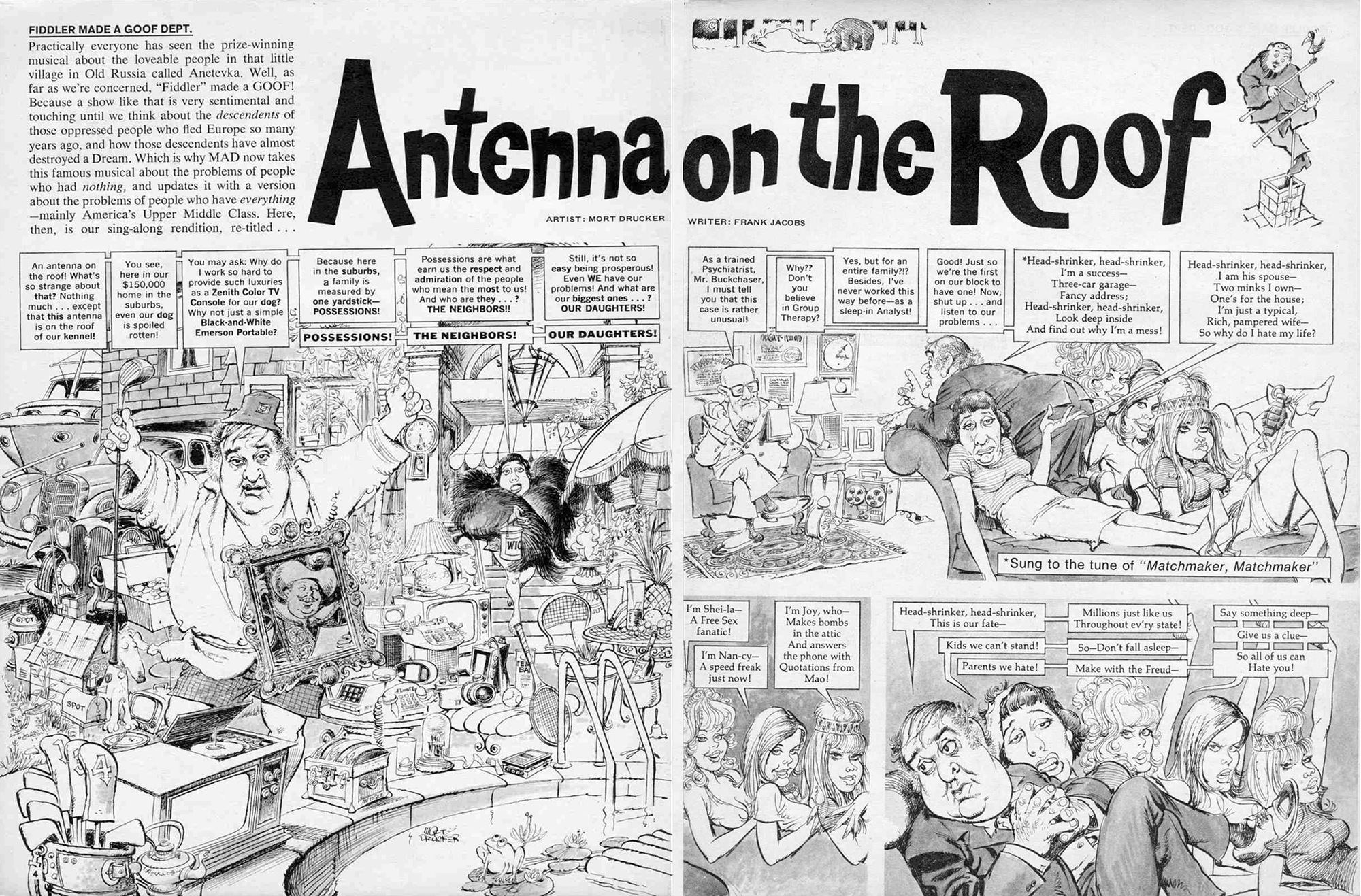
It was 1992, I was six years old, and I had never heard of MAD Magazine. But I did know musicals (like every Jewish child in Los Angeles, I was an extra in a school production of Fiddler that year) and I definitely knew comics, and I could immediately recognize this as a first-class example of both. Here was everything I appreciated as a connoisseur of lowbrow pop cartooning: the recognizable celebrity caricatures stopping one degree short of grotesque; the rolling waves of antiquated topical references I couldn’t begin to understand (Emerson portables? Chairman Mao? Yippies?); the soupçon of PG-13 sex in the panels of naked flower children cavorting to the tune of “Miracle of Miracles.” This was my American 20th century in seven pages.
Nor was I alone in this. MAD began as a humble E.C. Comic in 1952, under the stewardship of editor and cartoonist Harvey Kurtzman, and transformed into its more familiar magazine form three years later. Over the next 74 years, what began as a cartoon parody of modern culture developed, increasingly, a seminal influence over the real thing. The list of modern cartoonists, writers, comedians, and cultural critics who cite MAD as a defining influence is too long to name, but it includes Robert Crumb, SCTV, Mike Judge, Dan O’Neill and the Air Pirates, Peter Bagge, Bill Griffith, Alan Moore, and every one of the classic-era writers of The Simpsons along with creator Matt Groening. It is not pushing things too far to say that a direct line can be drawn from the first issue of MAD to American comedy as we understand it today.
MAD itself, meanwhile, went through its own distinctive eras: the early, vital years under Kurtzman; the settled habits and comfortable anarchy of his successor Al Feldstein; the dutiful final years under E.C. founder Bill Gaines; and the self-referential final years under a new generation of editors and artists who had themselves grown up with the magazine. The cast of contributors became a familiar roster: Sergio Aragonés, Don Martin, Mort Drucker, Al Jaffee, Antonio Prohías, the wild Basil Wolverton, the tragic Wally Wood. A murderers’ row of cartoonists who would do anything for a cheap laugh.
For the next week, the usual gang of idiots at Flaming Hydra will run our own examinations, reflections, and analyses of the MAD comics, magazines, and creators that made us what we are. We invite you to enjoy MAD Week, because the central question of life remains what it was seven decades ago:
“What, me worry?”
—Zach Rabiroff
Issue No. 557
Don Martin, MAD’s Sickest Artist
Annalee Newitz
Five Things I Found Funny While My Childhood Cat Was Dying
Amy Chu
Don Martin, MAD’s Sickest Artist
by Annalee Newitz
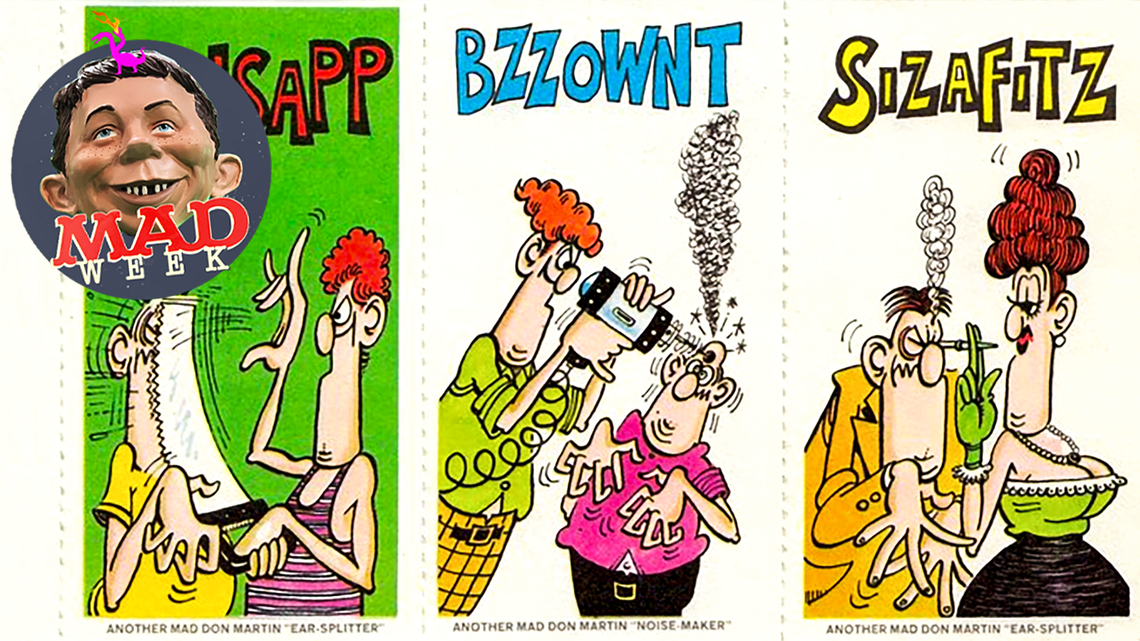
When I was a kid in the early 1980s, I supplemented my monthly MAD subscription by convincing my parents to buy me one of the many MAD paperbacks sold near the checkout counter at Fedco. My favorites were the ones by Don Martin, the chaotic cartoonist whose “One Fine Day” strips in the magazine never failed to hold my 10-year-old attention with their frenetic motion lines and impossibly grotesque body horror.
I still have a significant number of his books from back in the day.
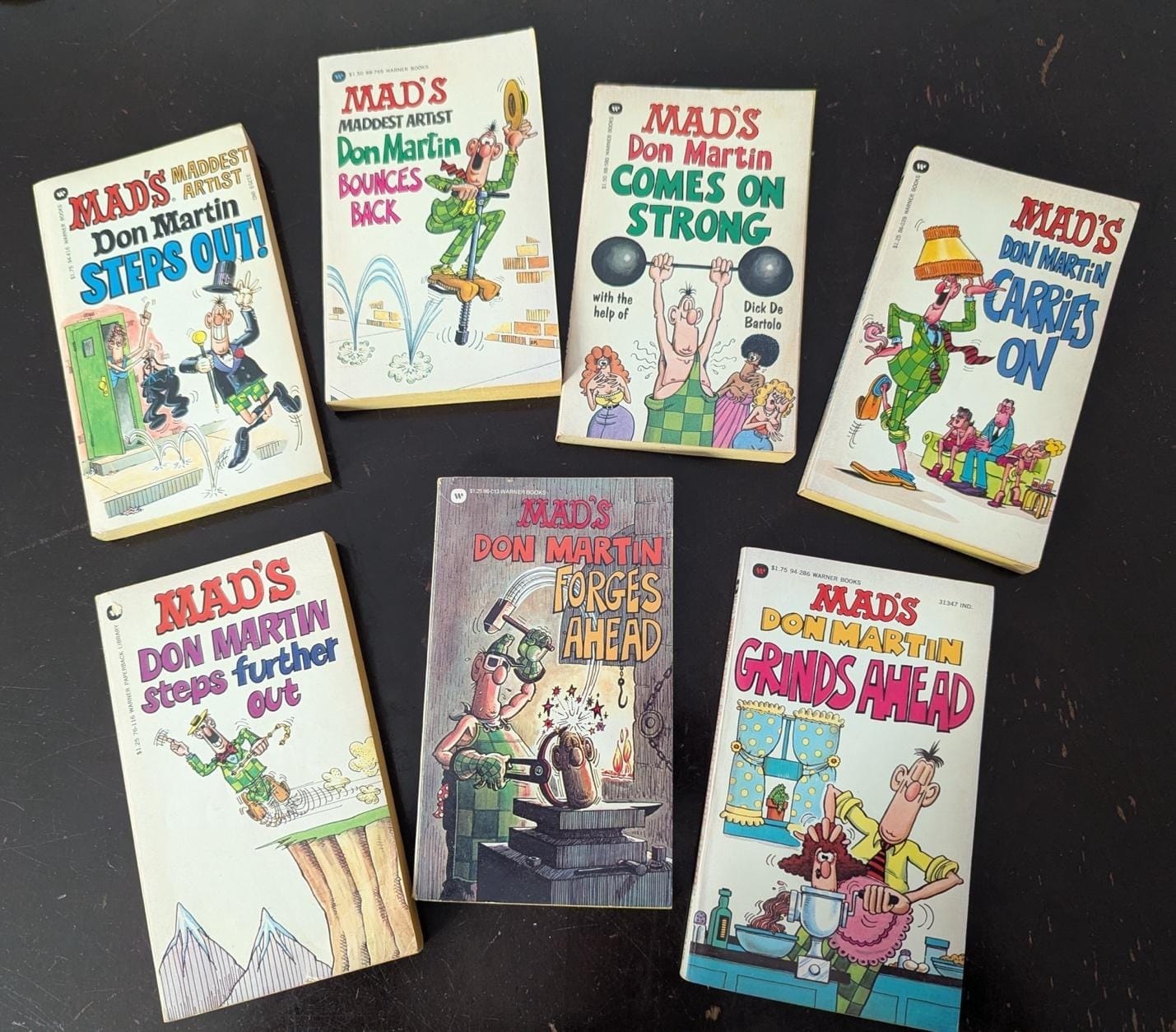
At the time, I thought Martin’s work was so deeply weird that I had to be the only person in the world weird enough to appreciate it. Little did I know that he was one of MAD’s most lucrative commodities. By 1981, his books had sold 7 million copies in the U.S. alone. MAD’s editors dubbed him “MAD’s maddest artist” and eventually gave him his own “Don Martin Dept.” His art was a pure expression of the magazine’s unhinged spirit. And yet, ultimately, MAD broke his heart.
Keep us breathing fire!







For $3/month you can read this whole post and get our weekdaily newsletter too!