
Terminal velocity
Today: Dave Karpf, professor of political communication at George Washington University, writer of “The Future, Now and Then” newsletter, and author of the forthcoming book, Vaporware, Inc: How Silicon Valley Sells the Illusion of Progress.
Issue No. 578
How Durable is Muskism?
Dave Karpf
How Durable is Muskism?
by Dave Karpf
Elon Musk will soon become the world’s first trillionaire. I don’t like it any more than you do. There is something unsettling about that guy becoming the most successful businessman of all time. In the same way that all of American politics is now wrapped around the axle of Trumpism, it appears much of the business world is being reordered around Muskism.
Ben Tarnoff and Quinn Slobodian’s new book, Muskism: A Guide for the Perplexed, explores what Elon Musk is doing to capitalism. Tarnoff and Slobodian treat Muskism as something akin to Fordism, which was arguably Henry Ford’s most significant legacy. Fordism was a social contract: a model of life under capitalism, quite apart from the specific biographical details and business decisions of the man himself. That model lasted for decades, as businesses, governments, labor organizations and citizens came to operate within the context and social expectations Ford established.
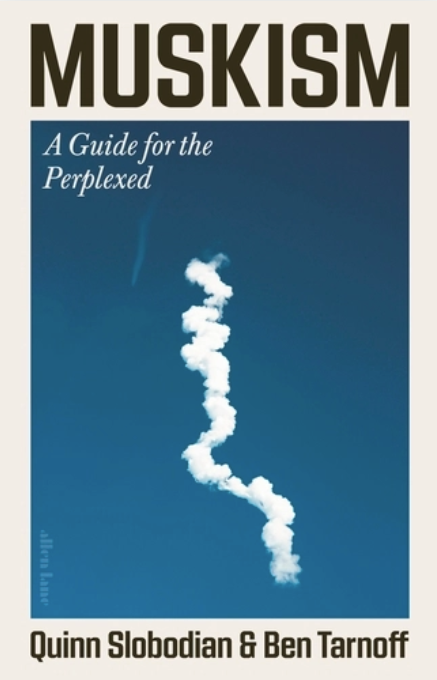
It is no small challenge, setting out to write something truly original on the subject of Elon Musk circa 2026. The field is packed, with hagiographies and sharp-elbowed takedowns both amply represented. But Muskism is a very good book with a fresh approach: Tarnoff and Slobodian focus less on the man than on his replicable, potentially durable intervention in the social order. The authors leave even the closest Musk-watchers with something new to think about.
Consider, for instance, “fortress futurism.” One strategy that has paid off quite handsomely for Elon Musk is his preference for controlling his businesses’ entire supply chains. This was far from the norm for multinational corporations in the 2000s and 2010s, but, amidst the supply chain disruptions of the early 2020s, it became wildly profitable. Muskism uses Musk’s personal history to show where these business practices originated, not to celebrate or critique them, but to identify the key patterns of behavior that make Musk companies distinctively Muskian in ways that future companies might seek to follow.
Keep us breathing fire!








For $3/month you can read this whole post and get our weekdaily newsletter too!