
It’s Science
by Misha Angrist
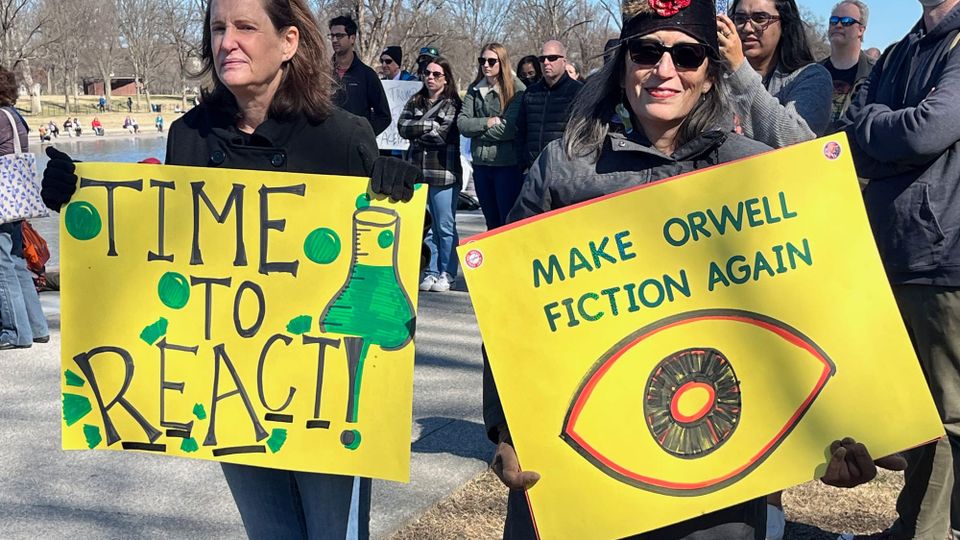
When I ask my students whether they’ve ever heard of the 2017 March for Science they are apt to furrow their brows, as if I were asking them about the cultural significance of pre-grunge hair metal or the comedic legacy of All in the Family. In what now seem like quaint trespasses, the early days of 2017 were marked by an executive branch that tried to muzzle and perhaps purge government employees who worked on environmental issues; appointed a guy to run the Environmental Protection Agency who, as Oklahoma attorney general, had been suing the agency he was now appointed to run; and met with noted anti-vaxxers. Scientists, and especially young scientists, took to Reddit, which quickly mushroomed into a mass protest. More than a million people turned out to march in cities all over the world.
I wasn’t at the main event in 2017. I was attending a conference on open science in Seattle where the meeting organizer gave everyone a copy of Timothy Snyder’s On Tyranny. On the last day of the conference we adjourned early so attendees could join the local march in Cal Anderson Park and walk the mile and a half to the Space Needle. It was pissing down rain, which was a shame because it’s hard to hold an umbrella in one hand and a soggy sign in the other that reads “Science: because you can’t just make 💩 up.”
But many with real power in the scientific industrial complex declined to participate in the 2017 MFS, choosing instead to condescend and pooh-pooh it beforehand and ignore it afterward. “What are they marching for?” wondered Princeton physicist and consensus-climate-change denier William Happer. “[I]t’s like the toddler banging his spoon in the highchair.” Elsewhere, a geologist took to The Times to call the march “a bad idea”; The New England Journal of Medicine agreed. The fault was not in our science, they said, but in ourselves—we needed to tell better stories. To march was to debase oneself.
One policy scholar published a slightly less scoldy plea to okay, maybe march, but please don’t voice any partisan objections. The “reality-based community” seemed to fear that marching could only provoke and alienate science’s benefactors (Congress, philanthropists, taxpayers) and thus be counterproductive; they responded with a defensive crouch. Other outlets, like Nature (based in the UK, probably not coincidentally!) voiced support for the march.
Like most protest movements, the original MFS was ephemeral. Within a few months the organization was beset with infighting and accusations of opacity, financial underhandedness, and forgetting its grassroots origins. The following year’s March for Science in DC march drew just 10,000 people—a drop of 90 percent. The passion that fuels a tryst while the bombs are falling is not the same thing that sustains a long marriage.
Keep us breathing fire!








For $3/month you can read this whole post and get our weekdaily newsletter too!