No, We Definitely Knew How Bad It Would Be
by Josephine Riesman
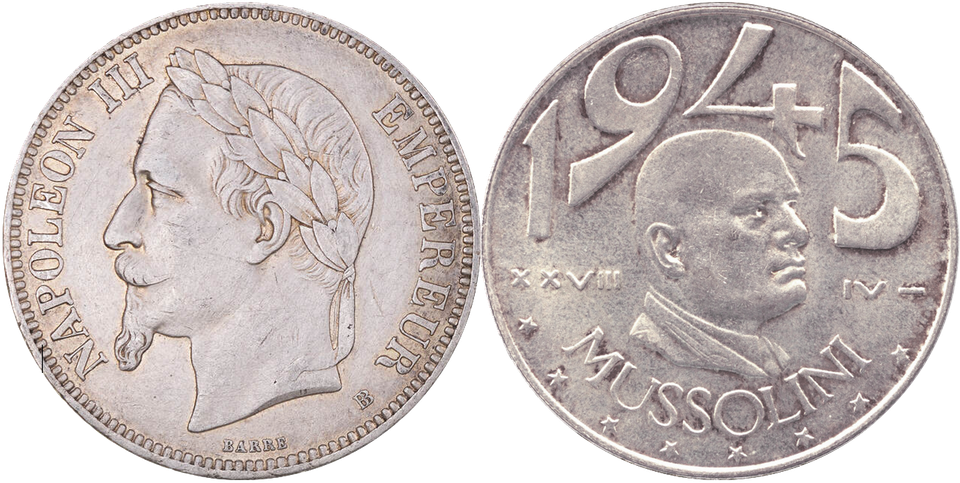
If there’s one phrase I wish I could ban from the American lexicon as of February 2026, it is this: “None of us could have known how bad it would be.”
I long ago lost track of how many times I’ve heard citizens of the United States who consider themselves informed and intelligent say they thought Trump 2.0 would be bad, but that—and this is where they rope you in against your will—no one could have known it would be this bad.
In fact, plenty of people thought it would be this bad. Perhaps those who didn’t see this awfulness coming should ask themselves why.
Personally? I blame the schools.
Since the end of World War II, the United States has generally done an abysmal job of educating its children, much less its adults, about what fascism was, is, and could yet become. It’s deeply troubling that there had to be any debate as to whether Donald Trump’s MAGA movement was fascist in character. It certainly seemed obvious to a lot of people, as it did to me.
But then again, I had a good teacher.
In the twelfth grade, when I was 16 and 17 years old, I had the honor of studying European History under Dr. Jessica Young, a ridiculously talented teacher at my massive public secondary school in suburban Chicago, Oak Park and River Forest High. Dr. Young was no fool, nor did she suffer fools. She imbued in me a proper balance of terrified awe and mocking condescension towards fascism. She taught our class that fascism could always come back. She gave me a copy of Robert O. Paxton’s The Anatomy of Fascism as a graduation present. I cherish what I learned from her.
But Dr. Young’s position vis-à-vis fascism was not popular in academia as of 2003-04. The study of fascism had fallen out of favor in the universities. Perhaps that was part of a conspiracy to make people forget what should not be forgotten; a look at all the Trumpniks and Harvard professors in the Epstein Files certainly raises some questions there. Perhaps it just seemed like fascism was a dead letter to most—a closed chapter of history, relevant only for action flicks and late-night cable documentaries. Or maybe folks just stopped listening to Marxists.
My final paper for Dr. Young was a historiography—a history of people writing history. It was about a line of thinking, held mostly by long-dead Marxists, that claimed similarities between the fascism of the 20th century and the authoritarian rule of Louis Napoleon Bonaparte. A nephew of the original Emperor Napoleon I and cousin of Napoleon II (who held the title for only two days before the French Empire was dissolved), this so-called Napoleon III had inspired Karl Marx to write at length about the nature of democratic failure in a monograph, The Eighteenth Brumaire of Louis Bonaparte. Indeed, it was in the service of comparing Napoleon I to his nephew that Marx coined the phrase, “the first time as tragedy, the second time as farce.”
I still think there is much to be learned from comparing Bonapartism and fascism. That’s why I’m so glad that Flaming Hydra is publishing my 2004 twelfth-grade paper on the historiography of the comparison. And I want you to pay special attention to something I wrote near the end:
Since the 1980s, fascism has received less and less historical attention in general, and Bonapartism has been decreasingly seen as an accurate historical model. This is most likely due to the fact that the comparison was born from Marxist ideology, and political scientists in the past two decades have increasingly abandoned Marxist interpretations of history.
(I am still in touch with Dr. Young. I asked her to comment on this paper in light of recent history, and am grateful she had a chance to respond before press time; we’ve appended her thoughts below.)
I’m not a doctrinaire Marxist, but I have come to believe that the marginalization of Marxism in academic history was a world-historical disaster. When the academy abandoned Marx and his followers, they abandoned the most powerful intellectual tradition that still identified fascism as a real, living threat. We are all now living through the consequences.
There is hope. Napoleon III’s rule did not last forever, nor did Hitler’s or Mussolini’s. These conflagrations burn themselves out. But keep your eyes open while the inferno surges, and allow me, age 17, to walk you through the analyses of the Marxists (most of them Jewish, as I failed to point out in the original paper) who sounded the alarm for over a century and a half. A lineage I am cautiously proud to join here.
“Their Cards Up His Sleeve”:
An Historiography of Napoleon III and the Fascists
From 1851 until 1870, France abandoned both monarchy and republicanism in favor of the authoritarian rule of a man named Louis Napoleon Bonaparte, the self-proclaimed Emperor of the French, who ruled as Napoleon III. Almost sixty years after the collapse of this Second French Empire, political parties calling themselves “fascist” seized power in Italy and Germany. Both the so-called “Bonapartism” of the Second Empire, especially in its early days, and the fascism of early twentieth century Europe left indelible marks on European political discourse, international diplomacy, and intellectual history. Yet to this day there are few concepts as elusive in their origins, purpose, and place on the political spectrum as Bonapartism and fascism. Since the rise of the fascist parties in the 1920s, however, historians of various backgrounds have outlined similarities between Bonapartism—especially as it existed in the early days of the Empire—and fascism, in order to better understand each system. The comparison developed through four stages: birth in the writings of outsiders within the Communist Party during the period between the two World Wars; development during the Second World War; mainstream acceptance in the postwar world; and a slow but steady fall from favor since the mid-1970s. Although the argument for the similarity between Bonapartism and fascism has never dominated the historiography of either topic, it has revealed a number of vital insights about each, and shown the aims and beliefs of the historians who addressed the topic.
The prologue to this story actually began some seventy years before the appearance of fascism as a political concept. Louis Napoleon first gained power as president of the Second French Republic in 1848 after a bloody civil conflict known as the “June Days” broke out between the working classes of Paris and the bourgeois ruling party, leaving the country divided and confused. The nephew of Napoleon I, Louis Napoleon had been a wandering adventurer, raised in exile, and a virtual nonentity in French politics. Yet he entered into the race for president, won by a landslide, staged a coup d'état against the parliament in 1851 and proclaimed the Empire in 1852. Opposition came only from the socialist groups, who were crushed by the army. The general population was overwhelmingly supportive of the new order.[1] Most contemporary observers attributed this political success to his deft use of the Bonaparte name and his appeals for unity and order. But one commentator saw a deeper set of factors at work. In an 1852 essay entitled The Eighteenth Brumaire of Louis Bonaparte, Karl Marx expressed his belief that the middle classes had allowed and encouraged Bonaparte’s ascension because of the class conflict present in the June Days. Marx defined the Bonapartist system as one in which the ruling bourgeois interests and their petit-bourgeois allies, having barely survived an open attack by a still-developing proletariat, found themselves in a power equilibrium with the proletarian parties. The ruling elites then gave up their political power to a dictator and began to act as his administrators in the hopes that he would preserve their economic interests. Bonapartism represented a “broken” middle class and was “the final form of bourgeois society,” in Marx’s mind.[2] After writing this piece, Marx devoted little further attention to the Empire, and The Eighteenth Brumaire was largely forgotten.[3] But in interwar Europe, it would resurface in a brand-new context.
In the early 1920s, the new political force known as fascism sent the European political community into a scramble. Especially after the March on Rome brought fascists into power in Italy in 1922, it became imperative that political theorists of all stripes figure out where fascism had come from, what made it so appealing, and where it was going. One clear and defining characteristic of the fascists, however, was their hatred of communism, and the communist parties of Europe were forced to develop some kind of understanding of their foes. The Russian Bolsheviks, who dominated the Comintern, had had few first-hand encounters with fascism and declared the so-called “social fascism” theory as the official party line. This doctrine stated that fascism was just a form of monopoly capitalism and essentially the same as all other noncommunist ideologies. Thus, according to the Stalinists, any attempt to specifically define the fascists as different from the social democrats or the liberals was a waste of time.[4] The social fascism theory alarmed and frustrated three Marxian theorists, who felt that fascism represented a far more dire threat and merited focused attention. These three men turned to Marx's own writings to define fascism. Almost simultaneously, and independently of one another, Germany’s August Thalheimer, Austria’s Otto Bauer, and the wandering Leon Trotsky all came across The Eighteenth Brumaire and saw fascism in a new light. Their status as communists opposing Comintern orthodoxy meant that their work did not reach a wide audience, but they used their writings to warn against what they saw as a grave and unique threat in fascism.
Thalheimer was a writer and leader of the KPD, or German Communist Party, who witnessed the rising Nazi power and wrote a series of analytical works in the 1920s and 30s. For Thalheimer, Marx had been on the right track in his analysis of the Bonapartist system, but had made a few miscalculations. For one, the Empire had not been the last gasp of capitalism, and liberal parliamentarism had reemerged in the Third Republic. To account for this inconsistency, Thalheimer theorized that Marx had focused too much on the strict economics of Napoleon III’s government, when the more valuable insight lay in the social underpinnings of the system. Bonapartism and fascism were the “ultimate” forms of class rule, not in the temporal sense, but in that they were the most extreme forms of repression by the bourgeois classes.[5] Louis Napoleon’s rule was meant to function as a temporary expedient against social tension and was intended to allow the ruling class to recover. This principle could be applied to the fascist parties that rose to prominence after failed communist revolutionary attempts across Europe. To Thalheimer, it seemed that the government of Italy had been only too willing to allow Mussolini to take power, and he predicted that the Weimar Republic would follow suit.
Thalheimer saw a key difference from Bonapartism that made fascism still more threatening. Napoleon III’s power base lay in the willingness of middle-class déclassés, such as unemployed white-collar bureaucrats, army veterans, and street hustlers, to act as docile administrators after they had been frightened by proletarian social unrest.[6] But the frightened petit-bourgeoisie that formed the rank-and-file of the fascist parties were far more organized and united by ideology. Whereas Bonapartism had been a party-less dictatorship that attracted followers, fascism was a mass movement. Thalheimer was unique among his KPD colleagues in his belief both that the German government would eventually give up power to the Nazis, and that the moblike nature of the fascists would cause the bourgeois elites quickly to lose control and allow the Nazis to create “an unequalled barbarian dictatorship.”[7] He urged quick and violent action. But Thalheimer was excommunicated from the KPD for his opposition to Stalinist theory, and his theories, although prescient, never caught on in his own time.
Bauer’s situation was different. He was the head of the Austrian Marxist Party, which had long been estranged from Comintern orthodoxy, and thus had more freedom to create a differing interpretation of fascism. His attitude towards The Eighteenth Brumaire was virtually identical to that of Thalheimer and was developed around the same time, in 1924.[8] But Bauer had a more specific agenda for change. The Austrian Marxists had been unique among communist parties in their belief that political participation could lead Marxist change. In Bauer’s mind, the most crucial element of Louis Napoleon’s ascension was the idea that the ruling class of a country could separate itself from state power. Conventional communist theory had held that the state was always a tool of the ruling class. But to Bauer, the fact that the ruling bourgeois interests of France had given up all their power in the state to a separate entity, namely Louis Napoleon, implied that the political apparatus of a country could exist as an independent entity, manipulated by anyone powerful enough to take control. Thus, the communists could beat the fascists to the punch by getting involved in the parliaments of Austria and the rest of Europe.[9] Of course, it was a difficult task to elect communists to power, and an Austro-Marxist ascension in parliament never occurred. In addition, the Comintern suppressed Bauer’s writings due to his rejection of the social fascism theory, thus preventing his ideas from reaching a wider European audience. As the Austrian fascist movement had more and more success, a frustrated Bauer abandoned his old emphasis on Bonapartism, choosing instead to accentuate the imperialist nature of fascist ideology. His writings lived on, to be rediscovered later.
Trotsky’s theory took a third path. Although Bonapartism was central to his interpretation of fascism, he saw it not as a model for fascism, but rather as a sort of warning sign of its onset. Trotsky saw the Weimar Republic under Hindenburg and the Doumergue regime in France as examples of Bonapartist governments, with strong police forces intended to ward off communist revolution.[10] However, Trotsky believed that these governments could easily give way to fascist regimes if the fascist parties were allowed to grow, because increasing sociopolitical instability would motivate the governments to enforce order by deputizing the fascists. He, like Bauer and Thalheimer, believed that the fascists were primarily petit-bourgeois déclassés, weary from the Great War and social tension. But Trotsky believed these people had been attracted to fascism and not to the communist parties because of the failures of the Comintern. Trotsky wrote as an outsider, an exile from Stalin’s government and a man without a country, but one who felt fascism was some kind of “historical punishment” for the inability of European communists to revolt successfully.[11] He feared that, as was the case with the Second Empire, bourgeois liberalism would emerge triumphant if the proletariat did not mobilize against transitional Bonapartist regimes. His writings, however, were banned by the Comintern, and never reached a wide audience in his own time.
Unfortunately for all three of these theorists, the Stalinists refused to change the party line or to regard fascism as a serious threat until it was too late. From Hitler’s ascension in 1933 until V-E Day in 1945, the Bonapartist-fascist connection lived on in the theories of two different camps, the Nazis and the intellectuals of Vichy France. Among many Nazi party historians, Napoleon III’s regime was regarded for some time as “the only historical parallel to the National Socialist revolution of our day,“ as Franz Kemper put it.[12] Biographies that praised the authoritarian and antiparliamentary nature of Napoleon III’s reign were published in occupied Europe for a number of years. However, after Hitler’s invasion of Russia in 1941, Nazi party superiors banned such literature for fear of the comparisons people might make to Napoleon I and his epic failure on the Russian front.
Simultaneously, a curious development occurred in French historiography. French historians had almost unanimously decried Napoleon III’s rule since the birth of the Third Republic in 1871. But while France was occupied by the Nazis, the Chair of the History Department at the Sorbonne, Charles Pouthas, published a series of lectures in which he showered glowing praise on Louis Napoleon’s use of authoritarian power to bring about economic growth.[13] As is true for much intellectual thought in Vichy France, it is difficult to discern how much of this shift was a bid for favor from the occupying Nazi powers. But it seems that Pouthas was in many ways genuine. Vichy France saw a fair amount of economic development, and thus the fascist experience may have played a large part in the reevaluation of Louis Napoleon’s role in France’s economic history.
Outside of the Nazi and Vichy theorists, there was not much open discussion of the connection during the Second World War. The end of the war, however, brought a whole new audience and validity for the comparison. In 1949, a professor at the City College of New York City named J. Salwyn Schapiro published a book entitled Liberalism and the Challenge of Fascism: Social Forces in England and France 1815-1870. Schapiro was a strong proponent of liberal ideology, which he saw as under attack from all sides in the emerging Cold War. Communist totalitarianism was obviously illiberal, but so too was the reactionary Red Scare paranoia of the House Un-American Activities Committee in the United States. Schapiro sought to extol the virtues of liberal thought despite its flaws, and to demonstrate that fascism had its origins not just in Germany and Italy, but in vital ideological forebears in England and France. This argument implied that the evils of fascism were not unique to the old Axis powers, and that fascistic tendencies must be fought vigilantly throughout the postwar world. In a section entitled “Heralds of Fascism,” Schapiro claimed that Pierre Joseph Proudhon, Thomas Carlyle, and most importantly Louis Napoleon Bonaparte himself had laid the groundwork for the birth of fascist ideology. It is not clear whether Schapiro was familiar with the works of the interwar communist theorists, but his analysis of Napoleon III adopted many of the same concepts. Schapiro, however, saw similarities that Thalheimer and his colleagues could never have imagined, and went so far as to suggest that Bonapartism actually helped make fascism possible by setting a number of precedents.
To Schapiro, Bonapartism and fascism had five significant similarities:
(1) each system had come to power after widespread “economic disorganization” had led to mass unemployment, created respectively by the Industrial Revolution and by World War One, whereupon the resulting socialist agitation had made the bourgeoisie turn to dictatorship;
(2) once in power, each system manufactured political legitimacy through the use of false parliamentary government and plebiscitarian elections;
(3) each system manipulated public opinion not just by censoring the opposition but by using the press as a “mouthpiece of the government,” an unprecedented idea in Napoleon III’s time;
(4) each system co-opted the labor movement through government-sponsored labor relations councils; and
(5) each system called for grand social works projects to win people over to the government instead of enacting real social reform.[14]
Schapiro saw only two essential differences between these systems: the lack of anti-Semitism or racial ideology in the Empire, and the fact that the communication, transportation, and military technology of the day, combined with the decentralized nature of property ownership in France, prevented totalitarianism in its modern form from appearing.[15] However, Schapiro asserted that Napoleon would have loved to achieve such a state had it been possible. In Schapiro’s mind, the Second Empire brought certain factors into political discourse that did not directly cause fascism, but made it possible.Schapiro’s book received, on the whole, enthusiastically positive reviews, especially for his section on the Heralds of Fascism.[16] Thus, what had once been an isolated theory held by a small group of communists entered the mainstream historiography of both Napoleon III and of fascism.
Hannah Arendt, in her seminal 1951 work, The Origins of Totalitarianism**, cited Louis Napoleon on a number of occasions for his unprecedented manipulation of public opinion and political machinery, among other factors.[17] A. J. P. Taylor, in a 1952 article on Louis Napoleon, stated that “there is nothing new in Hitler or Mussolini: Louis Napoleon had their cards up his sleeve, except, perhaps, their brutality.”[18] L. C. B. Seaman wrote an article in 1956, in which he used the method of comparative biography to point out similarities between Hitler and Louis Napoleon.[19] In a 1958 article entitled “The First Mountebank Dictator,” British historian Sir Lewis Namier used a somewhat sensationalist set of comparisons between Louis Napoleon and Hitler to attack favorable interpretations of the Empire written by the followers of French historian Albert Guerard.[20] Guerard had refuted the fascist comparison in his 1943 Napoleon III, describing the Empire as “nonpartisan,” and thus “directly antagonistic to the single-party system, which is Totalitarianism.”[21] But the transition toward a positive outlook on Napoleon III among French historians, begun by Pouthas and Guerard, merits an analysis, because it may also have subtly admitted a Bonapartist-fascist connection.
Within French historiography, favorable evaluations of the Second Empire dramatically increased in the post-war era and focused primarily on economic factors. Writers such as Marcel Blanchard, Robert Schnerb, and Georges Duveau all praised Louis Napoleon as a socioeconomic visionary for his policy of governmental intervention in the economy to promote industry, unity, and progress.[22] To them, the Emperor had held beliefs synonymous with the post-war French belief in technocracy, or a society in which direct governmental development of the economy and infrastructure is primary. A number of historians have attributed the rise of technocracy to the fact that the interventionist and authoritarian economic policies of the fascist-led Vichy government had given France a much-needed economic boost and shown the power of so-called dirigisme, or directed economy. Stuart L. Campbell, in his analysis of French historiography entitled The Second Empire Revisited, has asserted that, although Blanchard and his colleagues would never have openly admitted a respect for the humiliating Vichy government, their technocratic admiration for Napoleon III stemmed from a belief in the effectiveness of fascist-style economic planning.[23] Thus, if Campbell is to be believed, the positive postwar assessment of the Second Empire among French writers may have unintentionally admitted that the economic policies of fascism and Bonapartism were similarly beneficial.
The popularity of the Bonapartist-fascist comparison reached its final stage between 1974 and 1977, when a number of factors, including the American Bicentennial, the fortieth anniversary of the Spanish Civil War, and the thirtieth anniversary of the end of World War Two led to a groundswell of new writings on the fascist phenomenon. Despite the work of Schapiro, fascism had been largely regarded as an isolated phenomenon for decades, but the new zeitgeist of ’76 called for investigations into the origins of fascism as a concept. Thus, Bonapartism appeared in a number of works written at the time.[24] Some of the most fascinating work came from the West German left, where authors had rediscovered the works of Thalheimer and Bauer and used them as touchstones for understanding the Nazi years.[25] As historians struggled for an understanding of the elusive Bonapartist and fascist systems, it seemed that the time was ripe for a concrete comparison of the two. But none arrived.
After 1977, the Bonapartism-fascism comparison was largely abandoned or discredited by historians of both concepts. It is important to remember that the “proto-fascist” theory never gained traction in the historical debate over Napoleon III. Although historian G. P. Gooch stated in 1963 that “virtually every writer on the Second Empire must take [the comparison] into account,” it was never even mentioned in the most monumental biographies and analyses of the Second Emperor, such as those by J. M. Thompson, W. H. C. Smith, T. A. B. Corley, Theodore Zeldin, and Alain Plessis.[26] This omission can be attributed to a number of factors. For one, fascism is a loaded term, and it is likely that many historians are reluctant to toss it around for fear of being labeled as sensationalists. Another reason may be that such comparisons appear extraneous for a strict history of the man or his empire. But also, Schapiro’s comparison came at a somewhat inopportune period, when historical opinion was beginning a swing toward favorable interpretations of Napoleon III, and biographers hoping to depict any of his policies in a positive light would be more than a little tentative about comparisons to Hitler or Mussolini. At this point, the second most recent biography of Louis Napoleon, James McMillan’s Napoleon III of 1991, addresses the comparison only once, in which it is called “fanciful.”[27] The most recent, Fenton Bresler’s Napoleon III: A Life, does not mention fascism at all.
Since the 1980s, fascism has received less and less historical attention in general, and Bonapartism has been decreasingly seen as an accurate historical model. This is most likely due to the fact that the comparison was born from Marxist ideology, and political scientists in the past two decades have increasingly abandoned Marxist interpretations of history. In 1980, author Stanley G. Payne wrote a critically acclaimed summary of fascist theory and practice entitled Fascism: Comparison and Definition, devoting no more than three pages to denouncing the validity of the Bonapartism model. He argued that what Louis Napoleon had created was a “product of the mid-nineteenth century” and that descriptions of Bonapartism can “scarcely refer to anything discretely ‘fascist.’”[28] It was not until 1997 that another significant mention of Bonapartism appeared in the study of fascism, with the French writer Marcel Winock identifying Napoleon III as a utopian socialist and calling any attempt to reconcile socialism with fascism a case of “ideological scrambling.”[29]
J. Salwyn Schapiro wrote, “Nothing is easier than to find factual parallels in history. They are generally plausible, seldom convincing, and never instructive. To see the origins of great changes in history is a quite different—and more important—matter.”[30] It appears that current historiography has placed the comparison between the political systems of Louis Napoleon Bonaparte and fascist Italy and Germany into the former of Schapiro’s two categories. But although the comparison runs the risk of becoming a method for finding meaningless connections between two different historical periods, when it has been treated judiciously and carefully it has revealed a number of crucial insights. For one, it has helped make apparent the class underpinnings of modern dictatorship, both in the Second Empire and in the fascist states. The comparison in no way fully explains how fascism succeeded in the Western world, or what its true definition or function was, but it has shed some light on why certain groups allowed and supported fascism’s rise. Drawing the comparison similarly fails to completely explain the significance of the Second Empire and the elusive Emperor who helmed it, but it does make a convincing argument that Bonapartism may have represented a post-liberal form of political machinery that would come to influence political thought for more than a hundred years.
The argument for the similarity between Bonapartism and fascism is more than mere sensationalism. The connections between the systems, from the socioeconomic conditions that preceded their rise and the way they functioned in relation to existing political institutions, to their ambiguous placement on the political spectrum and their relationship to the bourgeoisie, all cry out for comparison. Although it has never dominated modern political thought, the Bonapartist-fascist paradigm may be ripe for a re-evaluation whenever the next wave of thought about either concept arrives.
John Merriman, A History of Modern Europe (New York City: W. W. Norton & Company, 1996) 746-7. ↩︎
Jost Dulffer, “Bonapartism, Fascism and National Socialism,” Journal of Contemporary History Oct. 1976: 110; Martin Kitchen, “August Thalheimer’s Theory of Fascism,” Journal of the History of Ideas Jan. 1973: 70. ↩︎
Dulffer 111. Engels did echo Marx’s definition of Bonapartism in 1856, writing that “Bonapartism is the necessary form of government in a country in which the working classes have reached an advanced stage of development in the cities, but are outnumbered by the small peasantry and have been defeated by the capitalist class, the petty bourgeoisie, and the army in a great revolutionary battle”; Marx restated his findings almost verbatim in his 1871 Civil War in France. ↩︎
Dulffer 112. ↩︎
Kitchen 71. ↩︎
Kitchen 69. “Déclassés” in this context refers to impoverished, angry, or criminal members of the middle classes, such as unemployed white-collar bureaucrats, street hustlers, and prostitutes. ↩︎
Kitchen 77. ↩︎
Gerhard Botz, “Austro-Marxist Interpretation of Fascism,” Journal of Contemporary History Oct. 1976: 133. Bauer wrote, “The Italian fascism of 1922 is the modern counterpart of French Bonapartism in 1851…The reason they both succeeded was because the bourgeoisie…threw themselves into the arms of the force that had rebelled against their power, in order, in exchange for this surrender of their political domination, to rescue their property from the proletarian threat.” ↩︎
Botz 152. ↩︎
Dulffer 114. ↩︎
Robert S. Wistrich, “Leon Trotsky’s Theory of Fascism,” Journal of Contemporary History Oct. 1976: 172. ↩︎
J. Salwyn Schapiro, Liberalism and the Challenge of Fascism: Social Forces in England and France, 1815-1870 (New York City: McGraw-Hill Book Company, 1949) 328. ↩︎
Charles H. Pouthas, “The Second Empire,” Napoleon III—Man of Destiny, ed. Brison D. Gooch (Chicago: Holt, Rinehart and Winston, 1963) 102. Pouthas concluded his essay with this dubious statement: “A genuine economic and social revolution was being translated into bursting prosperity and a general improvement of the living standards. The government [of the Second Empire] presided over this in the most liberal and comprehensive manner; the country seemed to have forgotten its taste for politics and to prefer order to liberty.” ↩︎
Schapiro 320-4. ↩︎
Schapiro 325-30. On the totalitarianism question, Schapiro writes that France had four characteristics that prevented totalitarianism: a great mass of individual property owners with atomized power, decentralized industrial and labor-union groups, no national school system, and, of course, a lack of modern mass-communication, transportation, and military technology like television, airplanes, and machine guns. ↩︎
Leo Gershoy, review of Liberalism and the Challenge of Fascism: Social Forces in England and France 1815-1870 by J. Salwyn Schapiro, The Journal of Economic History May 1950; Sherman Kent, review of Liberalism and the Challenge of Fascism: Social Forces in England and France 1815-1870 by J. Salwyn Schapiro, The Journal of Modern History, June 1950; Willson H. Coates, review of Liberalism and the Challenge of Fascism: Social Forces in England and France 1815-1870 by J. Salwyn Schapiro, Journal of the History of Ideas, Jan. 1950; Thomas I. Cook, review of Liberalism and the Challenge of Fascism: Social Forces in England and France 1815-1870 by J. Salwyn Schapiro, The American Historical Review, Jan. 1950. Only the review in The American Historical Review wholeheartedly criticized the book, accusing Schapiro of the “fallacy known as historicism…the problem of social or ideological causation is barely tackled, not at all solved.” ↩︎
Hannah Arendt, The Origins of Totalitarianism (New York City: Meridian Books, 1951) 19, 24, 46, 47, 148, 262, 314, 423. ↩︎
A. J. P. Taylor, “The Man of December,” Napoleon III—Man of Destiny, ed. Brison D. Gooch (Chicago: Holt, Rinehart and Winston, 1963) 118. ↩︎
L. C. B. Seaman, “Louis Napoleon: Second Republic and Second Empire,“ Napoleon III—Man of Destiny, ed. Brison D. Gooch (Chicago: Holt, Rinehart and Winston, 1963). Seaman illustrates that both men were strangers to the people they came to lead, both were imprisoned after failed coup attempts, both used their time in prison to develop their political ideas, both stole the slogans of opposition parties in order to co-opt them, and both were underestimated by the ruling elites. The main difference he sees is that Louis Napoleon had no “fire in the belly,“ and was “irresolute, the opposite of ruthless.” ↩︎
Sir Lewis Namier, “The First Mountebank Dictator,” The European Past, Vol. II, ed. Peter Gay et. al. (New York City: The Macmillan Company 1964). These comparisons are, on the whole, hardly scientific. One such parallel addresses the “deeper, unconscious urge, born of fear: of things lurking in the dark, narrow streets of old cities, the product of organic, uncontrolled growth” that found a “conscious rationalization” in the regimes of Napoleon III and Hitler. ↩︎
Albert Guerard, “The Judgment of Posterity,” The European Past, Vol. II, ed. Peter Gay et. al. (New York City: The Macmillan Company 1964) 162. ↩︎
Among the more storied achievements of the Second Empire was the almost complete rebuilding and redesigning of the city of Paris. ↩︎
Stuart L. Campbell, The Second Empire Revisited (New Brunswick, NJ: Rutgers University Press, 1978) 146-53. ↩︎
Charles S. Maier, “Some Recent Studies of Fascism,” The Journal of Modern History Sep. 1976; Katherine Mayer, review of Fascism—a Reader’s Guide by Walter Laqueur and Fascism as a Mass Movement by Mihaly Vajda, Social Forces Dec. 1977; Anson G. Rabinbach, “Poulantzas and the Problem of Fascism,” New German Critique Spring 1976. Among these investigations were a special edition of the Journal of Contemporary History, a book by Mihaly Vajda, and a number of articles in the major historical journals. Nicos Poulantzas wrote a dense volume entitled Fascism and Dictatorship, in which he claimed to discredit an equation of Bonapartism with fascism, but also claimed that the two were inextricably linked. ↩︎
Wolfgang Wipperman, “The Post-War German Left and Fascism,” Journal of Contemporary History Oct. 1976; Anson G. Rabinbach, “Toward a Marxist Theory of Fascism and National Socialism: A Report on Developments in West Germany,” New German Critique Autumn 1974. ↩︎
A number of these books address whether or not Louis Napoleon was a ruthless dictator or a totalitarian, but these general questions do not amount to a real analysis of the fascist comparison. ↩︎
James F. McMillan, Napoleon III (New York City: Longman, 1991) 175. ↩︎
Stanley G. Payne, Fascism: Comparison and Definition (Madison, WI: University of Wisconsin Press, 1980) 32-4. ↩︎
Mel Cohen, review of Nationalism, Anti-Semitism, and Fascism in France by Jane Marie Todd, The Journal of Politics May 2000, 624. ↩︎
Schapiro 321-2. ↩︎
A NOTE FROM DR. YOUNG
This paper was the third of four large papers assigned in my AP European history class so I had some prior idea of what Josie could produce. Her bibliographies enormously exceeded the requirements and her arguments were precise and original—although now upon re-reading, I can see where some improvements might be made. 😺
Nonetheless this paper was astonishing in its ambition as well as in its achievement. To give you a sense of her accomplishment in this self-defined task, consider the case of an AP Euro Document Based Question (DBQ) on the Spanish Civil War some years earlier. This DBQ required students to compare and analyse ideological differences among the numerous left-wing parties that were competing against each other as they tried to sustain opposition to Franco. It was one of the most catastrophic mistakes in the annals of the DBQ. Students across the nation found the task so far beyond them that the scoring had to be “taken off the curve.” There were not enough competent examples to make an honest “A.”
So imagine my surprise and delight to read this nuanced, well-periodized analysis of the various ways communists and socialists across nearly one hundred years assessed the nature and impact of Louis Napoleon Bonaparte, aka Napoleon III, on fascism. It was not a question, let alone an accomplishment, to be expected. “Back in the day” we did not fear fascism as we do, with cause, now.
Re-reading Josie’s paper makes me consider, for the first time, a comparison between Bonaparte and the United States president, and also the failure of late 20th century and early 21st century liberalism or progressivism to produce a society that rejects a would-be dictator. In light of the current threats to personal and intellectual freedom in the United States, it is well to pursue these questions by embracing the rigor of historical inquiry.
Jessica Young, Ph.D.
NBCT
Oak Park, Illinois
BIBLIOGRAPHY
Arendt, Hannah. The Origins of Totalitarianism. New York City: Meridian Books, 1951.
Botz, Gerhard. “Austro-Marxist Interpretation of Fascism.” Journal of Contemporary History, Oct. 1976: 129-156.
Campbell, Stuart L. The Second Empire Revisited. New Brunswick, NJ: Rutgers University Press, 1978.
Coates, Willson H. Review of Liberalism and the Challenge of Fascism: Social Forces in England and France 1815-1870 by J. Salwyn Schapiro, Journal of the History of Ideas, Jan. 1950.
Cohen, Mel. Review of Nationalism, Anti-Semitism, and Fascism in France by Jane Marie Todd, The Journal of Politics, May 2000.
Cook, Thomas I. Review of Liberalism and the Challenge of Fascism: Social Forces in England and France 1815-1870 by J. Salwyn Schapiro, The American Historical Review, Jan. 1950.
Dulffer, Jost. “Bonapartism, Fascism and National Socialism.” Journal of Contemporary History, Oct. 1976: 109-128.
Gershoy, Leo. Review of Liberalism and the Challenge of Fascism: Social Forces in England and France 1815-1870 by J. Salwyn Schapiro, The Journal of Economic History, May 1950. 75-77.
Guerard, Albert. “The Judgment of Posterity,” The European Past, Vol. II, ed. Peter Gay et. al. New York City: The Macmillan Company 1964. 160-7.
Kent, Sherman. Review of Liberalism and the Challenge of Fascism: Social Forces in England and France 1815-1870 by J. Salwyn Schapiro, The Journal of Modern History, June 1950.
Kitchen, Martin. “August Thalheimer’s Theory of Fascism.” Journal of the History of Ideas, Jan. 1973: 67-78.
Maier, Charles S. “Some Recent Studies of Fascism,” The Journal of Modern History, Sep. 1976 506-521.
Meyer, Katherine. Review of Fascism—a Reader’s Guide by Walter Laqueur and Fascism as a Mass Movement by Mihaly Vajda, Social Forces, Dec. 1977: 716-7.
McMillan, James F. Napoleon III. New York City: Longman, 1991.
Merriman, John. A History of Modern Europe. New York City: W. W. Norton & Company, 1996.
Namier, Sir Lewis. “The First Mountebank Dictator,” The European Past, Vol. II, ed. Peter Gay et. al. New York City: The Macmillan Company 1964. 167-76.
Payne, Stanley G. Fascism: Comparison and Definition. Madison, WI: University of Wisconsin Press, 1980.
Pouthas, Charles H. “The Second Empire,” Napoleon III—Man of Destiny, ed. Brison D. Gooch. Chicago: Holt, Rinehart and Winston, 1963.
Rabinbach, Anson G. “Poulantzas and the Problem of Fascism.” New German Critique, Spring 1976: 157-170.
“Toward a Marxist Theory of Fascism and National Socialism: A Report on Developments in West Germany.” New German Critique, Autumn 1974: 127-153.
Schapiro, J. Salwyn. Liberalism and the Challenge of Fascism: Social Forces in England and France, 1815-1870. New York City: McGraw-Hill Book Company, 1949.
Seaman, L. C. B. “Louis Napoleon: Second Republic and Second Empire,” Napoleon III—Man of Destiny, ed. Brison D. Gooch. Chicago: Holt, Rinehart and Winston, 1963. 84-9.
Taylor, A. J. P. “The Man of December,” Napoleon III—Man of Destiny, ed. Brison D. Gooch. Chicago: Holt, Rinehart and Winston, 1963.
Wistrich, Robert S. “Leon Trotsky’s Theory of Fascism.” Journal of Contemporary History, Oct. 1976: 157-184.
Wipperman, Wolfgang. “The Post-War German Left and Fascism.” Journal of Contemporary History, Oct. 1976: 185-219.
If you love this free post subscribe, starting at just $3/month, to