
Village people / Days of our lives
Today: Jídé Salawu, writer and editor at Olongo Africa; and Amy Chu, artist and publisher of Camoot.Journal.
Issue No. 498
Nigeria and the Rural Imagination
Jídé Salawu
Best and Worst Days of 2025
Amy Chu
Nigeria and the Rural Imagination
by Jídé Salawu
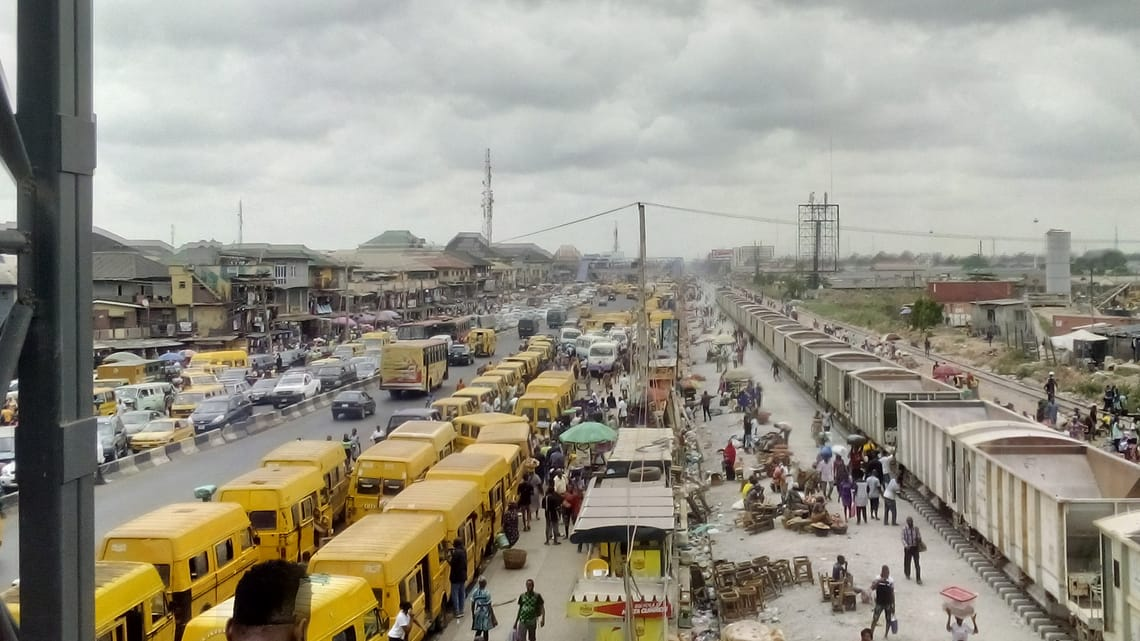
My mother’s economic life was sustained by the metropolis of Lagos. Every January, I would watch her leave my hometown, Shao, along with other migrant women heading to the city to hustle. Many of these women arrived in Ijora, Badia, Amukoko, and other areas of Lagos to engage in different kinds of labour, including serving as cooks in restaurants, as porters and loaders. My mother helped manage a grocery store, and also spent part of her time selling medicinal herbs from Shao—àgbo ibà for malaria, àgbo jẹ́dì for diarrhea, àgbo ibà apónjú tàbí jẹ̀funjẹ̀fun for typhoid—among the local transport workers and car park attendants. She would return to Shao in October, as many others did, during the annual Awon Mass Wedding Festival.
My family’s mobility story is not peculiar to my hometown. Lagos, the seat of the British in Nigeria, forms the colonialized imagination landscape of migration throughout the country, and in fact the former capital ruralizes all kinds of other spaces, including other cities. Narratives of migration in Africa today focus primarily on migrants’ encounters with the African city. But I study a different dimension of migration: the role of African rural spaces, inspired in part by my mother’s story of return.
In 2005, I was still a student in Shao, attending a poorly funded state-owned public school called Government Day Secondary School. Public schools like mine relied on teachers and contract staff sent by the National Youth Service Corps. One such teacher was Shola Adedokun, a graduate of the University of Lagos. While Shao is not home to Shola, he was appointed to contribute to the national life of Nigeria by teaching in my secondary school. This pattern of movement has long characterized African and Black diasporic narratives, yet is ignored in academia, where the rural space—which carries a deep burden of postcolonial struggles—is either forgotten, or collapsed into the idea of the city.
Keep us breathing fire!



For $3/month you can read this whole post and get our weekdaily newsletter too!