
Pivot to Video
by Osita Nwanevu
Hasan Piker, the socialist Twitch streamer, was reportedly stopped and detained by Customs and Border Patrol upon his return to the United States from a trip to France on Sunday. The very next day, he recounted the experience to his four-million-plus listeners in the familiar and almost familial tone that’s kept them coming back. “The goal here is to put fear into people’s hearts, to have a chilling effect on speech that, like, the government is unafraid of intimidating you,” he said. “Does this stop me from saying whatever the fuck I want to say? Of course not. Don’t be ridiculous. But the reason why I wanted to talk about it was to give you more insight into what the government is doing, and to speak out against this sort of stuff.”
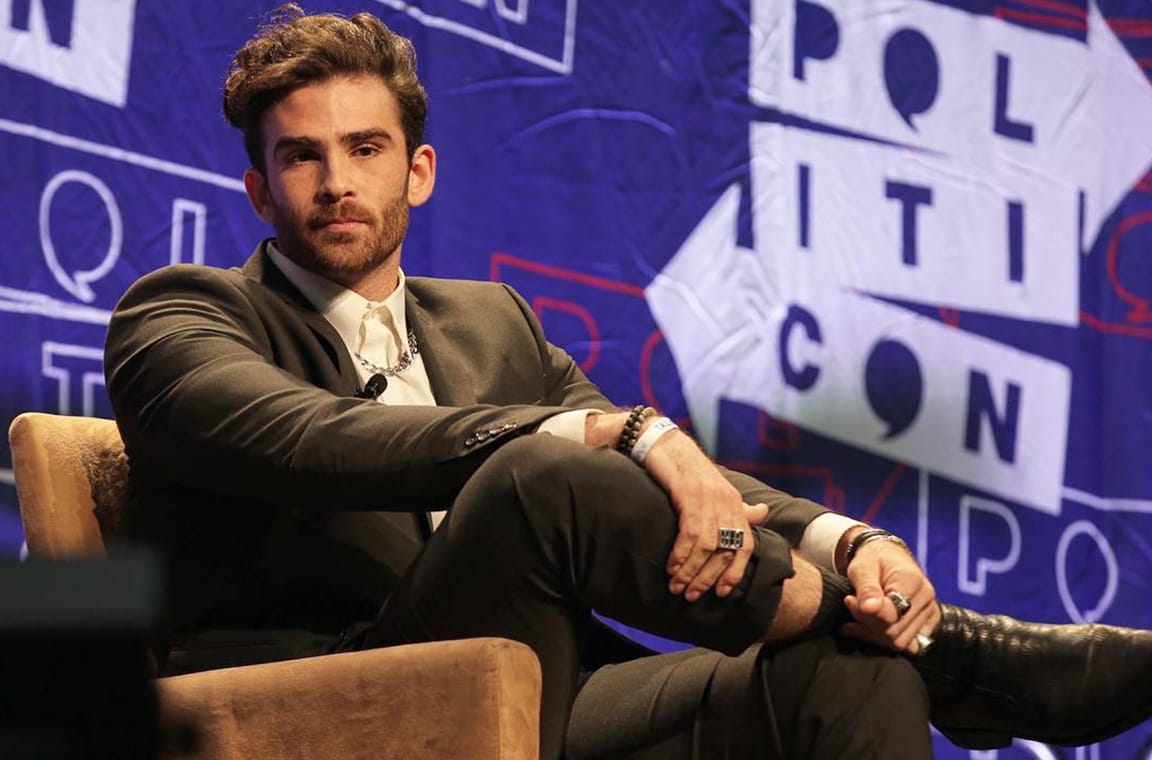
The New York Times, The New Yorker, and Slate have profiled Piker in recent weeks as the left’s answer to the manosphere, and it’s easy to see why. “Mr. Piker, a 33-year-old Twitch and YouTube streamer, is a ‘bro,’” the Times’s Jack Crosbie wrote. “He likes weapons, inhales supplements, uses nicotine pouches and ruminates endlessly on the legacy of LeBron James.”
It’s not actually obvious, all that aside, that there’s much overlap between Piker’s audience and the men who’ve taken to Joe Rogan and his peers; an informal 2023 survey of Piker’s listeners found that they skewed overwhelmingly young and male, yes, but were also roughly 40 percent queer. What is certain is that Piker is reaching millions of people who have never raged over the contents of a Times column or even seen a panel on cable news—people who otherwise might not have engaged with politics at all.
“At no point was I, like, ‘Only I, a dickhead on the internet, am qualified to teach these kids why we need a functioning welfare state,’” he told The New Yorker. “I just felt like no one else was really in these spaces trying to explain these things. Certainly not the Democrats.”
That sounds a lot like the kind of thing Jon Stewart used to say. I know because Stewart was giving me a political education, at an even younger age than the audiences of interest here, well before I’d read a word of political commentary in print or online. And though I may never go on The Daily Show, the times I’ve been on Piker’s stream have felt like coming full circle—I tend to hear immediately afterward from viewers who’ve felt encouraged to find out more about something I’d discussed with him, even though they don’t read magazines or even follow the news all that closely. These are the responses to my work that I treasure the most.
My first book will be out in August, and now that I’m just about through with the whole process, I’m often asked when folks can expect my next one. I’m not fond of this question, and not just because I’d rather leap from a great height than start another book anytime soon. I feel as though I’ve just pressed a vinyl record, really—as certain as it might be that there will be an audience for the written word for years to come, we writers are, plainly, being eclipsed. It is plausible that streamers like Piker made as much or more of a difference in this past election than the opinion columnists did; the ideas that will shape the next one are very possibly being delivered, at this very moment, by some much-divorced, third-rate ex-standup, between ads for boner pills and protein powders. The infrastructure for political commentary in this country is shifting away from the scribblers.
This isn't necessarily a problem for all of us. Some people write for its own sake. But, perhaps unfortunately, I do not. Writing, for me, is a means to the possibly delusional end of effecting a measure of change in this country. And moving the needle for the left is going to take outreach to a great many people who aren’t engaging with political writing much, or at all. This isn’t a novel challenge the internet has freighted us with; streaming and podcasting are just the latest in a series of revolutions in mass communication kicked off by the arrival of radio about a hundred years ago. The decisive blow against print was struck not by the internet and the dawn of the social media era but by television, the invention of which, I half-believe in my more crankish moments, has done about as much damage to the human race as nuclear weaponry. But like The Bomb, what’s been done here can’t be undone.
The writer who is serious not just about the act of writing but the actual dissemination of their ideas must find ways to communicate those ideas to a public that gets more and more of its information through sound and video on screens. And some writers I respect tremendously like Jamelle Bouie and Rachel Cohen are well ahead of me on this front.
Still, there are things writing does that other mediums can’t. Beyond all that’s precious and artful about good prose, it also primes audiences for substantive engagement. The task of an article, or essay, or column, or post is to get them to sit with an idea or an argument or a story being rendered in bare text and maybe a few accompanying visuals—ideally with little else before one’s eyes or in one’s ears to take one away from what the writer is trying to communicate. When you read a piece, your attention isn’t being diverted by the tenor of someone’s voice or what someone happens to look like or be wearing. And the writer, in turn, can only hide behind tricks of this trade that don’t bamboozle audiences quite as well as good looks and splashy graphics or audio cues. This is because reading is a less passive activity than watching or listening. It’s far easier to retrace the specifics and steps of an argument in text than it is to scrobble back through an interminable video essay or podcast episode to pick some thread up again; the temptation, always, is to let the whole thing—which you might be listening to or watching on a treadmill or during your commute anyway—wash over you and leave you with general impressions. The written word monopolizes your focus but leaves you less captive; it may waste less of your time than a video clip or a podcast tangent that takes forever and a half to deliver a paragraph’s worth of information.
All that aside, some of us with ideas to communicate also happen to hate talking. I don’t mind it all that much, though Lucifer himself couldn’t construct a worse hell for me than being forced to chat off the cuff about American politics in front of a camera for hours on end every day. I feel, always, that I need to know exactly what I’m talking about before mouthing off; that confidence only comes from having whittled my thoughts down, on the page, to a fine, sharp point. Becca Rothfeld once wrote a good piece on why writers shouldn’t go out of their way to speak that hit upon exactly this—we turn to the written word, in the first place, as “an antidote to the immediacy and inexactitude of speech.”
“Who in their right mind,” she asked, “would want to talk, much less listen, to a person who has contrived to spend as much of her life as possible crouched over her computer in isolation, deleting unsatisfactory variants of a single sentence for upwards of an hour? Nothing in my daily practice has prepared me for the gauntlet of a tête-à-tête.” She is a more fluid and entertaining speaker than she believes, but she was onto something. And the fact that the act of speaking wracks some writers with these kinds of distracting anxieties in the first place is another strike against it.
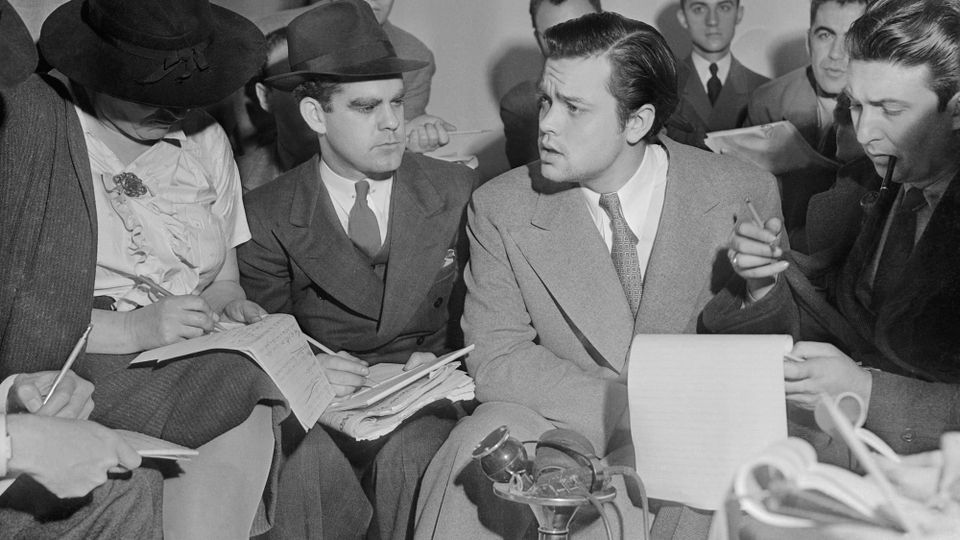
The times do seem to demand adaptation, though, and it should be some comfort to those committed to the written word that communication in the new online mediums can be more thoughtfully composed than is the norm right now. I’m writing this from the FDR Library in Hyde Park, New York, where visitors are encouraged to take in Roosevelt’s Fireside Chats. He was a master of what we now call parasociality; the direct connection that millions of Americans felt to him was made possible not only by radio as a technology, but by careful, frequently revised writing. Less well known but even more personally inspiring to me are the commentaries Orson Welles delivered by radio in the mid-1940s, including his advocacy for Isaac Woodard, a black veteran who had been attacked and blinded by policemen in South Carolina.
This, for my money, is some of the finest political oratory of the past century. It’s not a standard all of us who write and find ourselves speaking have to meet, but it does serve as a reminder of what’s possible. We should be reaching people where they are, yes—in the spaces where they take to ideas most easily. But I don’t think that means we have to make compromises on our words or on the work that makes them meaningful.