
Some People Shine
by Miles Klee
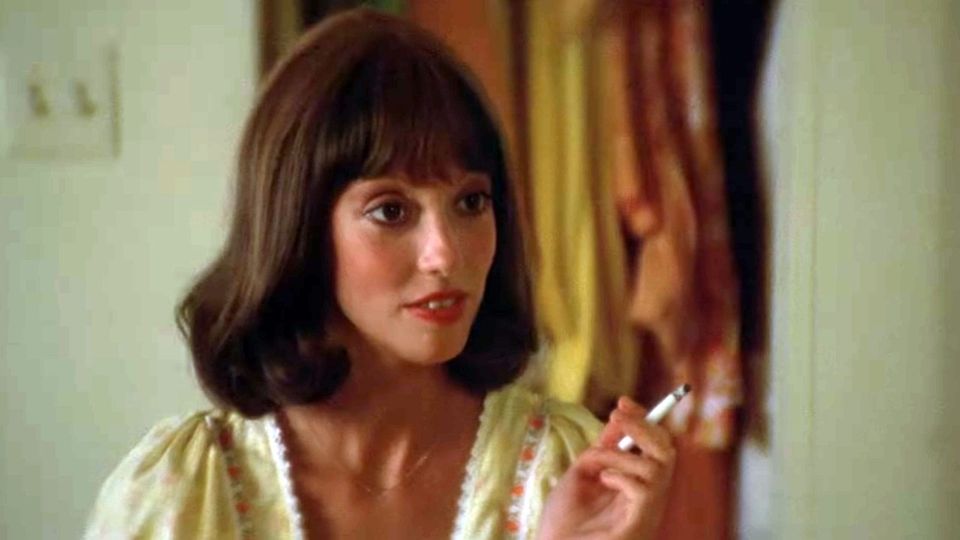
For the longest time, Shelley Duvall did not exist to me outside of The Shining—for the longest time, my favorite film.
What did I love about it? Not Shelley, not necessarily. I was taken with the haunted, impossible architecture of the Overlook Hotel; Stanley Kubick’s chilly formalism, which really did leave you frozen in fear; Jack Nicholson’s transformation, from tight-lipped master of passive-aggression to axe-wielding lunatic. There are moments in The Shining that still shock me, like the death of Dick Halloran after his continental journey—or that elicit a quieter, tingling dread, like when you hear the ghosts unlock the door to the kitchen where Wendy has imprisoned Jack. Later, I liked the bitter tale of how Kubrick had hijacked the story from Stephen King in order to realize his own monomaniacal purposes. (I hated the book.)
As for Duvall, I long considered her little more than an archetype, the damsel in distress who must be present if a murderous man is to pose some kind of danger. The idea of her plain victimhood is restated in common myths about Kubrick’s cruelty to her on set (which Duvall would notably deny, even while admitting to the extreme difficulty of the shoot).
Her face was fascinating, always. While I knew on some level that she was styled in The Shining to appear mousy, even dishwater-dull, I also couldn’t believe that Hollywood—at one point, anyway—allowed movie stars to look like this. Which is not to say I did not see her beauty, only that it felt so distant and alien that I had trouble picturing her in any other context, and as I failed, year after year, to watch any of her other movies, that impression solidified.
Keep us breathing fire!






For $3/month you can read this whole post and get our weekdaily newsletter too!