
The Bad Men Are No Mystery
by Zito Madu
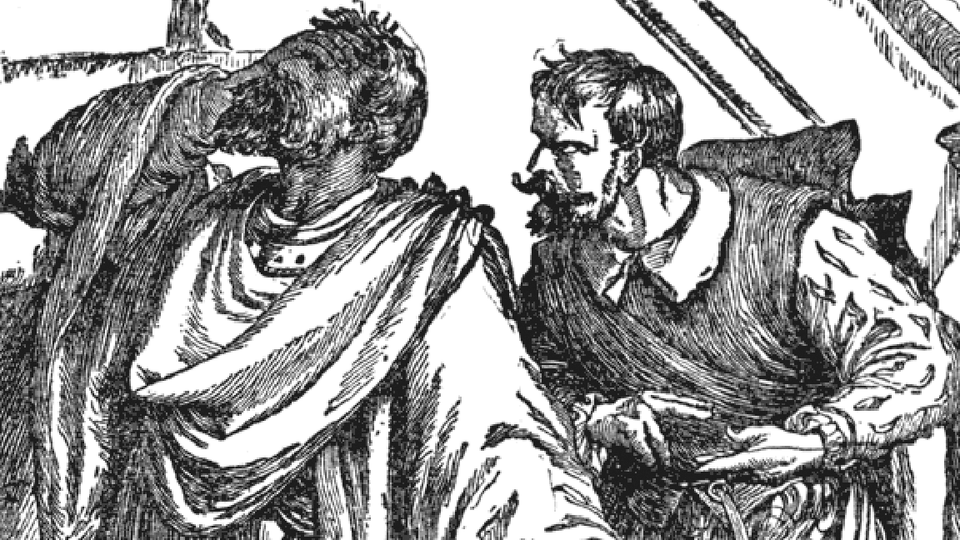
Most of the actors I’ve seen play Iago, the villain of Shakespeare’s Othello, portray him as a serpentine character—literally, as an extension of the serpent in the garden of Eden, a slippery, slithering trickster and deceiver who leads everyone to their destruction with his schemes and cleverness. But in the new Broadway production I saw recently, which stars Denzel Washington as Othello, Jake Gyllenhaal manifests Iago’s hatred and malevolence in a loud, physically aggressive way, leaning into the character as a domineering military man. It’s not just that he hates Othello, but that the hatred fills him full of shouting and unbearable rage, which Gyllenhaal expresses by snarling through his monologues.
As Tamsin Shaw wrote in the New York Review of Books, this greatest and most inscrutable of Shakespeare’s villains has come in many guises, from Bob Peck’s Iago as a “hate machine,” created through the dehumanizing process of warfare, to David Suchet’s repressed, homosexual Iago, “deeply in love with Othello and manically jealous of Desdemona.”
I’ve enjoyed comparing the different interpretations of this character as I watched each one come to life against the image in my mind, and this is what I set out to write about, originally. Shaw’s essay captures the idea that each interpretation of Iago offers us a new chance to think about how our world grapples with evil, and particularly with those who actively choose to do evil.
“Daniel Craig’s Iago is not a psychopath, or a victim of trauma, or a man deluded about right and wrong,” she writes.
He makes a choice. He chooses moral insensibility and viciousness. And Craig’s commanding performance, his combination of charm, sexual charisma, and menacing masculinity, his ability to make the audience dread his actions and yet giggle childishly along with his sadistic delight, makes his choice seem not like one that is psychologically inexplicable but rather one that does not need any deeper psychological explanation.
When I began writing I intended to talk about Iago in light of the current political situation in the United States, or geopolitics more generally, since whatever the United States does unfortunately has an effect on everyone and everything else. Iago—his hatred, his choosing to do evil over and over, evil seemingly for the sake of evil, and the way he destroys everyone’s lives with no remorse—felt like an apt metaphor for so many of those now in power in the United States government.
Keep us breathing fire!









For $3/month you can read this whole post and get our weekdaily newsletter too!