
The Bones of Gåshamna
by Kim Kelly
For days, the only colors I had seen were blues, greys, and browns. But I wasn’t complaining; it was impossible not to marvel at the silvery glacier ice and glistening rocks, the sun-bleached polar bear bones we clambered past, the unearthly cyan of the crystalline icebergs floating silently around our ship, or the teal and jade and lapis tones of the Arctic Ocean herself. Even the dun-colored clay that stuck to my muck boots didn’t look half-bad once it dried, pale and silty.
It was August at the top of the world in the High Arctic, just a few clicks away from the North Pole, and the cool palette matched the grey and gloomy weather. Rain and fog were persistent, and while the midnight sun kept up a day-long purplish glow, a rare break of true sunshine was cause for celebration. As my friends back home sweated out a wretchedly humid mid-Atlantic summer, I was tramping around Svalbard in wool base layers and a parka with a bunch of artists, scientists, and Arctic guides—and as much as I love going down the shore, I wasn’t too upset about hanging up my bikini for the season. I love to sail forbidden seas and land on barbarous coasts, but more importantly, I was going to see a whale.
Or at least, that’s what I was hoping for. In 2024, I spent two weeks aboard an old Russian icebreaker ship circumnavigating one of the world’s northernmost archipelagos. The crew maintained a running list of wildlife sightings for our benefit, and each day brought new thrills. We saw ringed seals, who quizzically popped their little heads out of the water and followed our Zodiacs with puppylike curiosity; stately reindeer would stroll over to observe our hikes; Arctic skuas and guillemots ruled the skies (and Arctic terns dive-bombed us on land when we accidentally got too close to a nesting site). All the while, I impatiently waited for a whale to reveal itself. A few of my shipmates, the lucky bastards, did see a beluga, but I missed the figurative boat on that one.
I’d read a ton of books about whales and the whaling industry over the years as part of my very normal obsession with maritime history, but had never managed to meet a cetacean in person. Now here I was, closer than I’d ever been or would probably ever be again; each day I’d hang my head over the rail and squint out across the water, hoping to spot a blow spout or a mighty fin slicing through the glassy surface. Seeing a whale in the flesh had felt like an impossible dream back home in South Philly, but now, I was in their neighborhood.
The most famed whale-watcher (and occasional whale-butcher) of all, Herman Melville, had never made it this far North. By the time he sat down to write his maritime magnum opus, the Arctic whaling grounds had been so severely overfished that it only made sense to look South to start the Pequod’s journey. Ishmael and his crewmates didn’t have to worry about getting trapped in the sea ice; the food wasn’t great but they weren’t futzing around with pemmican and chocolate like polar explorers, and when they did sight land, it was lush and tropical, not dotted with glaciers and predatory mammals. I’m not saying that they had it easy—they famously did not!—and whaling was a horrifically brutal job, especially under a captain like Ahab, but I reckon it would’ve been a whole lot harder to chase down that mythic white whale in frozen socks.
The day I finally saw the whales, we did not recognize one another. Old whalers have written about moments when they got close enough to a bloodied, dying whale to look it in the eye, and saw something human in its mournful gaze. I’d dreamed of experiencing something like that (minus the harpoons and sadness), but when we beached our rubber boats on the rocky shore of Gåshamna, the only living creatures in sight were a few seabirds, who wisely kept their distance. They already knew what we would shortly discover: we were walking into a burial ground. Gåshamna is the site of an old English whaling station that dates back to the 17th century. After playing host to a coterie of Russian scientists in 1900, a Norwegian trapper’s tarpaper cabin is now the only modern-ish structure left. Outside, the barren ground is littered with bones. Whale bones.
I was a few centuries too late to see the bowheads and right whales who had once lived and played in these waters before being slaughtered for their precious fat, but at least I could visit their graves.
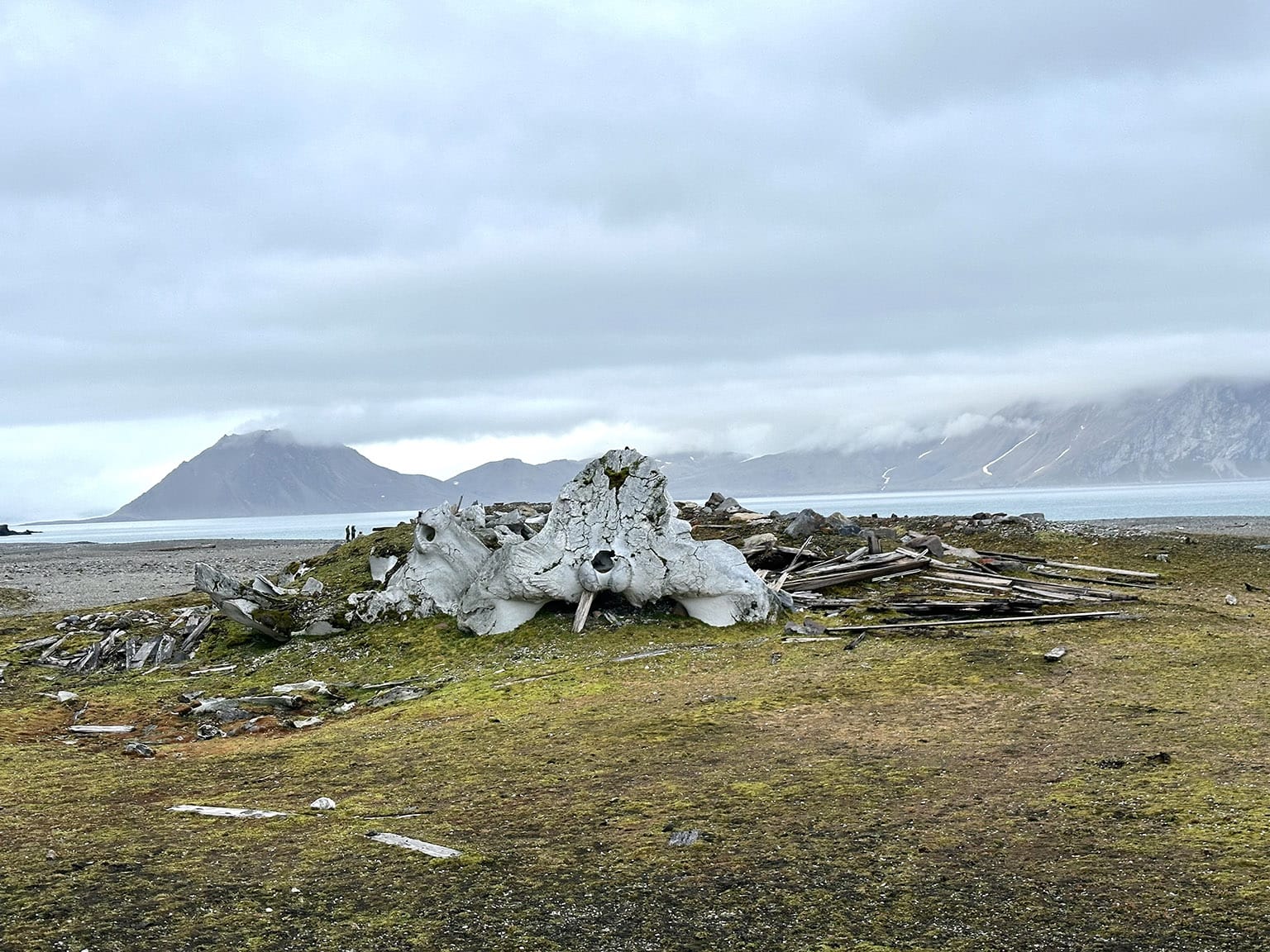
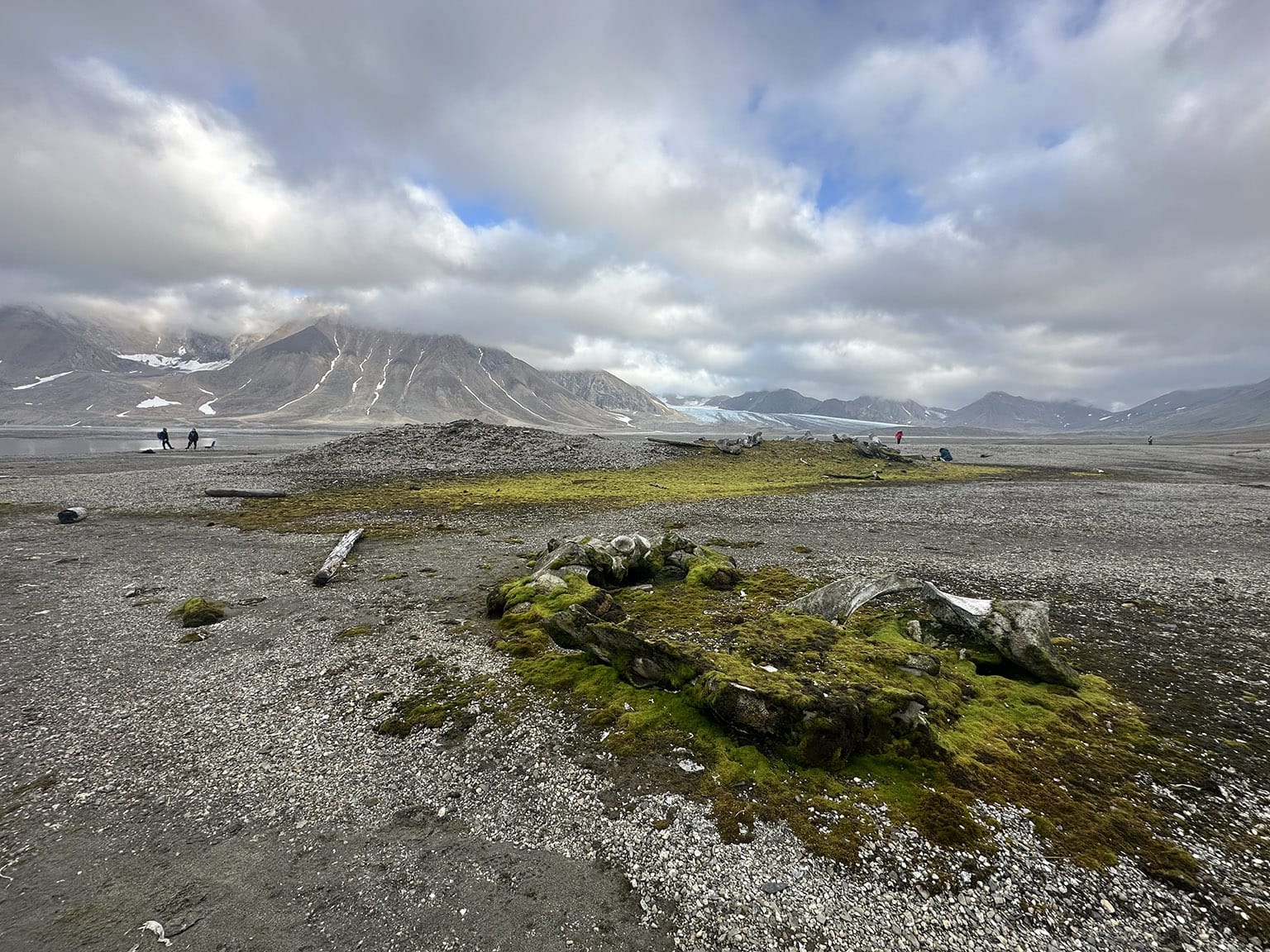
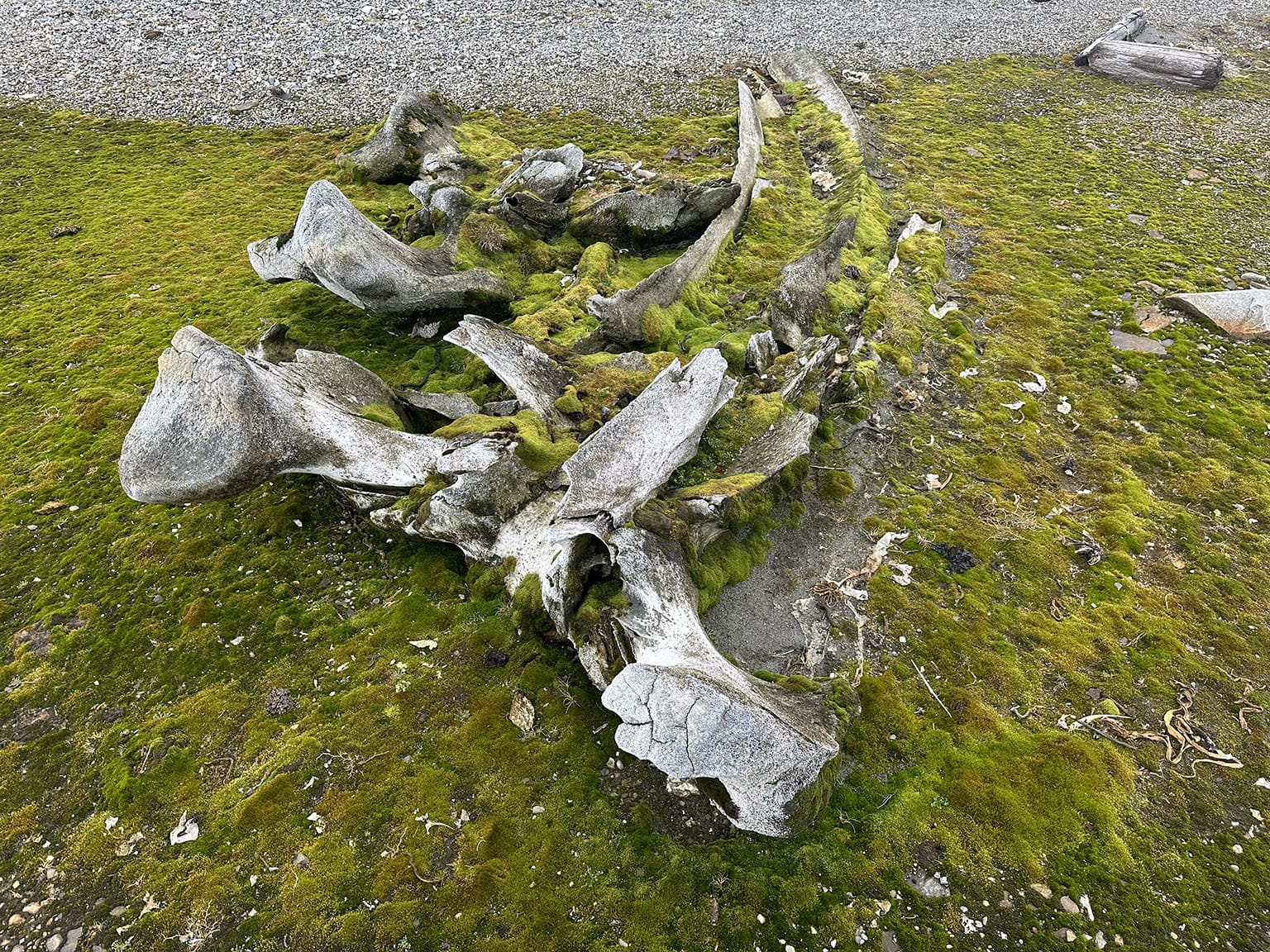
One of the first things you see is an odd heap of material that turns out to be the ruins of a whaler’s cabin, all jumbled wood and whalebones. Humps of gravel hide the remains of blubber ovens over which blood-slicked men once sweated and cursed; their own bones lie quietly beneath the sandy soil, too, invisible and exhausted. As we walked further inland, I began to notice something strange. Beneath the slate-blue sky, amidst the taupe landscape of rocks and lichens and bones, patches of lime-green moss began to appear. These shocks of color were spaced seemingly at random, but when I looked closer I realized that at the center of each verdant carpet sat a bone, or a pile of bones. Moss gently enveloped each massive vertebra, nestling into cracks and softening sharp edges.
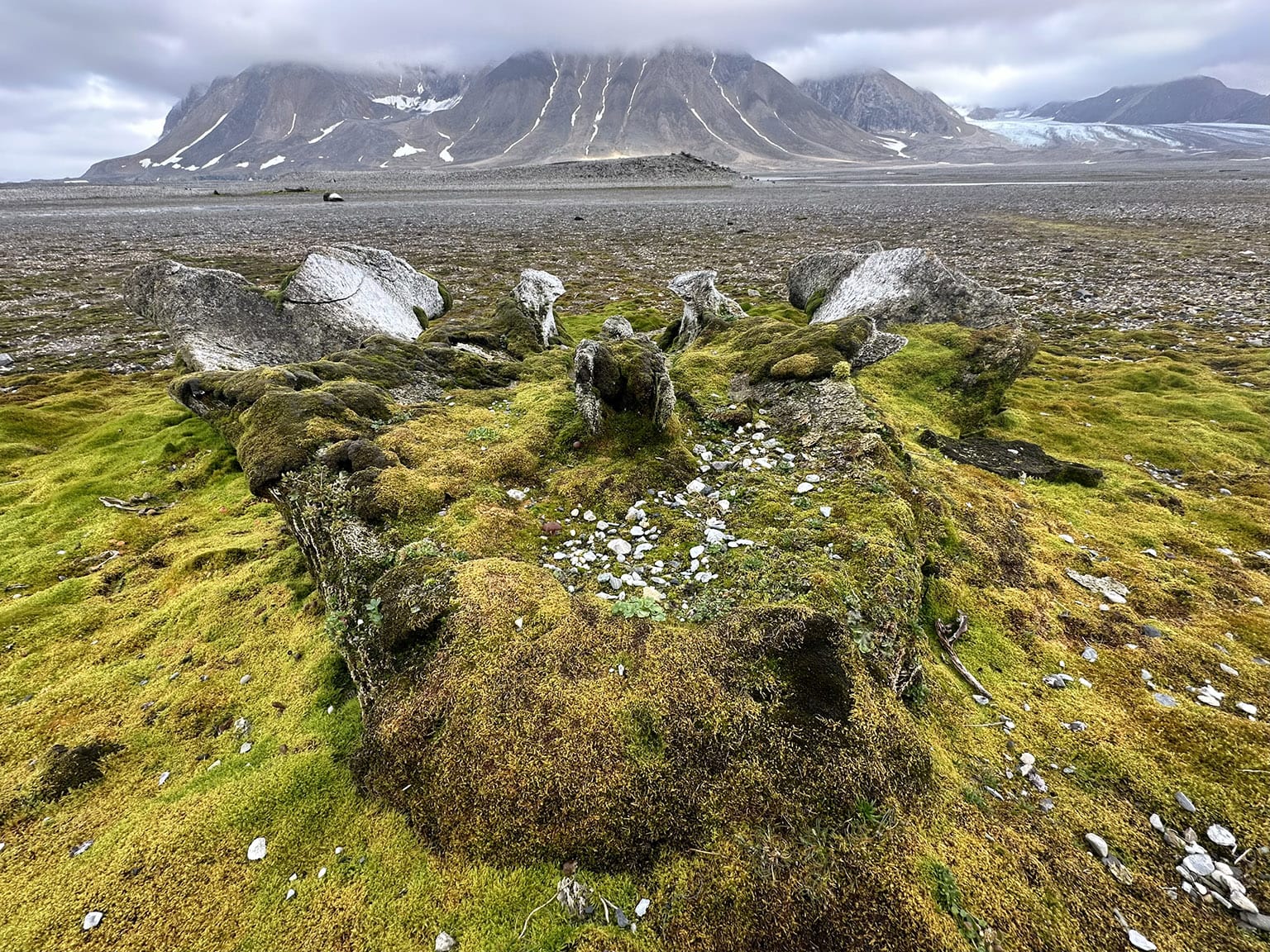
Our guide explained how centuries of exposure had leached out the marrow secreted within the dead whales’ bones and nourished the soil around them, allowing fragile Arctic mosses to grow. Each green spot was a shrine to death and rebirth, an entire life cycle made miniature. Crouching there among these beautiful little monuments felt like walking into a cathedral, guilt and all; that these enormous, mysterious creatures were treated so cruelly for so long remains a black spot on humanity’s permanent record. It’s something worse than a sin, and the living graves of Gåshamna refuse to let us forget.