
The Elevators
by Zito Madu
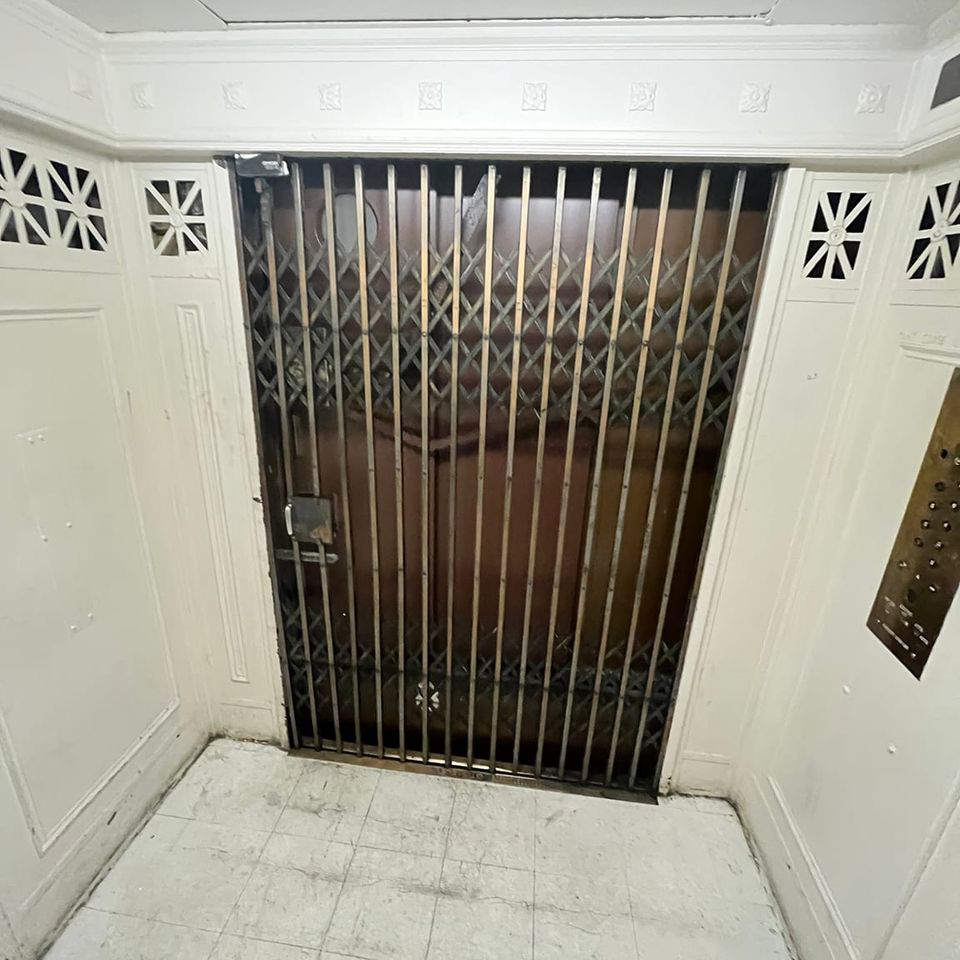
Before I moved to New York City, I didn't think about elevators much. When I first started looking at apartments I began with three requirements: the apartment must be next to the park, be quiet, and have a garage (though I wasn't even sure I would be bringing my car from Detroit to Brooklyn). After seeing the few apartments that fit those requirements—and didn’t cost $3000 for a one-bedroom—I soon realized there was another, something that seems essential to proper living here, but is effectively a luxury: working elevators.
Several times when I met up with an agent/broker to take a tour, I’d naturally move toward the elevator before being signaled toward the stairs, with the explanation that the elevator was broken. Sometimes there would be a sign on the elevator door declaring that it was down, with no indication of when it would be back in working order.
Luckily the building I ended up in has two functioning elevators. They do break from time to time, but not for long. The longest I’ve seen an elevator down was two days.
I’m still someone who would be considered able-bodied, in the sense that in ordinary circumstances I can go up and down stairs pretty easily. But that condition of able-bodiedness is in fact very precarious. As someone who plays soccer often and works out by running stairs and hills, all it takes is a small injury to the hamstrings, or an ankle or a knee, for the nature of one’s experience with the built environment to change dramatically. My first year in NYC, I hurt my knee pretty badly and spent most of that year cursing the hostility of the city’s design for old and disabled people. Sometimes, too, I just like having the option of taking the elevator instead of the stairs.
Keep us breathing fire!








For $3/month you can read this whole post and get our weekdaily newsletter too!