
The Power All Along
by Sam Thielman
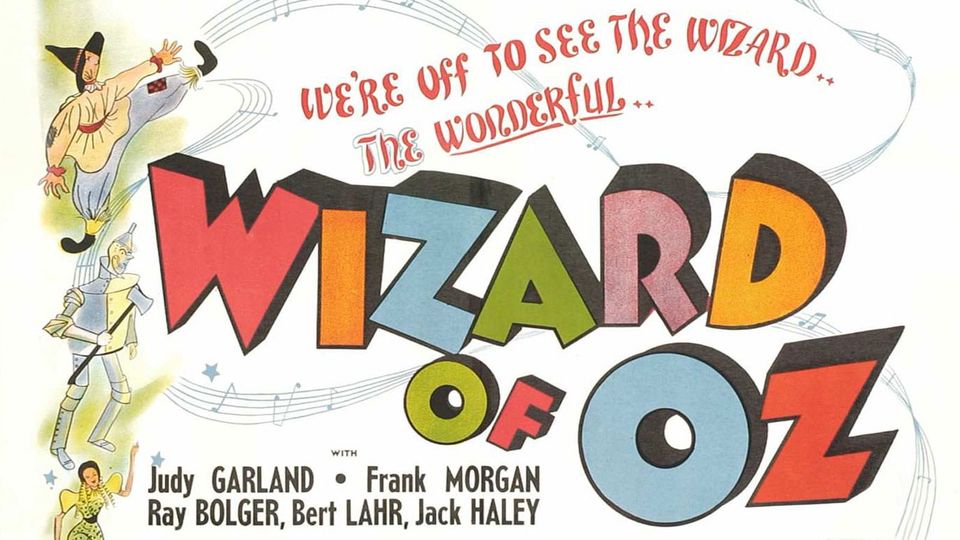
There is perhaps no more American book than L. Frank Baum’s The Wizard of Oz, which completed its first printing in January of 1901. It opened a fantasy cycle that spans fourteen books written by Baum himself until his death in 1919, at which point the series was such a spectacular success for his publishers that a trivial event like the death of its author didn’t even slow down the pace of publication—this too, a solidly American tradition—and by the time the series petered out in 1963, Baum had contributed fewer than half of the series’ forty volumes, though his were to prove the most enduring.
Though his heroine was a poor-but-hardy farmgirl, Lyman Frank Baum himself was a sickly child from a wealthy exurban family. At the age of fourteen he collapsed with chest pains and possibly a full-blown heart attack while he was being caned at a military boarding school in Peeskill, and returned home. Guilty over the harsh treatment to which he had subjected his son, his father Benjamin gave him a small printing press for his next birthday. Baum continued to live with his parents into his 20s in their six-bedroom mansion outside Syracuse.
The region was famous for its outré religious movements. In addition to the 19th century’s legions of revival preachers and their Great Awakenings, there were the “group-marriage” advocates called The Oneida Community, who counted Charles J. Guiteau, the assassin of President James Garfield, among their number; the Millerites, awaiting the Second Coming of Christ, which their leader confidently predicted would arrive on October 22, 1844; the Fox sisters, who invented the public séance; and Joseph Smith and the Mormons. One historian, according to Evan I. Schwartz’s biography of Baum, Finding Oz, called the region “The Burned-Over District,” reasoning that the fires of religious fervor had used up all the available fuel in the area and there were no more fresh souls to be had. Baum’s Oz borrows a great deal from the upstate New York of his childhood and from South Dakota, where he eventually moved and published a newspaper that advocated for the extermination of the Sioux, this time with a big-boy printing press. (Also extremely American.)
The 1939 MGM musical of The Wizard of Oz was the third film adaptation of the book, and it’s still impressive as a visual extravaganza despite the positive quaintness of every special effect. It is nearly a perfect movie, but it’s also the beginning of the idea that life in Oz might not be all rainbows and unionized lollipop artisans. Judy Garland, its 16-year-old star, was already being groped by people as powerful as Louis B. Mayer on the movie’s set. She was also bullied into losing weight and forced to take diet pills, setting in motion the drug habit that probably killed her—she ODed on alcohol and barbituates at just 47, after a lifetime of drug use. All this suffering combined with her perfect voice, angelic face, gingham dress and sparkling ruby slippers, plus Yip Harburg’s songs, made Dorothy the name-brand Hollywood folk hero for gay men, who were subject to horrific persecution during the middle of the 20th century.
“Manhattan's Dr. Leah Schaefer claims that homosexuals gravitate toward superstars because ‘these are people they can idolize and idealize without getting too close to,’” snorted Time, commenting on a 1967 Judy Garland concert attended by a number of “little bluebirds.” (The article is something like a thesaurus of genteel slurs for gay men.) “‘In Judy’s case,’ she adds, ‘the attraction might be made considerably stronger by the fact that she has survived so many problems; homosexuals identify with that kind of hysteria.’” Another Manhattan psychiatrist, Dr. Lawrence Hatterer, agreed: “Judy was beaten up by life, embattled, and ultimately had to become more masculine. She has the power that homosexuals would like to have, and they attempt to attain it by idolizing her.”
The movie also kept the books in the public consciousness. Charlie Smalls’s score for Sidney Lumet’s 1978 The Wiz set the stage for a kind of respectful subversion; any American pop goddess, even Diana Ross—then in her mid-30s—could fill Dorothy’s ruby slippers (or silver shoes, in the books and their more faithful adaptations), so long as there was a Tin Woodman, a Scarecrow, a Cowardly Lion, a Wicked Witch, and so on.
These trappings can be ironized or emphasized as the author sees fit; often they improve on earlier versions. “We’re Off to See the Wizard” is a good song but it’s no “Ease on Down the Road.” Sometimes the innovations even break containment: The scene of Dorothy waking up to see all her friends standing over her is an invention of the Judy Garland musical, and even though it doesn’t recur in most other versions, it has escaped into American culture writ large.
The key point retained from edition to edition of this story seems to be that people want to be virtuous; and the story’s problem, in all its forms, is that its heroes don’t really know how. This, too, can be subverted, but it’s present even in the 90-minute pornographic musical version, which features a Gilbert and Sullivan pastiche sung by the Cowardly Lion called “Am I Turning Gay?” What’s more important to porn than virtue? And what is virtue, anyway?
Which brings us to Gregory Maguire and The Wicked Years, a four-novel fantasy cycle starting with Wicked. Fantasy literature has few gay superstars but Maguire is absolutely one of them; his learned, lurid reworkings of children’s stories are quite a distance from, say, Angela Carter’s, which strip fairy tales to their essences. In Wicked and elsewhere, Maguire adds profuse, gossipy detail, rather than paring anything away, and this transforms Baum’s world by making it more real, which is to say, filled with more people like Maguire.
Wicked amped up Baum’s own ideas, too. Maguire’s wizard is the kind of tyrannical charlatan who loves to scapegoat vulnerable minorities in order to paper over his own shortcomings—this isn’t too far from Baum’s Emerald City, which is only green because everybody is issued a compulsory pair of green-tinted glasses when they pass through its gate. Baum was interested in the delightful qualities of nonsense, a staple of children’s literature; Maguire was interested in motivation, and so he made the Wicked Witch of the West his main character, and gave her a name: Elphaba—Lfb—which she’d never had before.
What else is there to do with motivation so deeply felt but sing about it (again)? Stephen Schwartz’s Broadway musical of Wicked opened to mixed reviews from a cohort of theater critics who seemed to see the show as a form of anti-Judy blasphemy, but it became a touchstone for a generation of young women of every sexuality in something like the way that Garland’s performance had once galvanized gay men. Maguire had moved on to different stories, but with the sudden, enormous popularity of the musical—it opened in 2003 and is still running—he wrote three sequels to Wicked, drawing on and expanding the lore of the Baum books, expanding the series into high fantasy. You’d think this sort of thing would hit a point of diminishing returns and become so obscure that people would lose interest, but it never has.
And now it’s a movie again. The new Wicked film is suddenly and obviously a critique of colonialism, something Baum’s books had no interest in; indeed, Baum himself explicitly endorsed colonialism. The endangered talking animals indigenous to Oz are simultaneously an ecological metaphor and a less comfortable racial metaphor (discomfort is the name of the game for Maguire), and Cynthia Erivo is somehow every woman who’s ever been passed over, slighted, or taken advantage of.
American literature is fantasy literature, because this big weird country doesn’t really have a unified or unifying history, or a common religious practice, or a broadly shared ethnicity, and so we have to make up stories we can all live with. Some of us kept others as slaves and some of us were expelled from our ancestors’ land and some of us just got here and are looking for work. There’s no ancient story that belongs to all of us. How could there be? Nothing but the latest edition is going to contain everyone because people are constantly arriving, so it will have to be updated as regularly as a census, its pages and characters reapportioned, its songs expanded to add new harmonies, its old versions continually extant so we can learn from their mistakes.
Oz and its subversions, homages, and additions are unique, which is perhaps the thing that suggests most strongly that it is working. If we are to make this country a home, there can be no place like it.

Enjoy quality media. Support the journalist-owned press. Subscribe to Flaming Hydra.