
The Public Is Catching on About Private Equity
by Julianne Escobedo Shepherd
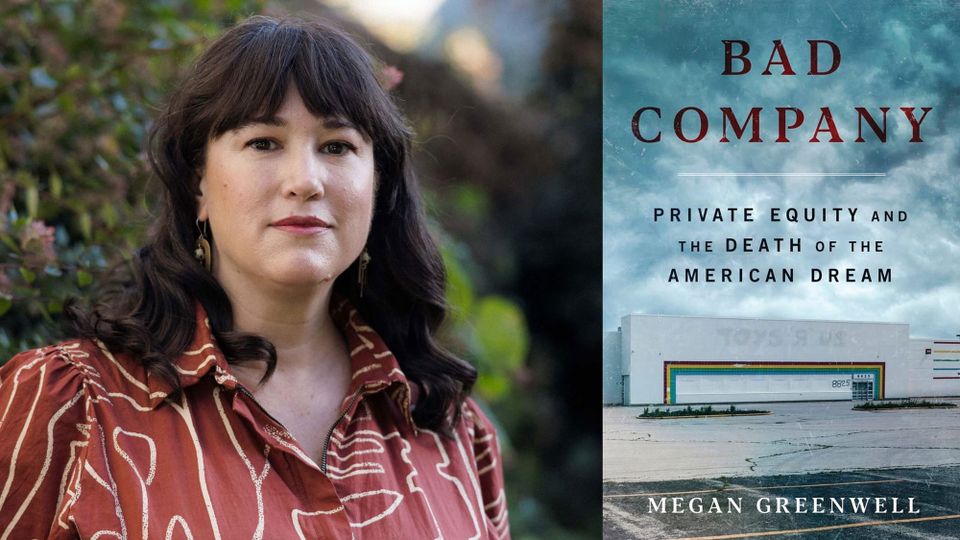
In 2016, a series of legal attacks secretly funded by tech mogul Peter Thiel culminated in the high-profile bankruptcy liquidation of Gawker Media Group. The company’s surviving sites, including Deadspin, Jezebel, Lifehacker, Gizmodo, Kotaku, and Jalopnik, were eventually acquired in 2019 by private equity company Great Hill Partners, who rebranded the company as G/O Media and installed former Forbes executive Jim Spanfeller to run it. As CEO, Spanfeller lurched from one blunder to another, the most notorious being the implosion of the popular and wide-ranging sports site Deadspin. Editor in Chief Megan Greenwell resigned within months, after refusing management directives to “stick to sports,” despite the site’s popularity covering lots of other topics. Not long after, Deadspin’s entire staff of 20 would defect. (G/O Media is currently winding down, having sold all its media properties with the exception of The Root.)
I was right there alongside Greenwell during all of this, as the EIC at Jezebel, Deadspin’s sister site. We became close friends and confidants. It was tragic watching the demise of our formerly successful company. But after her departure—while I was trying unsuccessfully to protect Jezebel (and my mental health) from an inevitable collapse—Greenwell was using her funemployment to research the brilliant new book, Bad Company: Private Equity and the Death of the American Dream, detailing for posterity how a bunch of random finance bros are transforming the landscape of capital while destroying peoples’ lives in the process.
Bad Company follows the journey of four individuals in media, healthcare, retail, and housing, telling the stories of how their careers and their futures were affected after private equity got involved. It’s structured brilliantly—the kind of narrative investigative reporting that’s exceedingly hard to pull off, though I’m not surprised that someone as talented and as caring as Greenwell could do it. (Like any sports fan, though, she will give you shit for no reason.)
We spoke about her book in the backyard of a Brooklyn dive bar in June, the day before Bad Company’s release. This interview has been edited for clarity and length.
You took this huge topic and divided it into the journeys of four different characters. How did you decide to divvy it up like that?
There are two components: One is the braided strands of the four characters’ stories, and the other is the before, during and after, chronological breakdown of each. It was important to me to do it chronologically, because I think that critics get themselves into trouble when they attribute too much of the root causes to private equity alone, so telling the before story—like, “here is how these industries got into this mess”—was very important. And I also didn’t want to end on a “Wow, doesn’t this shit suck?” kind of note. I’m not an activist, I’m a reporter, so I did not want to go into prescriptive mode. Finding characters who did something interesting after the private equity downfall felt important to me.
I love a narrative, right? So the hardest and also the most important part of the reporting, to me, was finding four characters that readers would be super compelled by and, like, fall a little bit in love with them.
Writing about the numbers of it is very tantalizing, because they’re kind of shocking—ten times as many private equity-owned companies enter bankruptcy proceedings, for example, in comparison with other kinds of companies. So I understand why the 10,000-foot view is important. But I also think that kind of primer only gets you so far, yeah, and doesn’t really make an impact until it’s real people.
And you wrote it for real people, which I can tell because even I didn’t fully understand private equity until I read this.
I think about the target reader for this book as being exactly who I was when I started it—which was, I have some sense that private equity is very important, and that in a lot of cases, it’s very bad. And I could not tell you a single thing about what that means, right?
I was not gonna read a primer about private equity back then. But I do think people want to understand how private equity works. They just don’t want to be like, force-fed a lecture.
And so many of the people most affected are in the working class and the middle class. I also wonder if you think any part of your upbringing kind of helped you tell these stories in the way you did.
You know, I had never thought of that until you asked, but I think it’s absolutely true. For most of their careers, both my parents were kind of itinerant workers. My dad was a flooring installer, and my mom installed window capsules. They met at work at JCPenney, when they were both in the design department, back when that was a thing that JCPenney did. And so we were constantly moving when I was a kid, because, like, job opportunities were gonna be better in X place, or because the store where one or both of them were working shut down. From a very young age I was acclimated to the idea that jobs are precarious, and the powerful people in charge can take away your parents’ job at any time. You will then have to blow up your life and move and go to some new terrible school when all you want is to be with your old, cool friends.
JCPenney was later owned by private equity, and went into bankruptcy under private equity ownership. So before my dad died, when I was first starting to work on the proposal for this book, I got him reading all about JCPenney, and he was just like, livid. He really got a fire lit under him, having known nothing about private equity, until I started paying attention to this.
It seems to me that a lot more people in the U.S. are waking up to how this extreme economic and power imbalance is making all our lives so much more precarious. But the thing that I can’t really get my head around, though, is—what do these people want? Do they realize that there will be no wealth to extract if there are no willing workers?
I just don’t think the vast majority of them think past “This is good for our bottom line.”
Relatedly, do you think money was a bad idea? Like, the invention of money.
A thing I really appreciate about Flaming Hydra is that I have done so many media interviews, and this is a question I’ve never been asked.
I felt like you would be thoughtful about it.
I feel like you’re opening my third eye to where I’ve never gone that deep before. I’m willing to commit to saying that money was a bad idea.
Great, we’re in agreement. Even though it’s focused, your book also feels like a history of this moment when these U.S. institutions are both crumbling and shifting ever-closer to oligarchy. So do you look at this and think, “Here I am, documenting this awful moment for future generations.”
Had the book come out five years ago, I’m not sure anybody would have read it. But these issues have now kind of crossed into the public consciousness in ways I didn’t anticipate. That’s not because I’m a genius. That’s because the world got more screwed over. You can trace this history of the development of the modern private equity system in the ’60s through the ’80s to the explosion in the last 10 years. And now we’re in this moment where it could actually just swallow everything.
Do you ever think about how that might connect to the bootstraps narrative? This idea that the U.S. is built on hard work, but they’ve created a system where you can work hard at three jobs and still not even make your rent.
I thought a lot about this in particular with Liz, and the story of her career at Toys “R” Us, because she’s from Alaska. The story of Alaska itself is bootstrapping. And by any reasonable definition, Liz bootstrapped. She grew up in poverty, in an abusive environment, had to raise her younger siblings, had to drop out of high school—she had the deck stacked against her, and she was sort of like All right, I’ll just do it anyway. And she did. She moved her family from Alaska to the Pacific Northwest and was supporting a husband and three children on a retail worker’s salary. Like, if anybody bootstrapped, she did.
But obviously, when we talk about what American bootstrapping is, we’re not talking about Liz. In the book I draw this parallel between Liz and Charles Lazarus, who founded Toys “R” Us: the bootstrapping myth was created about people like him. He too was born poor, served in World War II, and then, because of the GI Bill, he got a very, very low interest loan, both to buy a house in a fancy suburb of D.C. and to start a business. He was able to become a billionaire in the classic mold of the “American success story,” in part because these opportunities were given to him that were never available to Liz. The bootstrapping ideal is obviously bullshit.
Yeah, like Liz shouldn’t have had to bootstrap; people might focus on her resilience, but actually hers is a story about institutional failure.
All four of these stories are largely about the failure of society to take care of people. So the private equity story is almost like, layered on top of that, right? These companies are just taking advantage of the shitty circumstances and the lack of any sort of structural support for people.
The anger about this system increasingly unites normal people on both sides of the aisle. And I don’t know if you know this, but there are a lot of Republicans in Wyoming. I talked with a lot of Trump supporters, and the idea that they cannot get health care in their hometown, they’re all truly baffled by the idea that that would be a political issue. Honestly, that was maybe the most hopeful thing in the entire reporting process to me. Even they were able to agree that our healthcare system is so fundamentally broken that they can see that they’re being literally abandoned by for-profit companies and the government.
That gives me some optimism. Because if you can unite Roger from the book, who is like, a pretty progressive, 80-year-old Democrat, and all of these big-time Wyoming Trumpers, that indicates to me that change to this system will be possible at some point.
If you enjoyed this free post, help support the journalist-owned press. Subscribe to Flaming Hydra.