
Translating Africa
by Kọ́lá Túbọ̀sún
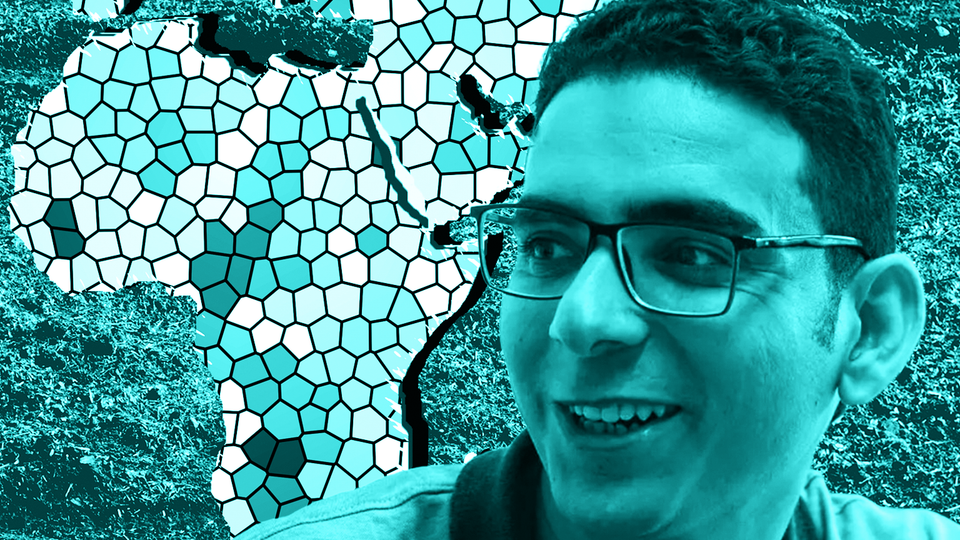
Ibrahim Fawzy is an award-winning Egyptian writer and literary translator. His recent translation of Hassan Akram’s “A Plan to Save the World” was published in the 2025 edition of Best Literary Translations, which I co-edit; “When We Left Home” by Yousri Alghoul was published in Letters from Gaza (2025).
Fawzy is currently a fellow at Boston University’s Center on Forced Displacement. I spoke with him after a recent conference there about what it’s like to be a writer and translator of Middle Eastern origin in these very interesting times in America.
This conversation has been edited for brevity and clarity.
Tell me about yourself, Ibrahim.
My name is Ibrahim Fawzy. I’m a literary translator and academic from Egypt, working primarily between Arabic and English. I live fully in both languages. I hold an MA in Comparative Literature and am pursuing an MFA in Literary Translation at Boston University. My primary focus is on contemporary works. One of my translations appears in The Best Literary Translations 2025.
I grew up in a family steeped in Arabic literary tradition—my uncles studied Arabic Grammar and Literature—so I was often surrounded by conversations about language, asked to parse grammar, or reflect on a passage. Literature was never distant; it was a presence in the room, a way of thinking and being. In many ways, I feel I’ve always lived inside it.
The first writer who truly captivated me was Naguib Mahfouz. I was struck by how intimately he captured the texture of Egyptian alleyways, how he transformed local realities into something universally resonant. Reading became a refuge, and eventually, an impulse. I write, though I wouldn’t call myself a writer in the grand sense. Writing, for me, is a survival tactic, a way of holding up.
What got you into literary translation?
Everything began by chance. During the pandemic, I found myself reading extensively in the literature of political prisons. I came across a few powerful translations from Arabic into English, and I thought, “Wow, those translators have done something extraordinary.” I wanted to be part of that, to contribute something of my own to this beautiful, shared table. That’s when I came across a short story titled “The Last Stop” by the Egyptian academic and writer Hany Said. I translated it into English and submitted it to ArabLit. When it was published, I was overjoyed. I posted on Facebook: “I’m thrilled to announce that my first translation is out!” And from that moment, everything changed.
What does translation mean to you?
Translation has transformed my life in ways I never expected. It tethered me more deeply to my heritage while opening a door to the broader world, and, just as importantly, brought the world closer to me. Through translation, I learned to see the difference not as distance, but as richness. It reshaped the way I understand language, culture, and identity. In translation, I speak for those whose voices risk being lost across borders. Translation taught me that the world is not one fixed thing, but a chorus. It reconnected me to everything I hold dear in my lineage—as an African, an Arab, and a human being.
Keep us breathing fire!



For $3/month you can read this whole post and get our weekdaily newsletter too!