
Viral Rebound
by Misha Angrist
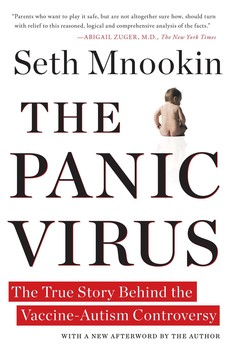
At a dinner party back in 2008, a group of educated parents told journalist and author Seth Mnookin that they were delaying or even forgoing their kids’ scheduled shots.
“It just feels like a lot for a developing immune system to deal with,” one first-time dad told him.
Mnookin pushed back, asking for data—a single experiment or piece of epidemiological evidence demonstrating any danger posed to children by the measles-mumps-rubella (MMR) vaccine. The dad was at a loss.
This story appeared in Mnookin’s 2011 book, The Panic Virus: A True Story of Medicine, Science, and Fear. From the dinner party, the book moves back in time to the turbulent histories of other vaccines, including smallpox and polio—the vaccine for which from one lab mistakenly contained live virus and caused the paralysis and death of several dozen children—and the fears of fluoride and other public health innovations. Beyond being a compelling read, the book is somehow both prescient and naïve (clearly we were all naïve).
Until a year or two ago, I used to spend a few minutes at the beginning of my science policy classes on what I called “current events,” reviewing some piece of science news—about the Hubble Telescope, for example, or the Cancer Moonshot, or the proposed de-extinction of the dodo bird. But nowadays, as my students and I review the latest in a seemingly neverending series of Health and Human Services vaccine policy self-owns, I call it “staring into the abyss.”
There’s no shortage of topics relating to the horrorshow of the current U.S. government’s vaccine policy on measles (so back!), or its position that the polio vaccine should be optional, its tightening of the vaccine schedule, the wholesale replacement of critics, its restrictions on research, and the return of conspiracy theories like the autism fixation, or the villainization of aluminum. But to make sense of it all, I found a return to Mnookin’s book helpful, re-grounding my understanding in the long history of anti-science moments that led us to this current ferocious one.
The second part of The Panic Virus deals with Andrew Wakefield, the gastroenterologist who in 1998 published an infamous paper in The Lancet claiming a link between the MMR vaccine and autism. The study was based on 12 children, included no controls, and was never replicated, either in epidemiological or virological studies. Reporter Brian Deer spent many years investigating Wakefield and his claims; Deer found that Wakefield had manipulated data; he was on the take from litigators; and he stood to gain financially from the downfall of the MMR vaccine. In 2010 the UK General Medical Council stripped Wakefield of his license, and The Lancet retracted his MMR-autism paper.
Keep us breathing fire!










For $3/month you can read this whole post and get our weekdaily newsletter too!