
Big talk / Loud noise
Today: Tal Lavin, author of Wild Faith; Jack Pendarvis, an American screenwriter, author, and voice actor; and Misha Angrist, a senior fellow at the Initiative for Science & Society and associate professor of the practice at the Social Science Research Institute at Duke University (the views he expresses here are his alone).
Issue No. 471
Pursuit of the White Whale
Tal Lavin and Jack Pendarvis
Cetacean Solo
Misha Angrist
Pursuit of the White Whale
by Tal Lavin and Jack Pendarvis
Jack: Hi, Tal! It’s me, Jack. I understand that you began a heroic, never-completed exploration of Moby-Dick. So did I! Why did we do that? I actually finished mine, but only a portion of it was ever published. Tell me about yours!
Tal: It was during the Covid lockdowns, and I was finishing up writing a book about Nazis, and I felt like I was going insane; I felt really alone. So I decided to start a podcast analyzing Moby-Dick chapter by chapter, with guests each week, as a way to a) reach out to scholars, journalists, authors and scientists with the implicit imprimatur of Melville’s seriousness; b) have these lovely conversations about something I loved already; c) introduce people to this longtime obsession of mine, and d) consequently feel less alone. It did succeed in those goals! Tell me about your White Whale of a project and how it met its untimely fate.
Jack: I think I must have heard about your podcast while my own thing was going on. I have a vague feeling that my friend Kat Kinsman was on it. Or am I thinking of someone else? Someone I know was definitely on it.
Well, my idea stemmed from my discovery that I enjoyed talking into a digital recorder and transcribing it better than writing. Mostly I did freeform things. I don’t know how I hit on the idea of paraphrasing the entirety of Moby-Dick. Maybe it has its roots in a joke made by my friend Bill Taft, who, back in Atlanta in the 1990s, saw a documentary about a man walking across the USA. He said that someone should make a documentary of him (Bill Taft) trying to read Moby-Dick. I thought it was a great idea and pestered him about it until one day he said something wise: “Sometimes it’s more fun to talk about a thing than to do it.” I still rely on that insight to this day!
Well, our friend and editor Maria Bustillos had been publishing some of my digital rambles on Popula, so I convinced her to advance into the slightly more cohesive idea of paraphrasing Moby-Dick. It doesn’t sound quite sane as I type those words. I mean, the great weakness of my idea was that a person could just as easily read Moby-Dick! At some point, Popula stopped posting my segments, but I never asked why. I assumed it was because nobody was clicking on them.

[Popula went on hiatus because the cooperative was morphing into Flaming Hydra, with a budget too small to keep it all afloat! — Ed.]
What happened to your podcast? How far did you make it?
Tal: Only to Chapter 55, so slightly less than halfway through. Sadly, a podcast is fairly time consuming—not just to record, but also to edit, and my sound editing capabilities are rudimentary at best. Between booking guests every week, paying a college student to edit it, and paying for a podcast hosting site that let me put it on Apple and Spotify and stuff, it was eating up a lot of money and a ton of time, for a passion project. I’d love to return to it in that elusive Someday people always want to return to their passions, but it’s hard to pick up something you dropped so comprehensively in the middle. I do think there’s something about Moby-Dick—clearly, in both of our cases—that inspires this kind of obsessive attention, though. I mean, it’s a book so epic in scale it inspires epic projects, don’t you think?
Tal talking chowder with Kat Kinsman, senior editor of Food & Wine; Helen Rosner, food correspondent for The New Yorker; and Pete Wells of the New York Times, on Moby Dick Energy: A Moby Dick Podcast
I’m really obsessed with this party game called DICK, which is the same basic structure as Cards Against Humanity, where you have sort of, sentences with, fill in the blank at the end, but instead of the fill-in-the-blank being, like assorted edgelord words and phrases? It’s just context-free excerpts from Moby-Dick. — Helen Rosner, on Moby-Dick Energy
People who haven’t read it tend to think it must be plot-heavy, like Treasure Island or something, but if you’ve read it you’ll know that is almost the opposite of the case. It’s this giant salmagundi of Melville’s obsessions, tangents, random attempts at dramaturgy, passionate but deeply inaccurate cetology, and so on. At one point you discover that Ishmael is tattooed all over with whale dimensions. There’s an entire chapter that’s just the third mate reciting a dream he had to the fourth mate about Ahab kicking him with his peg leg. I can’t overstate how bizarre it is, and to me it’s that dreamlike quality, larded with some of the most gorgeous prose in English, that drew me to make this attempt to understand it on a micro level, and by extension thus to absorb the whole. What was the process of paraphrasing Moby-Dick like? How did you paraphrase the more insane flourishes? What language choices did you make, and why? What was your favorite chapter to paraphrase?
Jack: Yes, I agree that Moby-Dick is contagious! It makes you want to do things. Terrible things. To repeat your question: how did I paraphrase the insane flourishes? Very poorly. I don’t know, it made me laugh, just the thought of it. My theory—which I have never managed to prove—is that if you do something for long enough, it becomes art. Like, if I did a 20-page summary of Moby-Dick, that would be nothing. But if I did a pointless 400-page paraphrase (which I did), it would be a solid object to reckon with, if only in its absurdity. Did it work? I guess not. At the nadir of my paraphrasing, I’m like an entertainer who goes from high school to high school trying to make Hamlet hip for the kids of today.
And yes, the chapter(s) about whale dimensions! He ends one chapter like (I’ll paraphrase, of course), “Are you ready for some whale dimensions? Sit back! You’re not going to believe it!” And then BANG! The chapter ends. That’s his idea of a cliffhanger. That’s why we love you, Ishmael!
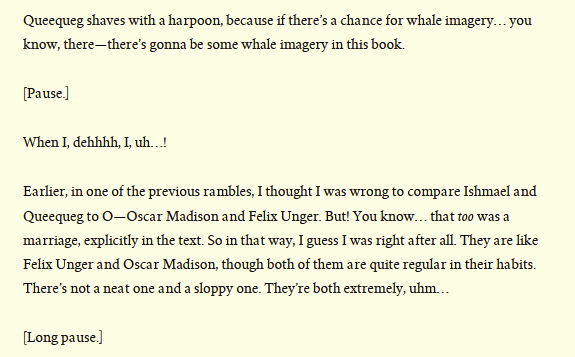
You asked about my favorite chapter to paraphrase. I don’t know. I like doing character work. Stubb and Flask. I decided one of them was like Danny Devito and the other was like Popeye the Sailor Man. I can’t recall which was which. But everybody gets some juicy monologues, and it was fun to do an awful job recreating them.
You know what? I’m just now remembering that I wrote a piece for The Believer in 2007 called “If Sammy Davis Jr. Had Written Moby-Dick.” So I was already messing around with the idea of “translating” Melville… why? My first idea was Jerry Lewis writing Moby-Dick, but I found his voice much harder to capture on paper.

Tal: The book itself lends itself to feinting and character work and all kinds of dumb stuff, because sometimes Melville writes a half-play, forgets what genre he’s in, goes all in on cetology or constellations or whatever the fuck was in his beautiful brain at the time. So it makes sense to play with it, because it’s a playful book even while it’s also serious as fuck.
Jack: Did you have a podcast episode you felt was most successful at exploring something about the book? And how did you feel when you pulled the plug on your podcast? When I’m done with a project, I often stop thinking about the subject completely. In fact, the subject becomes annoying. Does that make sense? For me, it didn’t happen with Moby-Dick, though. I do feel I sort of rushed through the end of the book in my paraphrase, becoming less rigorous as I raced to the finish line.
Oh! I have one more question. Don’t you think Melville kind of drops the ball with Queequeg? I wanted a big final scene with Ishmael and Queequeg that didn’t happen. But it makes me laugh to imagine Melville bringing his stuff into a writing workshop where some jerk would take him to task for something like that.
All right, I am going to keep typing. Didn’t you notice while reading Moby-Dick that there were connections and allusions everywhere you looked in the real world, all the time? Like, I was watching Elvis Presley’s 1968 comeback special and he picked up his mic stand and brandished it like a harpoon and said, “Captain Ahab!” I am done typing for now! Maybe forever!
Tal: My favorite podcast episode was when I got honest to god famous food critics to discuss the chowder recipe in Moby-Dick, the chapter called “Chowder” that is essentially just Herman Melville’s chowder recipe. In a way, Melville was probably the first writer I really fell in love with, the one that made my hair stand on end and realize prose could make your heart go nuclear or whatever. He’s probably still the reason I include one thousand zillion commas in every sentence I write, like a run-on is proof of literary passion.
Obviously, yes, I wanted more Ishmael and Queeqeg. I also wanted the entire crew to be in gay love with one another (I think they kind of were, though? In my head, they were). In the end we get Ishmael surviving by literally floating on Queequeg’s coffin, which is kind of the epitome of a tragic gay love story. The book ends where it begins, really—the two of them in this kind of forced, intense intimacy. I think it’s a story about love, and hate, and obsession, and whales. And it’s the most beautiful and confusing story I’ve ever read or will ever read. And that’s my thought on that. I’m glad I ended the podcast, even though I’m sad I ended the podcast, because this way I’ll never be done with Moby-Dick.
Jack: I love everything you’ve said! You know, several times, Ishmael describes Queequeg and himself as husband and wife. And yes, yes, you’re right, the book invites you to participate in it. It’s very welcoming! You just jump in and swim. Or drown. Or float on a coffin. Unrelated, but we haven’t even talked about how they use the whale penis as a raincoat! I believe I’ll end there.
NEWS ON FIRE
The People(’s Republic) Have Spoken
The Known Knowns: We know that Avatar: Fire and Ash is leading the box office and will keep doing so. At $776 million (and counting) so far, it has a good shot at hitting the $2 billion mark and thus trapping writer/director James Cameron on Pandora forever.
The Lesson: China. Is. Back. After a couple years when Hollywood movies struggled (and were given minimal or bad release dates) in the People’s Republic, this year Zootopia 2 and Avatar: Fire and Ash will each top $100 million.
Why? Is it happenstance? A strategic pivot by China’s regulatory bodies? The swelling confidence of a rising hegemon? Maybe it’s just the increasing atomization of the Chinese audience, even as the country’s local box office topped $6.7 billion this year, led by the runaway success of animated mythological film, Ne Zha 2, (“Nezha: The Demon Boy Churns the Sea.”) According to Sixth Tone’s Gui Lin, the increase in films appealing to specific regional and cultural demographics heralds “a movie market defined by diversity rather than uniformity.” – J.D. Connor
Seeing Redd
On December 23, the President of the United States starred in the broadcast of the Kennedy Center Honors, an event staged at the famed institution that is, by remarkable coincidence, supposedly named after him now. The broadcast, which aired on CBS, logged the lowest ratings in the show’s history, dropping a staggering 35% in viewership versus last year.
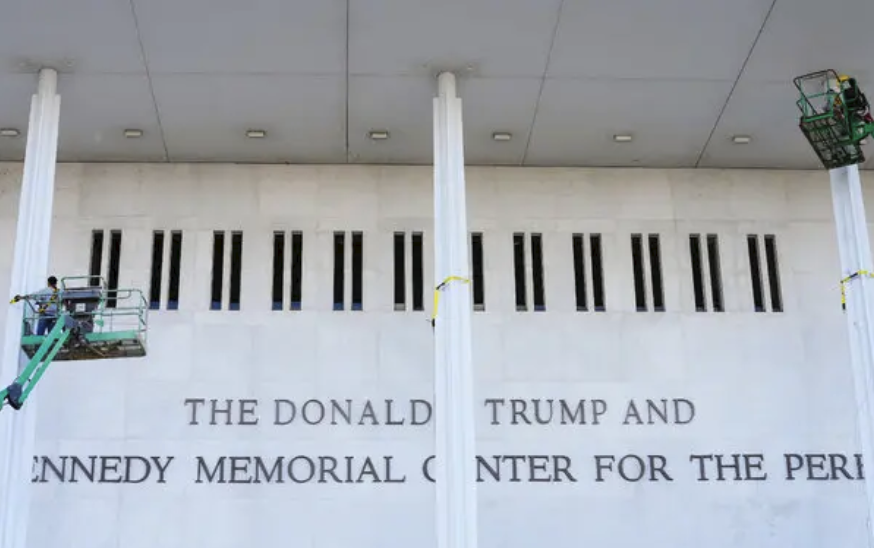
The poor showing came as jazz artist Chuck Redd announced a last-minute cancellation of the traditional Christmas Eve concert, which he had performed since 2006, in protest of Trump’s seizure of the Kennedy Center. In response, the Center’s leadership announced that they were suing Redd for $1 million for allegedly betraying his role as a “public artist,” which, like the newly-named The Donald J. Trump and The John F. Kennedy Memorial Center for the Performing Arts itself, is a designation they literally just made up.
But all is not lost. Trump can still look forward to the New Year’s performance of Monty Python’s Spamalot, whose librettist will surely have only laudatory things to say about the country’s most distinguished patron of the arts. – Zach Rabiroff
Cetacean solo
by Misha Angrist
As I recall, my older brother and I stood in line for hours (probably at National Record Mart) to buy tickets to see Led Zeppelin at the Civic Arena in Pittsburgh. I would turn 13 that summer of 1977 and there was little that spoke to me with the authority and unquenchable force of these four long-haired blokes from the sticks of England and their deafening, wailing, sensual, grandiose tapestry of medieval Tolkien-laden modal blues.
The previous year they had released their seventh studio album, Presence, a cryptic and somewhat off-putting work, beginning with the creepy cover: a very respectable Mummy, Daddy, and two children sitting at a white-clothed dinner table, tall windows behind them overlooking a crowded marina. In the center of the table, and the focus of everyone’s attention, is a phallic obelisk, jet-black, popularly known as “The Object.” It reflects no light and casts no shadow.
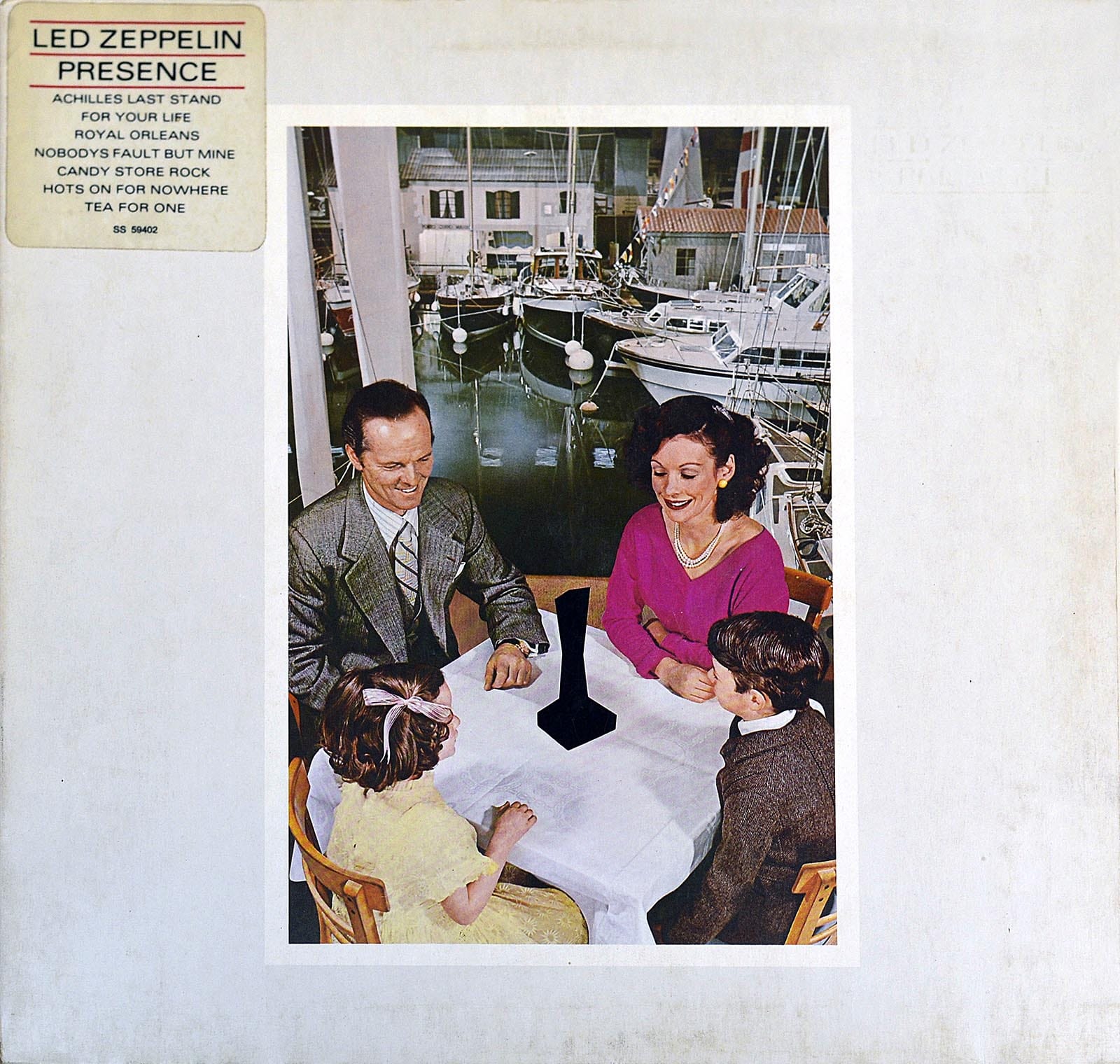
The sleeve of Presence has been described as the greatest work ever done by album cover auteurs Hipgnosis… and also, somewhat less charitably, on Reddit. Apparently, the band’s label, Swan Song Records, made a thousand replicas of The Object; the quest for one consumed the better part of an episode of Pawn Stars. Meanwhile, the music itself felt more bloated and discursive than 1975’s magisterial double album, Physical Graffiti (which a friend owned on eight-track tape, because of course), despite being half as long.
None of that mattered to teen-aged me. I was preconditioned to love Presence and dammit, I was going to see the apotheosis—the embodiment—of rock and roll decadence in person at the tail end of their triumphant North American tour.
Alas, it was not to be. That July, singer Robert Plant’s five-year-old son Karac contracted a stomach virus and passed away. The remaining tour dates were cancelled.
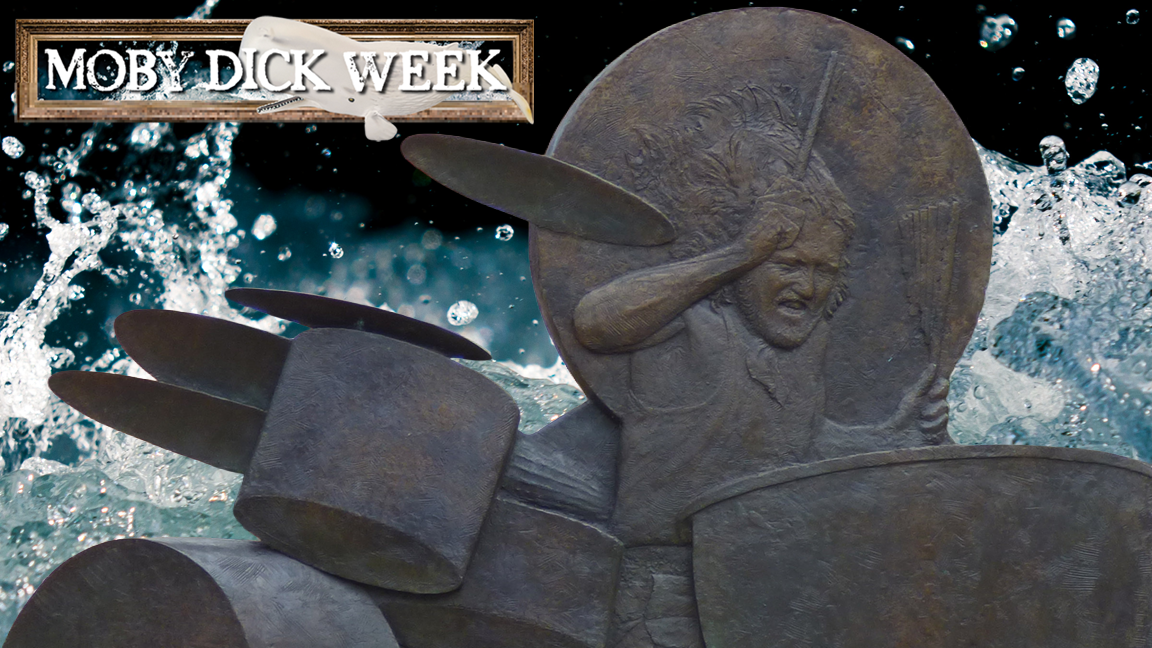
When I hear the words “Moby Dick,” my first thought is of a masterpiece, yes, but the one by Zeppelin drummer John Bonham rather than the one by Herman Melville. Many will raise an eyebrow to ask: “A masterpiece? Really?”
“Moby Dick” (originally called “Pat’s Delight” in honor of Bonham’s wife) is a perfectly serviceable I-IV-V heavy blues riff bookending Bonham’s 15-minute-long tour de force. The cetacean drum excursion begins about one minute in on Led Zeppelin II, after a bit of Jimmy Page histrionics. You can hear Bonzo finding his way, almost as if he is tuning the drums. Gradually, he becomes more insistent, the beating of the toms intensifies, the fury builds, and soon it is as if the entire drum kit is falling down flight after flight of metal stairs on a planet burdened with infinite gravity; one fears that the drumheads will break. At the four-minute mark, Bonham crescendos with a final majestic crack and the guitar and bass return. The outgoing riff is punctuated by outbursts of Bonham’s tom tom tumult and a final descending sequence of Page power chords.
Viewers of Becoming Led Zeppelin might recall Page’s vision for recording the band’s second album as they made their way across the United States in 1969. “John Bonham’s kit was gonna be spread right across the stereo picture,” Page said of Zeppelin II. “He had the science of tuning the drum so that when he hit it, it just resonated out of the top. It just projected. And he played with his wrists—it’s not all this forearm smashing.” Though when Bonzo hit an accent on the bass drum, Page conceded, “you’d feel it in your gut.”
The exquisitely engineered four-minute studio version of the song does not demand the same indulgence on the part of the listener as the various lengthy live versions. (And no, I’ve not listened to them all.) I love drums and drumming and drummers, but I am not a drummer. For me, long drum solos—Ginger Baker’s “Toad” with Cream and the Grateful Dead’s thoughtfully named “Drums” come to mind—were usually an opportunity to duck out for a smoke and a drink.
So how would “Moby Dick” live at the Royal Albert Hall (1970) sound to my jaded ears, five decades later? Short answer: pretty good! Bonham begins with the same searching and tinkering—he is clearing his throat. As in the studio version, the energy builds, accelerating to the familiar insistent rhythmic clatter that undergirds so many Led Zep classics… but suddenly, a little more than five minutes in, he stops—he puts down his sticks and begins playing the drums with his hands.
Once I might have viewed this the way I view Jimmy Page playing guitar with a violin bow—an eyeroll-provoking bit of cacophonous 1970s kitsch destined to be satirized in Spinal Tap. But I find I can feel it now. Bonham’s hand drumming—now kit, now congas—feels feral and relentless.
According to Mick Wall, author of the salacious Zeppelin biography When Giants Walked the Earth, before playing “Moby Dick,” Bonham would “reach down and grab handfuls of coke from a bag at his feet and rub it all over his nose and mouth.”
There is zero question that this kind of excess hastened the demise of Led Zeppelin. Bonham would drink himself unconscious with some regularity; he died in September 1980, allegedly after having consumed 40 shots of vodka. But please don’t conflate the rock and roll lifestyle with some kind of shortcut to making amazing art. Performance-enhancing drugs might give you the stamina to hit your snare longer and louder, but I seriously doubt that they will allow you to master drag triplets or double paradiddles or 11/8 time.
Back at the Royal Albert Hall, by the time the band rejoins Bonham at 14 and a half minutes, he has taken us on a sublime percussive ride—from soothing sotto voce pulses to raucous violence—and reminded us that he is not a technician but an artist. (Among his heroes was session legend Bernard “Pretty” Purdie, the architect of so many iconic grooves from Aretha Franklin to Steely Dan. One can hear Bonham’s homage to him in the infectious shuffle of “Fool in the Rain.”)
I would argue that the song “Moby Dick” is worthy of its namesake. It is full of singlemindedness, compulsion, relentlessness, and rage. It is, at its apex, unhinged.
In Chapter 119 of the novel (“The Candles”), a typhoon has struck the Pequod and produced a Saint Elmo’s fire such that the masts of the ship appear to be on fire. Ahab, in full flower of madness, sees the “flames” as some kind of divine validation of his quest—a force that inhabits and nourishes him.
Oh, thou clear spirit, of thy fire thou madest me, and like a true child of fire, I breathe it back to thee.

Talk About It