
Winning Isn’t Everything
by David Roth
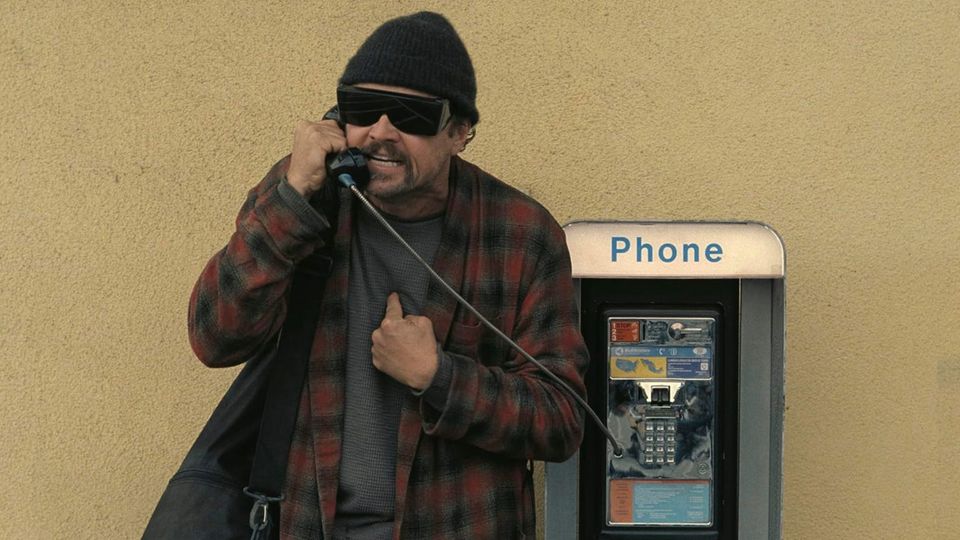
It will be clear that I am not offering a self-care tip by the time you finish reading this sentence, but when things started getting dark for me around the beginning of this year I started watching movies from the 1970s. Film after film in which everyone’s hair looked incredible and the food even in the fanciest restaurants looked like absolute dogshit—ashen but somehow also boiled-looking. New York City was a smear of garish red velvet and gray-black car exhaust and appalling yellow light; long brown sedans jostled and raced through a bleak and crowded smudgescape in which it was plain that there was not one single acceptable cup of coffee to be found. The blocks around Times Square were caked in a damp neon film, but I could still identify what has since become a Shake Shack. The map had been altered and altered again, but the territory just was what it was.
I don’t think I really had anything in particular in mind. I was depressed; a bunch of big things I’d idly or just hopefully thought were permanent had proven not to be; I had believed those things to be load-bearing, which seemed to be the only part I got right. The idea of addressing this problem by applying a thick and smoggy layer of movies in which Gene Hackman appeared to be experiencing indigestion while wearing various hats was not, and could not really have been, a fully reasoned one on my part. It was just what I was up for at the time, mostly. But I think I also wanted to see how bad things had been before—or, more precisely, to be told some stories in which things were very bad, stories in which people wore extravagantly chunky sweaters and furtively spoke on corded phones and got killed and sometimes, somehow, looked as good as Brooke Adams does in the 1978 Invasion Of The Body Snatchers.
I was startled and delighted by how brown and moldy everything looked in The French Connection and by the blue notes of hornball fatalism in The Parallax View and Winter Kills and Night Moves and that Philip Kaufman adaptation of Invasion of the Body Snatchers. None of it really quite aligned with any observable contemporary reality, but even as I watched Warren Beatty, with maybe the most outrageous haircut I’ve ever seen on anyone, buy a plane ticket—with cash—on the damn airplane—in The Parallax View, it never felt entirely unreal. The twin threads of restlessness and hopelessness, the films’ thrumming but abstracted disgust with the hidden and utterly depraved systems against which all these lonesome protagonists smashed themselves, were a reminder that all of these stories had long been unfolding in the country and reality in which I live. Not in the same moment, but in the same place, and along the same beats.
I wouldn’t say that any of it made me “feel better,” but that wasn’t really why I was watching. I was watching because I didn’t want to, or just couldn’t, go to bed, and because I am already paying for a bunch of streaming services, and because I needed to be reminded, in the first dark, brutal days of the second Trump administration, of the grim and dreadful things that, too, had passed. I was trying to convince myself that this moment was not the end that it felt like. There was a story that I had been told for as long as I’d been alive that held that things were getting better, or just moving along an upward trajectory at a pace that would necessarily quicken and slow but which was constant and inexorable. A lot of suburban kids get told this, if not in so many words, and it is an important part of turning them into suburban adults.
But also I really thought I saw it for a while. Things once misunderstood were being figured out, and once figured out could be used as leverage for figuring out even more things; this was how the line climbed up and to the right, and doing that was just what lines were meant to do. There were compromises, of course, and missteps, a dialectic was at work and there would necessarily be conflict, it was not going to be simple or linear, although look at that line, look where it was going. But also, just on the merits, and considering the prevailing trends and available data…well. Well.
Paul Thomas Anderson’s One Battle After Another is not a 1970s film. It is a 2025 film based on a Thomas Pynchon novel that was published in 1990 and set in 1984; like all things Pynchon it emanates some fading but instantly identifiable 1960s Particles. What it has in common with the films I watched over the winter is significant: you’ve got the depraved networks of elites, and the film’s smoldering hatred of them; the outgunned and overmatched protagonists caught between that advancing front and their own prosaic human weaknesses; the manifest impossibility of meaningful victory in the classic Hollywood happy ending sense. But there are piercing departures from the suave and despairing detachment of the ’70s ; the reigning reactionaries still skulk and leer at each other in fancy hotel suites and secret conference rooms, but their dirty work is also done violently and in public, by men in uniform smashing and grabbing under color of law in city streets. Only their enemies feel compelled to sneak around at all; the secret society of white supremacist elites in the film hides behind their kitsch and their code seemingly mostly for yuks.
There is a lot to say about this movie, which seems custom-built for the sort of people who subscribe to Flaming Hydra, and we will have more writing about it here for sure. So I will say just this one thing about it, which is about why its righteous pessimism felt so bracing after a long winter (and spring, and summer) getting loaded on the vintage stuff.
The struggle against the forces of repression in One Battle After Another is quite probably lost, but it is not over. The resistance movement of the film’s first act cracks under the pressure of constant pursuit from the state and the fragmenting force of its members’ individual ambitions and appetites. Every revolutionary we meet during that act is killed or captured or chased into hiding, and those captured invariably cut deals with the oppressors. Everyone who can run and hide does so; authorities that have nothing more on their mind and nothing more to offer than chasing them down busily do so. If you want to be charitable about it, it is a stalemate.
In the ’70s films of my long winter, people wind up crushed against this edifice like bugs on a windshield; there is no force propelling them into that last splat beyond their own stubborn sense that something has gone wrong and that they should try to fix it. That is vanity, mostly, and it ends the way that vanity ends. There is a decent helping of vanity in the French 75 movement from One Battle After Another, as well, but in the longer and more defeated moments in which the back two-thirds of the film unfolds there is also something else—not the lonely defeat of those old protagonists, but a more communal and more defiant and much less settled defeat, of some with names and some without, who have resolutely refused to accept the end of it.
That refusal isn’t really about armed struggle; that’s not a fair fight, or a close one. It’s just one in an infinite series of refusals, one lopsided battle after another, by communities and individuals, some with ideologies and many with nothing but a stubborn and principled unwillingness to accept what is unacceptable. Where the lonesome protagonists of those ’70s films hurled themselves recklessly towards their death and sometimes got all the way there, the tension in One Battle After Another is about staying alive and engaged in the face of the state and the smug ghouls piloting it by remote control, the bigots and predators and mercenaries efflorescing in that stagnant status quo, all insisting that you don’t really matter, that no one and nothing matters. The state cracks down and beats up and pries apart communities by rote instinct; it aims to impose safety and purity on the communities with the obliterating finality of a bomb. The most powerful and most inspiring act of defiance, in the face of this, is not just the refusal of those terms but the refusal to acknowledge that anything is over, even if those refusing won’t get to see the end themselves.
This feels new in film, but is not really a new story in American life. It is just different from the one I grew up with. That one encouraged me to stay the course, so that I could see all the good things that would come to me in time. This one operates on a longer continuum, and is aimed at righteous goals that are simultaneously more modest and more legible. “I do whatever I do within the time that I have in my life, whatever time I’m gifted with, and much of what I do is built on what other people did before them,” Ta-Nehisi Coates said to Ezra Klein in their long interview last week. It was one of Coates’s many attempts to explain to the strategic and catastrophically sophisticated Klein what it is like to live a life centered around values rather than outcomes. “Then, after that, I leave the struggle where I leave it, and hopefully, it’s in a better place. Oftentimes it’s not. That’s the history in fact. And then my progeny, they pick it up, and they keep it going.”